 RU
RU ZH
ZH IT
IT ES
ES TR
TR JA
JA PT
PT KO
KO FR
FR DE
DE AR
AR ID
ID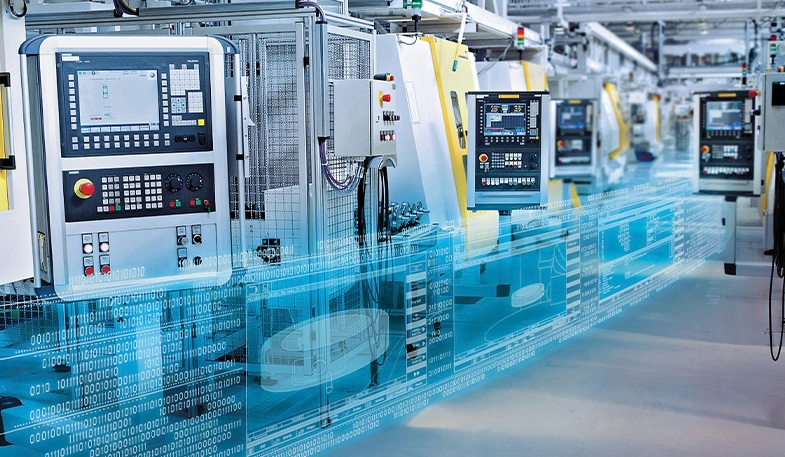
Applications of industrial touch monitor in the manufacturing industry
Learn More



In the touch display market, new technologies often attract more attention than proven ones. But for OEM buyers, product decisions are rarely based on what is newer or more eye-catching. They are based on what can be integrated smoothly, perform consistently, and support long-term device production without adding unnecessary risk. That is one of the main reasons many buyers still choose the Resistive Touch Screen for industrial and commercial equipment.
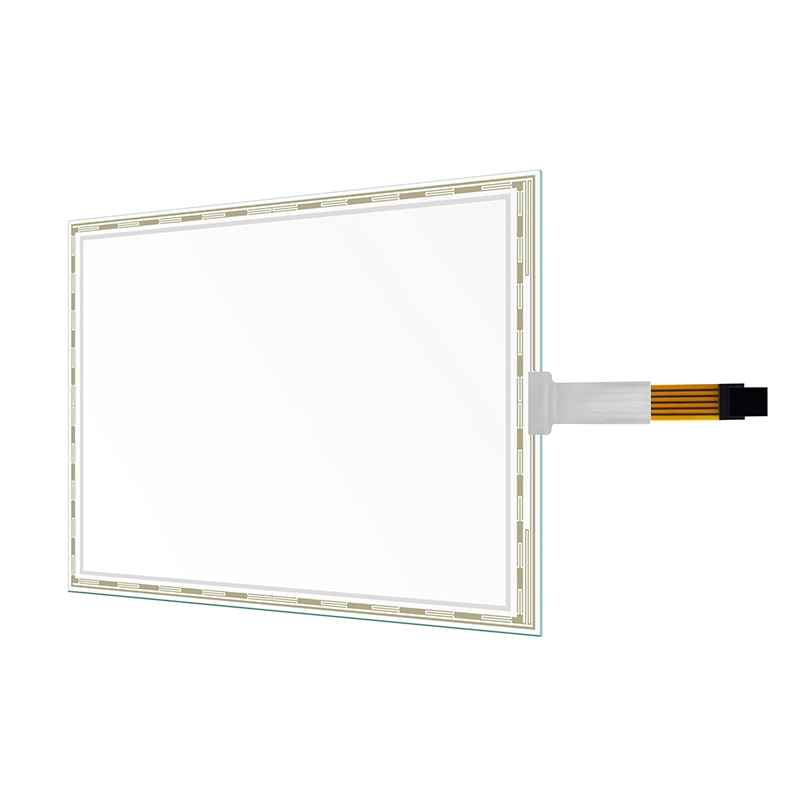
For OEM projects, touch technology is not an isolated component choice. It affects the full product chain, including device structure, software logic, operator experience, replacement planning, and manufacturing continuity. When buyers look at touch solutions from that perspective, resistive touch screens remain a practical option, especially for equipment that values stable input, clear interface logic, and efficient product matching.
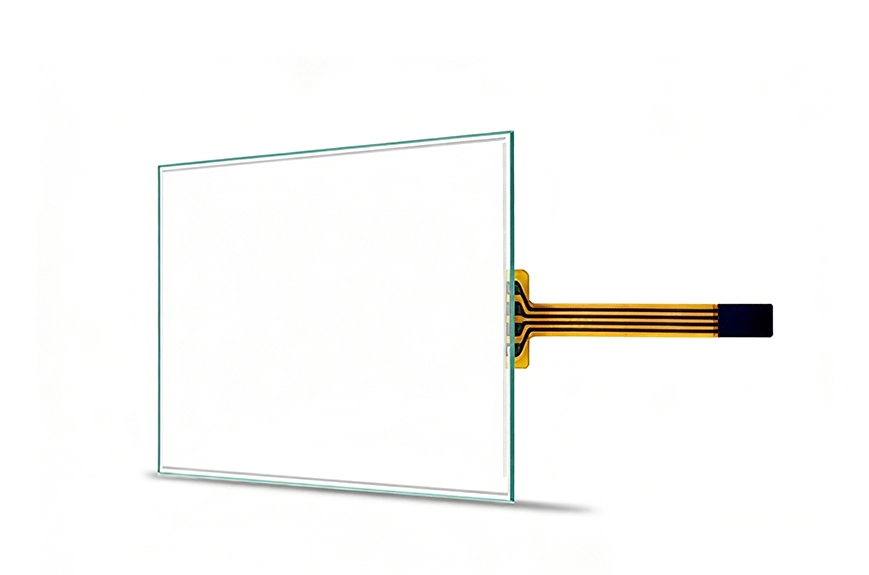
At GreenTouch Technology, the resistive touch screen category covers three practical product ranges: Resistive Touch Screen 7 to 22 Inches (5 Wire), Resistive Touch Screen 10.4 to 22 Inches (4 Wire), and Resistive Touch Screen 2.7 to 10.1 Inches (4 Wire). With a resolution of 4096 × 4096, a service life of 1,000,000 touches, structures including ITO Film + ITO Glass and ITO Film + ITO Film, and certifications such as CE, FCC, and RoHS, these products are designed for equipment makers who need dependable touch performance in real working environments.
In many product meetings, the first question is not “What touch technology is most popular?” The real question is “What will work best in this device over time?” That is an important difference.
OEM buyers often work on devices such as:
These products are usually built around specific tasks. Users tap buttons, select menus, input numbers, confirm settings, or operate predefined functions. In these cases, the touch experience does not need to feel like a consumer tablet. It needs to be accurate, repeatable, and easy to integrate into the equipment.
That is where resistive touch screens continue to make sense. They provide a straightforward touch method based on pressure input, and that operating logic remains highly practical for equipment-based interfaces.
For OEM buyers, stable performance means more than whether the screen reacts in the first demo. It means whether the touch response stays reliable across repeated use, across different operators, and across long equipment service cycles.
Resistive touch screens are still widely chosen because they support a clear and predictable input style. They can be operated by finger, gloved hand, stylus, or similar object. This is especially useful for devices used in industrial workshops, service counters, hospitals, or controlled commercial environments where users may not always interact with the screen under ideal consumer-style conditions.
This is also why resistive touch screens remain suitable for:
For many OEM products, that kind of practical stability is more important than extra touch features that the end user may never need.
When OEM buyers describe a product as cost-effective, they are usually not talking only about the component itself. They are thinking about how the component affects the total efficiency of the project.
A resistive touch screen can be a cost-effective choice because it often helps reduce unnecessary complexity in several areas:
If a touch solution fits the device architecture well, the manufacturer can often reduce redesign work, simplify product validation, and support more stable production over time. In that sense, cost-effective performance is really about balancing function, compatibility, and long-term reliability.
For many industrial and commercial devices, resistive touch technology still offers that balance.
One reason resistive touch screens remain practical for OEM projects is that they can cover a wide range of product sizes and equipment types.
This range is useful for compact equipment and embedded interfaces. It often fits:
These products usually need direct and simple operation in limited space.
This range is often selected for medium-sized commercial and industrial devices such as:
It provides enough display area for structured software pages while still remaining practical for standard equipment integration.
The 5-wire range is especially suitable for devices that face more repeated use or stronger durability demands. It is often considered for:
For OEM buyers, this makes it easier to match the touch structure to actual operating conditions rather than forcing one solution onto every product line.
Another reason OEM buyers still choose resistive touch screens is that the structure can be selected more purposefully according to the application.
GreenTouch Technology’s resistive touch screens include both 4-wire and 5-wire solutions. This is important because different projects have different expectations for operating intensity and service life.
A 4-wire structure is often practical for many standard commercial and industrial applications where the environment is controlled and the product structure is already well defined.
A 5-wire structure is often considered when the equipment needs stronger long-term stability under repeated pressing and more demanding use conditions.
This kind of structure flexibility helps OEM buyers choose according to real application logic, which improves the overall efficiency of product planning.
The resistive touch screen structure itself is another reason this technology remains relevant. GreenTouch Technology offers product structures including:
For equipment makers, this matters because structure affects how the touch screen fits into the final device, how it performs under daily use, and how it aligns with different project requirements.
In OEM work, these details are not small. They influence:
A touch screen that aligns well with the equipment structure usually creates fewer problems later in development and production.
OEM buyers do not just need general claims. They need specifications that support real project decisions.
The resistive touch screen products in this category provide:
These points matter because they help buyers evaluate the product more practically.
The 4096 × 4096 resolution supports accurate touch positioning in devices that rely on controlled, task-based input. The 1,000,000-touch service life helps buyers assess long-term usability in equipment that may operate daily for extended periods. Certifications such as CE, FCC, and RoHS support project qualification and international supply requirements.
This kind of information makes the product easier to assess from an engineering and sourcing perspective.
Touch screen performance is only one part of OEM success. The other part is whether the supplier can support consistent quality, technical communication, and repeat supply.
GreenTouch Technology is a professional manufacturer of touch products, covering capacitive touch screens, resistive touch screens, infrared touch frames, nano touch foil, touch screen monitors, touch all-in-one PCs, advertising digital signage, conference touch all-in-one PCs, teaching all-in-one PCs, and advertising machines. The company has its own trademark, a fully automatic production line, and a fully enclosed dust-free workshop, which helps support more stable production control.
GreenTouch Technology has also passed ISO9001 quality management system certification and ISO14001 environmental management system certification, and its products are controlled under strict quality management procedures. In addition to CE, FCC, and RoHS, the broader product portfolio also involves certifications such as CB, UL, CCC, and HDMI, which reflects a stronger manufacturing and compliance foundation.
For OEM buyers, this kind of background matters because long-term product performance depends not only on the screen design, but also on stable manufacturing execution.
The reason OEM buyers still choose resistive touch screens is not that they ignore other technologies. It is that many real devices still need the strengths resistive touch can provide.
These strengths include:
For equipment makers focused on stable production and practical product development, these advantages remain meaningful.
Resistive touch screens continue to be chosen by OEM buyers because they offer a realistic combination of stable performance, practical usability, and efficient product matching. In many industrial and commercial devices, that combination matters more than following broader market trends.
When buyers evaluate touch solutions from the perspective of full-device compatibility, operator habits, structure selection, and long-term manufacturing continuity, resistive touch screens still prove their value. With product ranges covering 2.7 to 22 inches, both 4-wire and 5-wire structures, practical performance specifications, and factory-backed manufacturing support, GreenTouch Technology provides a solution path that remains highly relevant for today’s OEM equipment projects.