 RU
RU ZH
ZH IT
IT ES
ES TR
TR JA
JA PT
PT KO
KO FR
FR DE
DE AR
AR ID
ID
Time to invest in pickup locker kiosks?
Learn More



When buyers evaluate a touch product, they often start with the visible specifications: size range, structure, touch resolution, service life, and certifications. Those details matter, but for OEM projects they are only part of the picture. A resistive touch screen is not judged by a datasheet alone. It is judged by whether the factory behind it can turn those specifications into stable, repeatable product quality over time.
That is why many equipment makers pay close attention to the manufacturing side of a Resistive Touch Screen program. In industrial, commercial, medical, and embedded applications, the buyer is not only choosing a component. The buyer is choosing a supply partner. Product quality and supply reliability come from how the factory manages materials, process control, consistency, and communication across the full order cycle.
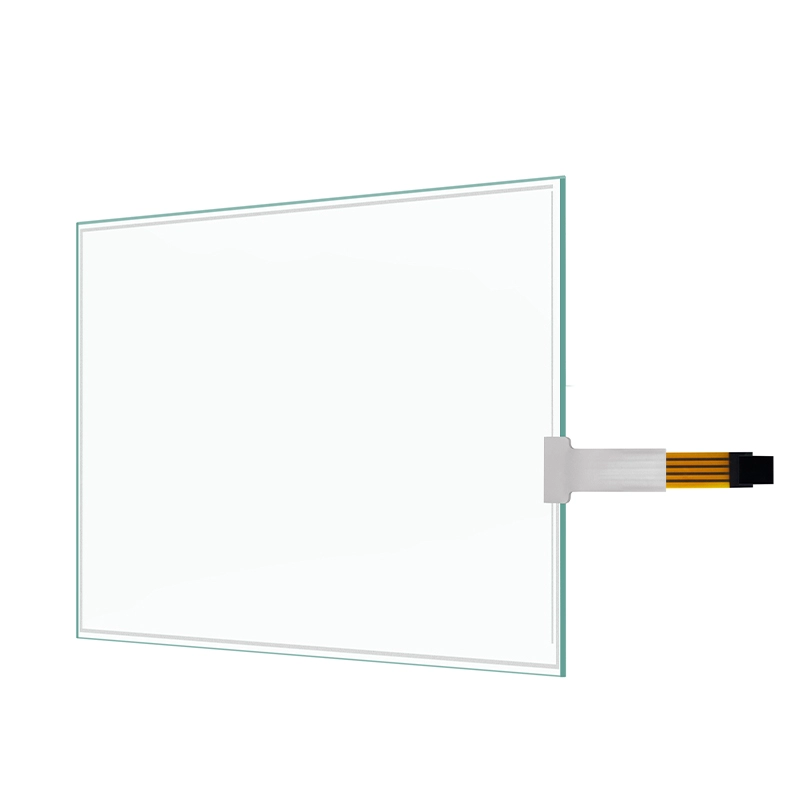
For GreenTouch Technology, the resistive touch screen category includes three practical product lines: Resistive Touch Screen 7 to 22 Inches (5 Wire), Resistive Touch Screen 10.4 to 22 Inches (4 Wire), and Resistive Touch Screen 2.7 to 10.1 Inches (4 Wire). These products provide a resolution of 4096 × 4096, a lifetime of 1,000,000 touches, product structures including ITO Film + ITO Glass and ITO Film + ITO Film, and certifications such as CE, FCC, and RoHS. But the real question behind these numbers is simple: what inside the factory makes these results dependable?
Many buyers think product quality starts on the production line. In reality, it starts earlier, at the stage where specifications are reviewed and turned into manufacturing requirements.
For resistive touch screens, that means the factory needs to understand more than the size requested by the customer. It needs to understand the intended use. A screen for an industrial HMI panel is not judged the same way as a screen for a handheld device, a POS terminal, or a medical instrument. The factory should be able to connect product structure with actual application needs.
At this stage, quality is shaped by how well the factory confirms:
If these points are not handled carefully from the beginning, problems later in sampling or batch production become much more likely.
Resistive touch screen performance depends heavily on the material structure used in the product. In this category, GreenTouch Technology provides structures such as ITO Film + ITO Glass and ITO Film + ITO Film. For buyers, these are not just technical labels. They are part of how the screen behaves in real equipment.
Material structure affects:
A reliable factory does not just list the structure. It must be able to manufacture that structure consistently, keep variation under control, and align the product with the requirements of different device categories. This is especially important in OEM work, where the screen may need to fit an established product platform rather than a general retail market.
One sample can look good. Real factory quality is proven when the same standard is maintained over repeated production. That is why process control is one of the clearest signs of a capable resistive touch screen factory.
In practical terms, process control means that the factory is able to manage key production steps in a stable way, rather than depending on one-off adjustments. Buyers may not see every step directly, but they will see the result in product consistency.
Good process control usually shows up in areas such as:
For OEM buyers, this matters because the touch screen is often assembled into a larger device structure. If the screen varies from batch to batch, assembly efficiency drops and field performance may become less predictable.
Resistive touch products are sensitive to production discipline. That is one reason factory environment matters. GreenTouch Technology has established a fully enclosed dust-free workshop and a fully automatic production line. These are not just presentation points. They reflect a more controlled manufacturing environment.
A clean and disciplined production environment helps reduce avoidable instability in the product. It supports:
For buyers in industrial, commercial, and medical sectors, this kind of environment adds confidence because it shows the factory is operating with process awareness rather than casual assembly logic.
In industrial and commercial equipment, a touch screen is rarely judged by appearance alone. What matters more is how it performs after installation, after repeated use, and across the service cycle of the equipment.
The GreenTouch resistive touch screen category lists a lifetime of 1,000,000 touches and a resolution of 4096 × 4096. These are useful indicators because they reflect two things buyers care about most:
For devices such as control terminals, POS equipment, medical instruments, and self-service systems, these are not secondary details. They affect daily usability. A reliable factory understands that quality is not only about whether the product passes inspection once. It is about whether the product keeps supporting the device after it reaches the user.
Some buyers think supply reliability means the factory can ship on time. That is part of it, but not the whole story. In OEM projects, supply reliability also means the factory can support the same specification again and again without unnecessary confusion or drift.
This includes:
This is particularly important in a category like resistive touch screens, where buyers may need several configurations for one product family. GreenTouch Technology’s range from 2.7 inches to 22 inches, across both 4-wire and 5-wire options, gives equipment makers more flexibility. But flexibility only matters if the factory can control it well.
A reliable supplier should be able to handle a small resistive touch screen for a compact embedded device and a larger one for an industrial terminal with the same seriousness in production control.
Certifications do not replace real manufacturing quality, but they do show whether a factory is operating with formal control systems. GreenTouch Technology has passed ISO9001 quality management system certification and ISO14001 environmental management system certification, and its products have obtained CE, FCC, CB, RoHS, UL, CCC, and HDMI certifications. The resistive touch screen category itself lists CE, FCC, and RoHS.
For buyers, this matters because certifications support practical business needs:
In B2B supply, these certifications are part of trust-building because they show the company is working within recognized systems rather than informal production habits.
Supply reliability is not only physical. It is also operational. A supplier may have the equipment to produce a good resistive touch screen, but if communication is slow or unclear, OEM buyers still face project risk.
A dependable factory partner should be able to support:
This is especially important for resistive touch screen orders that involve different wire structures, different size ranges, or adaptation for specific equipment platforms. The better the factory communicates, the easier it becomes for the buyer to manage engineering alignment and production planning.
GreenTouch Technology is a professional manufacturer of touch products, including capacitive touch screens, resistive touch screens, infrared touch frames, nano touch foil, touch screen monitors, touch all-in-one PCs, advertising digital signage, conference touch all-in-one PCs, teaching all-in-one PCs, and advertising machines. The company has its own trademark and has built a production system designed to support both product quality and structured supply.
For OEM buyers, this matters because a touch factory should do more than produce components. It should support real equipment development. In a category like resistive touch screens, where compatibility, repeatability, and application fit are all important, factory background becomes a real competitive factor.
When evaluating a supplier, buyers should not stop at the product page. They should look behind it.
Useful review points include:
When those answers are strong, the buyer is looking at more than a component supplier. The buyer is looking at a manufacturing partner.
Inside a resistive touch screen factory, product quality and supply reliability are defined by a combination of factors: material structure, process control, production environment, system management, repeatability, and communication discipline. Specifications such as 4096 × 4096 resolution, 1,000,000-touch lifetime, ITO-based structures, and CE/FCC/RoHS certifications are important, but their real value depends on how reliably the factory can deliver them in practice.
For OEM buyers, that is the difference between buying a product once and building a dependable supply relationship. In resistive touch screen projects, the factory behind the screen often matters just as much as the screen itself.