 RU
RU ZH
ZH IT
IT ES
ES TR
TR JA
JA PT
PT KO
KO FR
FR DE
DE AR
AR ID
ID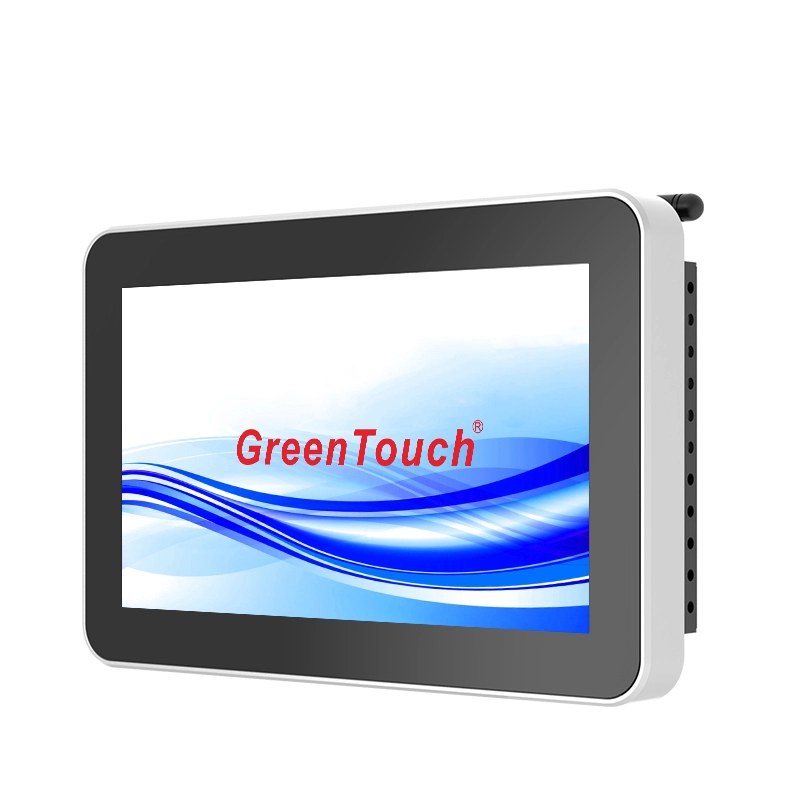
Close Frame Touch Panel PC 7-27 Inches: A Compact Solution for Industrial HMI Systems
Learn More



In the early stage of interactive display adoption, many projects were built around standard screen sizes and fixed touch structures. Buyers often selected a finished touch monitor or a standard kiosk display, then tried to fit that product into the installation environment. That approach still works for some applications, but it is no longer enough for many modern projects. More buyers now want display solutions that adapt to the space, the material, and the design concept instead of forcing the project to follow a rigid hardware format.
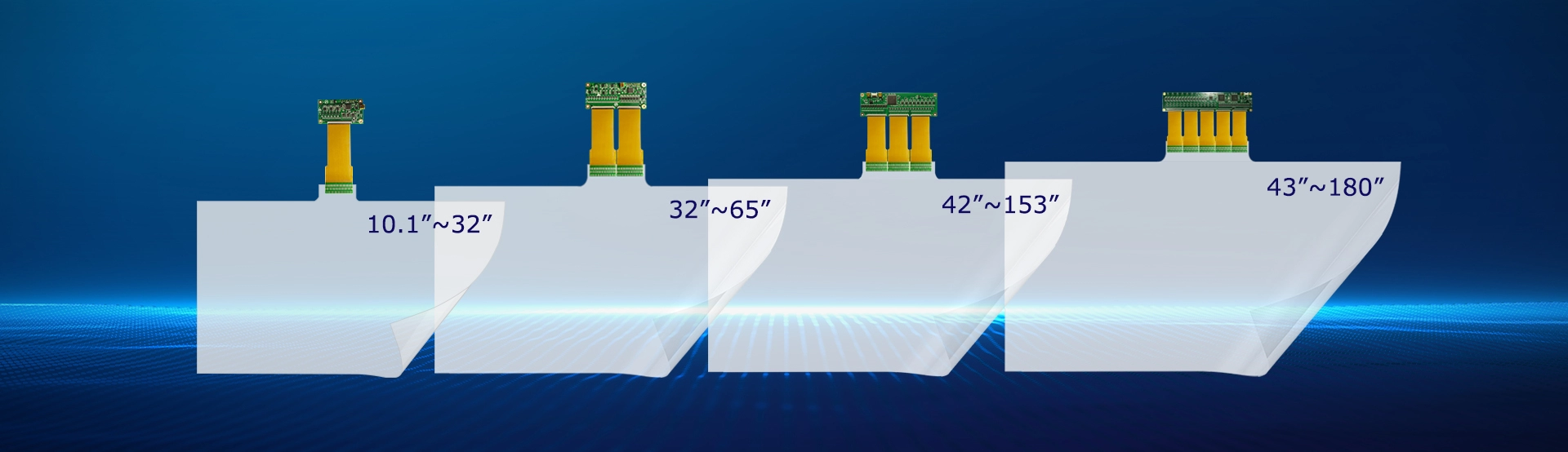
That shift is one of the main reasons more buyers are searching for a reliable Interactive Touch Foil supplier. Interactive touch foil offers a different path. It gives OEM buyers, integrators, and project contractors a way to turn glass, acrylic, or polycarbonate surfaces into interactive touch interfaces without relying on a conventional framed touch screen structure. For retail windows, smart partitions, digital signage upgrades, exhibition systems, and commercial presentation projects, that flexibility is becoming more valuable.
The point is not only to add touch. It is to create a cleaner, more adaptable interactive solution that fits the actual project.
A few years ago, many commercial touch projects were still built around standard monitor sizes and box-shaped hardware. Now, demand is broader. Buyers are designing interactive storefronts, transparent presentation systems, frameless meeting room displays, educational installations, museum experiences, and custom signage surfaces. In many of these projects, a standard touch screen is not the best fit.
The problem is usually not the touch function itself. The problem is the structure. A traditional touch display may be too thick, too visually obvious, too limited in size, or too difficult to integrate into glass-based designs. Buyers want something that gives them more freedom.
That is where interactive touch foil stands out. Because it uses an ultra-thin transparent PET film structure, it allows the touch function to be added to a surface rather than replacing the surface. For design-driven commercial projects, that changes the whole conversation.
A major reason buyers choose custom interactive touch foil is visual integration. In many projects, the display surface is part of the brand presentation, the architectural language, or the user experience. Large visible frames, bulky housings, and traditional monitor edges can weaken that result.
Interactive touch foil helps solve that issue because it can be integrated with glass or similar transparent surfaces in a way that keeps the display area cleaner and more modern. GreenTouch Technology’s touch foil product supports straight or curved use and can achieve an integrated no-frame effect. For many buyers, this is a decisive advantage.
This matters in spaces such as:
In these environments, appearance is not a secondary issue. The display must work well, but it also has to match the physical space. Buyers increasingly want suppliers who understand that.
Another reason buyers are looking for custom interactive touch foil suppliers is that project requirements now vary more than before. The same product is not expected to solve every use case. One project may need a compact foil for acrylic signage. Another may need a large transparent foil for a retail window. Another may need anti-glare treatment, logo customization, or installation support on a curved surface.
GreenTouch Technology’s product information reflects why customization matters so much in this category. The foil can be customized in:
For buyers, this matters because interactive foil projects are usually not one-size-fits-all. The product needs to align with the final installation plan. A supplier that only offers fixed specifications without project-level flexibility is often less useful for OEM or commercial deployment.
Custom supply is becoming more important because buyers are no longer purchasing only components. They are purchasing a complete application outcome.
Interactive touch foil is especially attractive because it works with common transparent materials such as glass, acrylic, and polycarbonate. This opens the door to many applications where traditional touch hardware is less practical.
For example, buyers increasingly want to create:
In all of these projects, the surface itself is already part of the design. Instead of replacing it with a dedicated touch monitor, buyers can add touch capability while preserving the original visual effect. That is why more companies are specifically searching for custom interactive touch foil suppliers rather than only searching for generic touch display manufacturers.
In OEM and commercial integration work, every added layer of hardware creates more installation work. More thickness means more structural adjustment. More framing means more visible hardware. More design compromise means more project revisions.
Interactive touch foil is attractive because it provides a relatively simple integration path. GreenTouch Technology describes it as a cost-effective interactive solution with a simple integration process. For project teams, that matters because they often need to move from design drawing to installation with as little structural conflict as possible.
The packing list itself reflects practical project use:
This kind of straightforward system helps buyers evaluate integration more clearly. It is not just about buying film material. It is about getting a usable interactive solution that can be planned into the project.
Another reason demand is increasing for better interactive touch foil suppliers is that many projects are no longer installed in controlled private spaces. They are being deployed in public or semi-public environments where the interactive surface may face repeated use, cleaning, dust, or rough contact.
GreenTouch Technology’s touch foil features address exactly these concerns:
For buyers, these are not just product highlights. They are risk-reduction points. If the installation is placed in a busy store, trade show, public information area, education environment, or customer-facing business space, durability becomes part of the purchase decision.
A serious buyer does not only ask whether the touch foil works. The buyer asks whether it can keep working in real conditions.
As interactive touch foil becomes more common in visual environments, optical performance has become one of the biggest selection factors. Buyers are using these products on transparent surfaces, glass partitions, and storefront windows where visibility is essential. If the foil damages the visual effect, the whole concept weakens.
GreenTouch Technology’s product information highlights:
These points matter because buyers are increasingly demanding both interaction and optical quality. They want the display to remain bright, clear, and commercially attractive while adding touch functionality. That is especially true in premium retail, exhibitions, branded environments, and modern office spaces.
This is why buyers are not just searching for “touch foil.” They are searching for custom interactive touch foil suppliers who can support a better final visual result.
Large interactive surfaces are another growth driver. Buyers are no longer satisfied with touch interaction only on small or mid-sized dedicated screens. In many projects, they want interaction across large presentation surfaces, transparent windows, and wall-scale display areas.
Because interactive touch foil supports flexible deployment and strong touch penetration, it is increasingly considered for larger applications where a standard framed touch screen would be limiting. Buyers who work on such projects usually need a supplier that can handle special dimensions, installation conditions, and project communication more carefully than a generic reseller can.
This demand for large, custom, design-driven interactivity is pushing more buyers toward factory-backed suppliers.
One of the clearest reasons buyers are looking for custom interactive touch foil suppliers is that they are no longer buying only products. They are buying project compatibility.
They want answers such as:
These are project questions, not catalog questions. A good supplier must be ready to answer them.
GreenTouch Technology is a professional manufacturer of touch products, covering capacitive touch screens, resistive touch screens, infrared touch frames, nano touch foil, touch screen monitors, touch all-in-one PCs, advertising digital signage, conference touch all-in-one PCs, teaching all-in-one PCs, and advertising machines. With its own trademark, fully automatic production line, and fully enclosed dust-free workshop, the company is positioned to support both standard supply and more customized touch projects.
The company has passed ISO9001 quality management system certification and ISO14001 environmental management system certification, and its products are controlled under strict quality procedures. It has also obtained CE, FCC, CB, RoHS, UL, CCC, and HDMI certifications. For buyers, that type of manufacturing background gives more confidence when a project requires consistent quality and repeatable OEM support.
More buyers are looking for custom interactive touch foil suppliers because interactive projects are becoming more varied, more design-driven, and more application-specific. Buyers want touch solutions that fit glass, acrylic, and transparent environments without adding unnecessary structure. They want better optical quality, easier integration, stronger durability, and more flexibility in size and treatment.
Interactive touch foil meets those needs particularly well when supported by a manufacturer that understands OEM execution, customization, and real installation conditions. That is why the supplier decision matters so much. In many cases, the success of the final project depends not only on the foil itself, but on the partner behind it.