 RU
RU ZH
ZH IT
IT ES
ES TR
TR JA
JA PT
PT KO
KO FR
FR DE
DE AR
AR ID
ID
Basic Product Setup
Learn More



Selecting a touch screen for an equipment project often looks simple at first. Many buyers begin by asking for a screen size, a drawing, or a standard model. But in real OEM and industrial development, choosing the right Resistive Touch Screen is not only about finding a panel that fits the front opening. The size and structure of the touch screen affect the device layout, touch performance, assembly method, long-term maintenance, and even how end users interact with the machine.
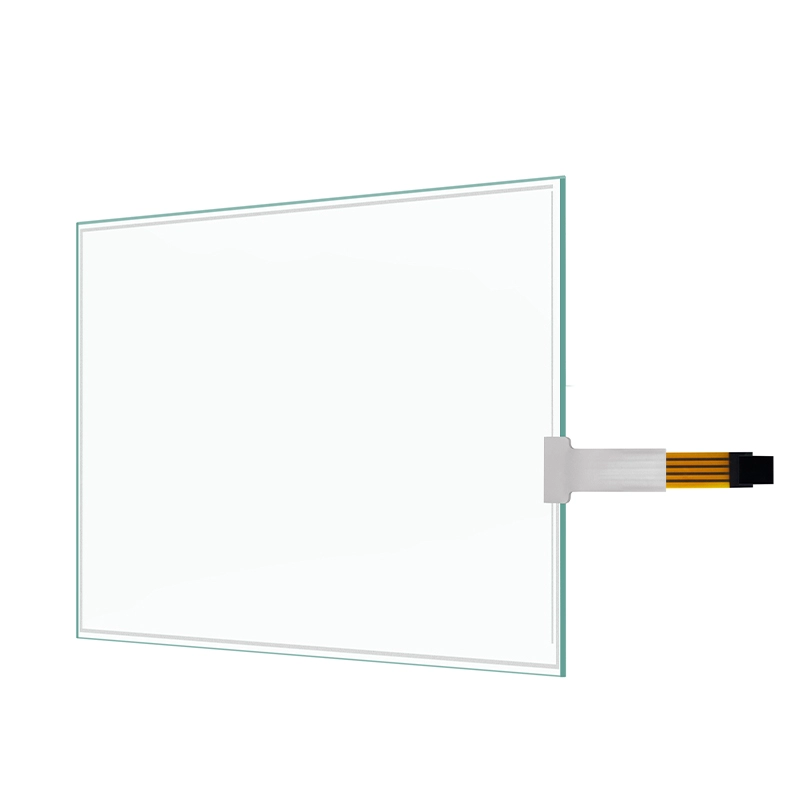
For equipment makers, this means one practical thing: the touch screen should be selected as part of the product design, not as an afterthought. A resistive touch screen may look like a simple component, but once it is integrated into an HMI, POS terminal, medical device, handheld instrument, or self-service system, it becomes part of the device’s working logic. If the size or structure is not right, the product may still function, but it will not work as smoothly as it should.
That is why choosing the right screen requires a closer look at both physical fit and application conditions.
Many sourcing discussions begin with a standard screen size such as 7 inch, 10.1 inch, 15 inch, or 21.5 inch. These are useful reference points, but they are only the beginning. The real question is how the screen will work inside the target device.
A touch screen that seems correct by size alone may still create problems if:
For this reason, equipment makers should first define the product context:
When these questions are clear, the right size and structure become easier to decide.
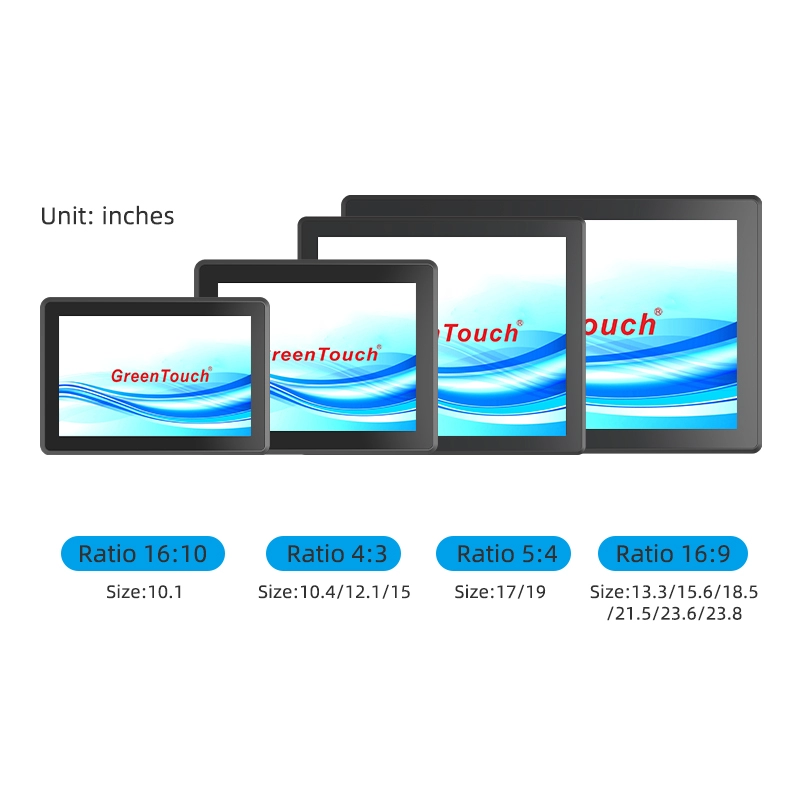
Touch screen size affects more than appearance. In industrial and commercial equipment, it directly influences interface layout, operating comfort, and product integration.
Smaller sizes are often used in handheld instruments, compact industrial terminals, embedded control devices, and certain medical or retail systems. They are useful when the product has limited front-panel space or when the interface only requires essential functions.
Smaller screens are often selected for:
In these applications, the main priority is usually space efficiency and clear task-based operation.
Mid-size screens are common in equipment that needs more visible data and easier menu navigation while still maintaining a compact overall footprint. This range is often practical for industrial control panels, self-service terminals, and medical workstations.
These sizes are often suitable for:
This size range is often preferred because it provides a balance between readability and installation flexibility.
Larger resistive touch screens are usually chosen when the interface needs bigger button areas, clearer visibility, or easier operation from a standing position. In some devices, a larger format also helps reduce user input error by giving each function more space on screen.
Larger touch screens may be useful in:
But larger size also brings more structural considerations. Housing depth, mounting method, front panel support, and cable management all become more important.
One common mistake in touch screen selection is assuming the nominal size tells the whole story. In reality, buyers need to check both active area and outer dimension.
The active area affects where touch input actually works. The outer dimension affects whether the screen fits the enclosure and mounting design. If these are not reviewed carefully, several problems can appear:
That is why equipment makers should always review mechanical drawings rather than selecting only by inch size.
Size is only half of the decision. Structure is just as important. For resistive touch screens, structure selection usually depends on durability expectations, operating environment, and device design requirements.
A 4-wire resistive touch screen is often a practical choice for standard commercial and industrial applications. It works well in many projects where the operating frequency is moderate and the environment is relatively controlled.
It is commonly considered for:
A 5-wire resistive touch screen is often selected for devices that need stronger long-term stability under repeated use. This structure is commonly considered when the screen will be pressed frequently or when the device is expected to operate over a long industrial lifecycle.
It is often suitable for:
The choice between 4-wire and 5-wire should be based on actual workload and service expectations, not just familiarity.
Different environments place different demands on a touch screen. A screen inside a clean retail environment does not face the same conditions as one installed in an industrial workshop or a hospital device.
Equipment makers should review whether the touch screen needs to support:
One reason resistive touch technology remains practical is that it supports pressure-based input. This improves usability in environments where bare-finger capacitive operation is not ideal. But even within resistive technology, structure still matters. Devices used in more demanding conditions usually need a stronger focus on durability and repeat-use stability.
Some equipment makers can use a standard resistive touch screen without difficulty. Others need custom adjustment because the device design has strict limits. This often depends on how much flexibility exists in the housing and internal layout.
A custom resistive touch screen may be needed when the project requires:
For OEM projects, this kind of customization often improves product compatibility and reduces design compromise. Instead of changing the whole device to fit a standard touch screen, the manufacturer can adapt the touch solution to the product.
A resistive touch screen that is only “close enough” can cause issues later in development or production. These problems may not appear immediately in the quotation stage, but they often show up during sample fitting, assembly, or field use.
Typical problems include:
That is why size and structure selection should be treated as a design decision, not only a purchasing step.
For equipment makers, a good supplier does more than offer a product list. The right manufacturing partner helps review the application, clarify the use conditions, and recommend a structure that matches the device more closely.
GreenTouch Technology is a professional manufacturer of touch products, with a product portfolio that includes capacitive touch screens, resistive touch screens, infrared touch frames, nano touch foil, touch screen monitors, touch all-in-one PCs, advertising digital signage, conference touch all-in-one PCs, teaching all-in-one PCs, and advertising machines. The company has its own trademark, a fully automatic production line, and a fully enclosed dust-free workshop, which supports more consistent product development and production control.
For OEM customers, this matters because resistive touch screen selection often requires more than standard part matching. GreenTouch Technology also operates under ISO9001 quality management system certification and ISO14001 environmental management system certification. Its products are controlled under strict quality procedures and have obtained CE, FCC, CB, RoHS, UL, CCC, and HDMI certifications. This type of manufacturing background gives buyers more confidence when they need stable supply and project-oriented support.
Before confirming the screen size and structure, equipment makers should review a few simple but important points:
These questions help reduce avoidable revisions later.
Choosing the right resistive touch screen size and structure is not only about fitting a screen into a device. It is about building a touch interface that works properly with the product’s design, operating environment, and service expectations.
The right size improves interface usability and installation efficiency. The right structure supports durability, operating consistency, and long-term product performance. When both are selected carefully, equipment makers can reduce engineering friction, improve assembly quality, and create a better end-user experience.
For industrial, medical, POS, and self-service equipment, that kind of practical compatibility is what makes the difference between a workable product and a dependable one.