 RU
RU ZH
ZH IT
IT ES
ES TR
TR JA
JA PT
PT KO
KO FR
FR DE
DE AR
AR ID
ID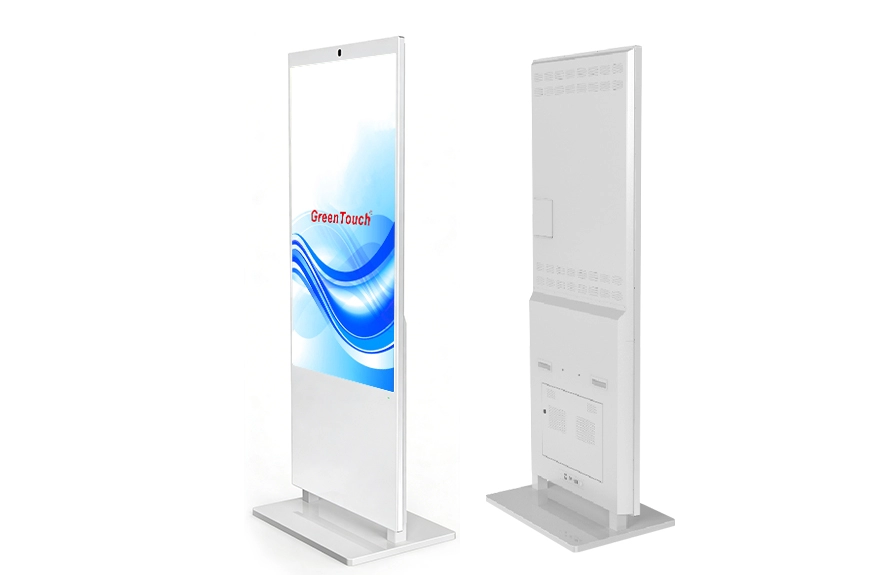
Why 43-55 Inch Floor Standing Digital Signage Is Becoming the Preferred Choice for Smart Commercial Displays
Learn More



Managing digital signage across multiple locations can quickly become complicated when every screen needs to be updated separately. Retail stores, offices, public facilities, cultural venues, and service businesses may need to change promotional content, announcements, schedules, or informational materials on a regular basis. Without centralized control, these routine tasks can consume unnecessary staff time and make content consistency difficult to maintain.
This is where remote content management becomes valuable. With the right floor standing digital signage solution, businesses can publish, update, schedule, and organize screen content from a centralized system instead of relying on manual operation at every display location.
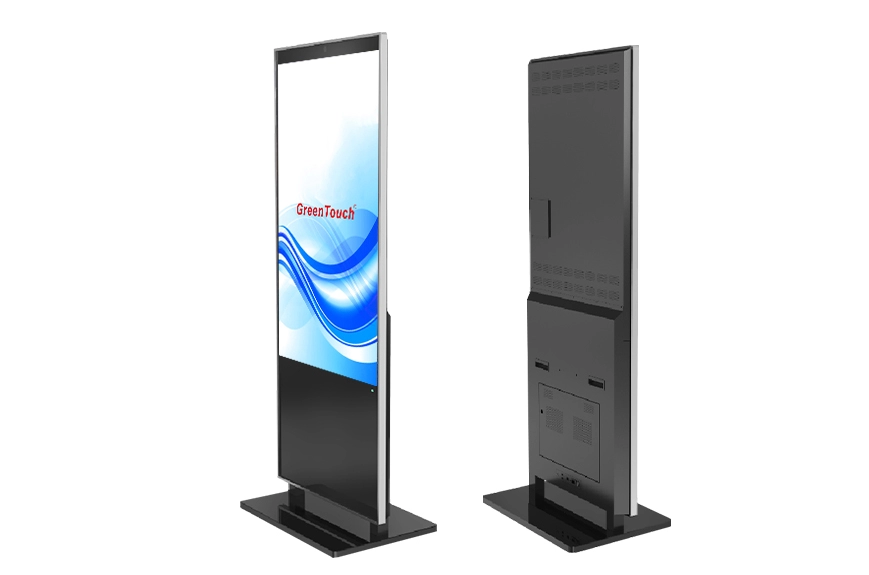
The Floor Standing Digital Signage 43-55 Inches (SWLB Series) is designed around this type of practical deployment. Available in 43-inch, 50-inch, and 55-inch configurations, it combines a large high-definition display with remote publishing functions, flexible playback options, and hardware designed for continuous indoor operation.
Traditional signage requires someone to physically access the display whenever content needs to be changed. For one screen, this may not seem like a major problem. However, the workload increases when displays are installed across different floors, branches, stores, reception areas, or public facilities.
Remote content management changes this workflow. Once the digital signage system is connected to the network, authorized staff can manage content without repeatedly visiting each display.
For example, a retail company can prepare a new promotional campaign at its headquarters and distribute it to displays in multiple stores. An office can update meeting information or corporate announcements without using a USB drive. A public facility can replace outdated notices while keeping other scheduled information unchanged.
The result is a simpler operational process: prepare the content, publish it remotely, and monitor the playback according to the deployment requirements.
One of the most useful functions of the SWLB Series is its built-in information publishing system, which supports remote management across regions. This is particularly useful for organizations operating multiple digital signage screens.
Instead of manually replacing media files on each machine, administrators can manage programs through the software system. The signage supports remote program publishing, allowing content to be prepared and distributed according to a defined communication plan.
The system also supports multiple playback methods, including computer connection, USB flash drive playback, and software-based management. This provides flexibility for different working environments.
For a single-location business, USB playback may be sufficient for simple campaigns. For larger deployments, network-based remote publishing can provide a more efficient way to coordinate content across multiple displays.
Digital signage is often expected to show different information at different times of the day. A restaurant may display breakfast information in the morning and promotional content later in the day. A retail store may change promotional messages according to business hours. An office building may show visitor information during working hours and general corporate information at other times.
The SWLB Series supports time-segmented playback as well as timed power on and off. These functions allow operators to create a more structured display schedule.
Instead of asking staff to manually change content every few hours, administrators can configure the required playback periods in advance. This helps reduce repetitive tasks and lowers the possibility of displaying the wrong message at the wrong time.
For facilities operating long hours, scheduled power control can also help coordinate the display's operating cycle with the site's actual business requirements.
Remote management is more useful when the display itself can support different content formats. The SWLB Series supports custom dragging, stretching, zooming in, zooming out, and flipping of pictures or videos.
This gives content teams more flexibility when adapting existing marketing materials, announcements, product information, or multimedia resources to a large vertical screen.
The system also supports free split-screen playback and multi-format combination playback. This means different types of information can be presented within one display rather than dedicating the entire screen to a single media file.
For example, a retail environment could use one area for a product video and another for promotional information. A corporate reception area could combine a welcome message with company information. In a public service environment, announcements and directional information can be arranged within the same screen layout.
These functions make the SWLB Series digital signage more adaptable to real-world communication requirements.
Remote management controls the content, but the physical design of the display also affects long-term usability.
The SWLB Series uses an integrated metal structure with a 29.3 mm aluminum frame and one-piece sheet metal construction. The design is intended to provide a sturdy enclosure for public and commercial environments, with anti-theft and vandal-resistant characteristics.
Its ultra-narrow bezel is approximately 10 mm wide and 5.5 mm deep, helping create a clean appearance while maximizing the visual area of the display.
The base uses a floating design with tempered glass, giving the unit a modern appearance suitable for reception areas, retail environments, exhibitions, and other indoor public spaces. High-transparency tempered glass is also used on the display side.
For continuous operation, heat management is another practical consideration. The SWLB Series uses aviation-grade aluminum for heat dissipation, helping maintain a lower surface temperature during operation. Its ELED backlight design contributes to the slim body structure, while the LED light strip is designed for a service life of up to 60,000 hours.
The SWLB Series can be configured with either Android or Windows depending on the application's software and management requirements.
For Android configurations, available interfaces include LAN, USB, HDMI, SD card, and an audio socket. Windows configurations provide HDMI, VGA, USB, LAN, and audio connectivity. These ports are positioned on the rear of the unit to keep the front appearance clean.
Processing options include Rockchip RK3288/RK3399 quad-core processors with a 1.8 GHz main frequency, while Windows configurations can use Intel J1900 or Core i3/i5/i7 processors depending on the required performance level.
The display can also be supplied with Full HD 1920 × 1080 or UHD 4K resolution. For applications where detailed product visuals, videos, maps, or high-resolution promotional materials are important, choosing the appropriate resolution can make a noticeable difference in viewing quality.
The practical value of centralized content management extends across many industries.
In retail, displays can support product promotion, seasonal campaigns, and brand communication. In offices, they can present corporate announcements, visitor information, event schedules, and internal communications.
Public facilities can use digital signage for information release and service guidance, while cultural tourism venues can display visitor information, promotional videos, maps, and activity schedules. Service businesses can also use large-format screens to communicate procedures, promotions, or customer guidance.
Because the display combines a large screen, network connectivity, remote publishing, scheduled playback, and flexible content layouts, it can function as more than a simple advertising screen. It becomes part of an organization's daily information communication system.
For companies planning a digital signage network, the key is not simply choosing a larger display. The management process should also be considered from the beginning.
A practical deployment should define who controls the content, how frequently information changes, which screens receive specific programs, and when different content should be displayed. Once these requirements are established, remote publishing and scheduled playback can significantly reduce manual work.
This is particularly important when the same signage solution is deployed across multiple locations. A standardized display platform makes it easier to maintain consistent screen layouts, content quality, and operational procedures.
With its Android or Windows options, multiple connectivity interfaces, remote program publishing, split-screen playback, and scheduled operation, the Floor Standing Digital Signage 43-55 Inches (SWLB Series) provides a flexible foundation for these requirements.
The effectiveness of a digital signage system ultimately depends on both software functionality and hardware reliability. A display that is easy to manage but difficult to maintain is not an ideal solution for commercial deployment.
GreenTouch combines touch and display product manufacturing with dedicated R&D and production capabilities. ShenZhen GreenTouch Technology Co.,Ltd. operates a 5,000 m² standard production workshop, a Class 1000 dust-free lamination workshop, and warehouse facilities in Huizhou and Shenzhen with a combined area of 2,000 m².
The company has more than 20 technical engineers and develops more than 50 new products annually. Its quality management system has obtained ISO9001 and ISO14001 certification, while its products have acquired certifications including CE, FCC, CB, RoHS, UL, CCC, and HDMI-related certifications.
These manufacturing and quality-control capabilities are important for B2B buyers looking for digital signage that can be deployed as part of a larger commercial project rather than purchased as an isolated display.
Remote content management turns digital signage from a manually operated screen into a manageable communication platform. Centralized publishing, scheduled playback, split-screen layouts, and multiple connectivity options can reduce repetitive work while helping organizations maintain consistent content across different locations.
For retail, office, public, cultural tourism, and service environments, the right combination of display hardware and content management functions can make daily signage operations easier to control and scale.
The Floor Standing Digital Signage 43-55 Inches (SWLB Series) brings these capabilities together with Full HD or 4K resolution, Android or Windows configurations, a durable metal structure, narrow-bezel design, infrared touch technology, and support for 24/7 operation. For organizations looking to simplify the management of indoor digital communication, it offers a practical platform for centralized and flexible signage deployment.