RU
 ZH
 IT
 ES
 TR
 JA
 PT
 KO
 FR
 DE
 AR
 ID
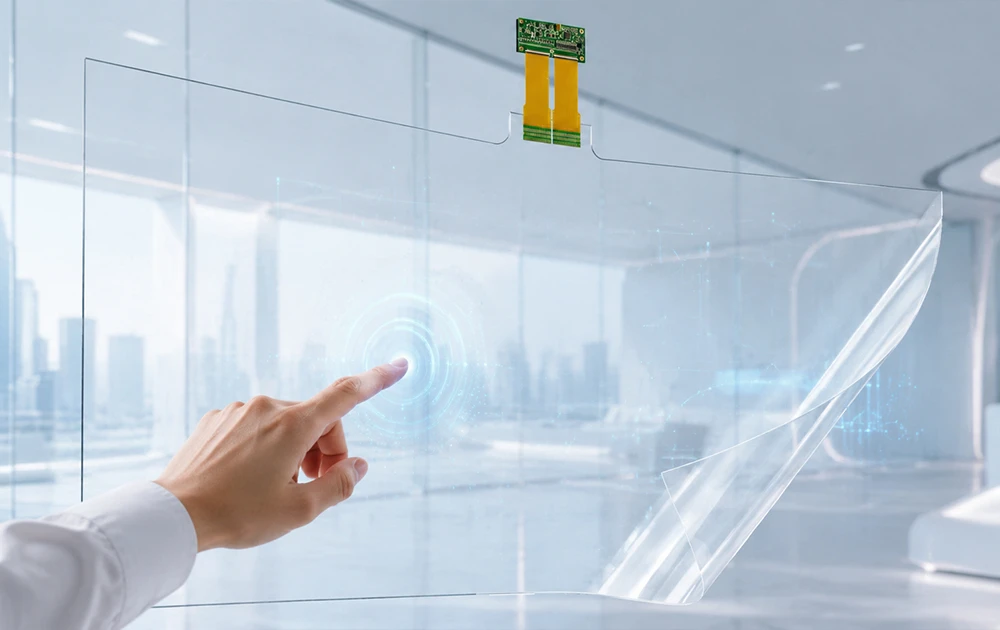
Capacitive Touch Foil Trends 2026: Large-Format Transparent Touch Enters a New Era of Smart Interaction
Learn More



Industrial computers often operate in places where dust, vibration, limited installation space, and long working hours make hardware selection more complicated than choosing a processor and screen size. In a production workshop, a control computer may need to display machine status throughout multiple shifts. Inside an automated cabinet, limited airflow can make heat management a daily concern. For equipment manufacturers, the cooling design of a panel PC can affect maintenance planning, installation flexibility, and long-term operating stability.
A fanless industrial panel PC offers a practical approach to these challenges. By eliminating the cooling fan and using a carefully designed enclosure to dissipate heat, this type of computer reduces the number of moving components and avoids fan-related noise. The Panel Mount Touch Panel PC 10.1-23.8 Inches (3D Series) from GreenTouch combines a fanless structure with an aluminum alloy housing, finned heat dissipation, and projected capacitive touch technology, making it a candidate for industrial control and embedded computing applications.

Traditional active cooling systems use fans to move air through or around internal components. This airflow helps carry heat away from the processor and other electronic parts, but it also introduces moving components that can wear out over time. Dust may accumulate around ventilation openings, and fan noise can become undesirable in quiet workspaces or enclosed equipment.
Passive cooling takes a different approach. Instead of relying on a fan, heat is transferred through internal thermal paths to the enclosure, where the surrounding air helps carry it away. The effectiveness of this design depends on factors such as heat generation, enclosure material, surface area, ambient temperature, and available space around the device.
In industrial panel PCs, the rear enclosure can play an important role in this process. A finned surface increases the area available for heat dissipation, helping the device release heat without forced airflow. However, passive cooling does not eliminate heat; it manages heat through the enclosure and its surrounding environment. Proper installation and sufficient clearance remain important.
For equipment designers, this means that cooling should be considered during the initial mechanical layout rather than after the control computer has been installed. A panel PC placed too close to other heat-producing components or enclosed in a poorly ventilated compartment may face more demanding thermal conditions than one installed with adequate clearance.
The main benefit of a fanless industrial computer is not simply the absence of noise. Its value becomes clearer when the computer is integrated into equipment that must operate consistently over extended periods.
First, removing the cooling fan eliminates a component that may otherwise require inspection or replacement. This can simplify maintenance planning, particularly when the panel PC is installed inside a machine enclosure or in a position that is difficult to access. It does not mean the entire computer is maintenance-free, but it removes one common mechanical wear point.
Second, a fanless structure can reduce the need for airflow openings associated with conventional fan cooling. When combined with a properly sealed enclosure, this can help limit the entry of dust and other contaminants. In applications where fine particles are generated during manufacturing, enclosure protection should be evaluated alongside the cooling design.
Third, lower acoustic output can be useful in laboratories, medical equipment rooms, inspection stations, and other work areas where unnecessary background noise is undesirable.
The GreenTouch 3D Series uses a fully enclosed aluminum alloy structure with a rear finned heat dissipation design. Its integrated construction is intended to support industrial use while avoiding fan noise. The enclosure also provides a solid mounting structure for embedded, wall-mounted, or desktop installations.
Enclosure design has a direct influence on how an industrial panel PC handles heat. Aluminum alloy is widely used in industrial equipment because it combines relatively low weight with useful mechanical strength and thermal conductivity.
The 3D Series features an aluminum alloy bezel and rear cover manufactured using a custom mold and die-casting process. This integrated housing supports the product's structural requirements while providing a surface through which heat can dissipate. The rear fins increase the available heat-transfer area, making the enclosure an active part of the thermal management system.
Mechanical integration still matters. When a panel PC is embedded in a machine, the surrounding panel may restrict airflow around the rear cover. Cables, nearby components, and cabinet walls can also reduce the space available for heat to escape. Equipment designers should therefore review the mounting dimensions and the space behind the display before finalizing the installation.
For wall-mounted or desktop applications, the available space may differ significantly from an embedded installation. A wall bracket or desktop stand should support the device securely without unnecessarily obstructing the rear cooling surface.
When selecting a fanless computer, it is also important to distinguish between the maximum supported operating temperature and the actual temperature inside the installation environment. The Panel Mount Touch Panel PC 3D Series specifies a wide operating temperature range of -20°C to 70°C. System designers should still confirm that the selected configuration, installation conditions, and application workload are suitable for the intended environment.
A fanless enclosure must manage the heat generated by the installed hardware. Processor selection is therefore closely connected to application requirements and thermal planning.
The GreenTouch 3D Series offers Intel® Core™ i3, i5, and i7 processor options. Different configurations can support different levels of computing demand, from straightforward operator interfaces to applications involving more complex software and data processing.
An industrial control interface that mainly displays machine status and accepts operator input may have different requirements from a system running several applications, processing inspection data, or communicating with multiple connected devices. Choosing a processor based on the actual workload helps avoid unnecessary hardware complexity.
Memory and storage should be evaluated in the same way. The listed configurations include 2–8GB of RAM, SSD capacities from 32GB to 256GB, and HDD options from 500GB to 1TB. The appropriate combination depends on the operating system, application software, local data storage, and expected future updates.
For example, a basic machine interface may require less memory and storage than a system that records production information locally or runs several software tools. An SSD can be useful where responsive system access and compact storage are priorities, while an HDD may be considered when greater local storage capacity is required. The final configuration should be confirmed against the available product options and the application's requirements.
Cooling is only one part of industrial computer reliability. Dust, water exposure, electrical interference, mechanical impact, and installation conditions can also influence how well a panel PC performs.
The 3D Series lists IP65 front protection and IK06 impact protection. These specifications address different concerns: IP65 relates to protection against dust and water jets under the applicable test conditions, while IK06 indicates a defined level of mechanical impact resistance. They should not be interpreted as proof that every surface of the complete device can withstand any environmental exposure.
For equipment installed near production processes, the distinction between front protection and whole-enclosure protection is especially important. The front of a panel PC may face cleaning procedures or occasional splashes, while its rear section may be located inside a protected cabinet. The required protection level should be assessed according to the actual installation.
The product also lists EMC anti-interference features. In industrial environments with motors, drives, switching equipment, and communication systems, electromagnetic compatibility is an important consideration. System-level performance depends on proper grounding, cable routing, power quality, and the characteristics of connected equipment, so these factors should be reviewed during integration.
Optional surface treatments include anti-glare (AG), anti-reflective (AR), anti-fingerprint (AF), and antibacterial treatments. These options can be considered according to the working environment and cleaning requirements. Their suitability should be confirmed for the specific configuration rather than assumed to be included as standard.
Fanless panel PCs are useful when equipment requires an integrated display and computer but has limited room for conventional cooling hardware.
In CNC machine tools and specialized machinery, the panel PC can serve as an operator interface for displaying operating information and interacting with compatible control software. The required screen size, mounting method, and communication interfaces depend on the machine design.
On automated production lines, a panel PC may be installed at an inspection station or operator workstation. A fanless structure can help reduce fan-related maintenance, while the aluminum housing provides a compact enclosure for embedded computing.
Smart healthcare equipment and laboratory systems may benefit from quiet operation and a sealed front surface, subject to the application's cleaning, electrical safety, and regulatory requirements. In self-service ticketing machines, retail checkout systems, and ordering terminals, the ability to install the display within a purpose-built cabinet can simplify equipment design.
The 3D Series supports multi-touch operation with projected capacitive technology and offers screen sizes from 10.1 to 23.8 inches. Its available display formats include 16:10, 4:3, 5:4, and 16:9, allowing equipment manufacturers to select a screen format that suits the interface and installation space.
A fanless panel PC should be selected with its mounting arrangement and cable access in mind. The 3D Series supports embedded, wall-mounted, and desktop installation. Rear VESA mounting options include 75 × 75 mm and 100 × 100 mm patterns, depending on the configuration.
Its downward-facing rear connections can help keep cables organized when the unit is installed in suitable positions. Available interfaces include HDMI, VGA, COM, LAN, USB, MIC, AUDIO, and DC IN. The product also features Gigabit Ethernet and built-in 802.11b/g/n Wi-Fi.
Before ordering, equipment manufacturers should verify the exact port configuration, mounting dimensions, power requirements, operating system, and display output options. Cable bend radius and service access should also be considered, particularly in shallow cabinets.
For systems that require a specific communication protocol, software environment, or external peripheral, confirming compatibility before installation can prevent avoidable redesign work.
For OEM equipment projects, product specifications are only one part of the decision. Manufacturing consistency, configuration support, quality management, and communication during integration can also affect project delivery.
ShenZhen GreenTouch Technology Co.,Ltd. specializes in touch products, including touch monitors, touch all-in-one PCs, capacitive and resistive touch screens, and other interactive display solutions. The company reports ISO 9001 quality management system certification and ISO 14001 environmental management system certification, along with product-related certifications including CE, FCC, CB, RoHS, UL, CCC, and HDMI, depending on the applicable product and configuration.
Its manufacturing resources include a Class 1000 dust-free lamination workshop, multiple bonding techniques, and a standard production workshop of approximately 5,000 square meters. The company also reports a team of more than 20 technical engineers and annual development of more than 50 new products.
For industrial customers, these capabilities provide useful starting points when evaluating a supplier. Buyers should confirm the specific certifications, production requirements, available configurations, warranty terms, and technical support applicable to their project.
A fanless industrial panel PC can help reduce fan-related maintenance and operating noise, but reliable operation depends on more than removing a moving component. Thermal design, processor selection, enclosure protection, mounting clearance, and workload planning all need to work together.
The Panel Mount Touch Panel PC 10.1-23.8 Inches (3D Series) combines a fanless aluminum alloy enclosure, rear finned heat dissipation, multiple processor options, projected capacitive multi-touch, and flexible mounting configurations. These features make it worth evaluating for industrial machinery, automation stations, and other integrated computing applications where space and maintenance access matter.
Before choosing a configuration, review the operating environment, required interfaces, mounting dimensions, software workload, and protection requirements. For OEM projects, discussing these details with GreenTouch can help establish whether the selected panel PC matches the equipment's actual operating conditions.
For more product information and configuration details, explore the 3D Series Touch Panel PC and compare its available screen sizes, hardware options, and mounting arrangements with your application requirements.