 RU
RU ZH
ZH IT
IT ES
ES TR
TR JA
JA PT
PT KO
KO FR
FR DE
DE AR
AR ID
ID
Key Benefits of Interactive Touch Foil for Retail, Education, and Public Information Displays
Learn More



For an infrared touch screen, reliable touch detection depends on more than resolution, touch points, or physical durability. The surrounding lighting environment can also affect how consistently the screen recognizes touch input. In locations exposed to strong indoor lighting, sunlight, or changing illumination, optical interference can become a practical concern.
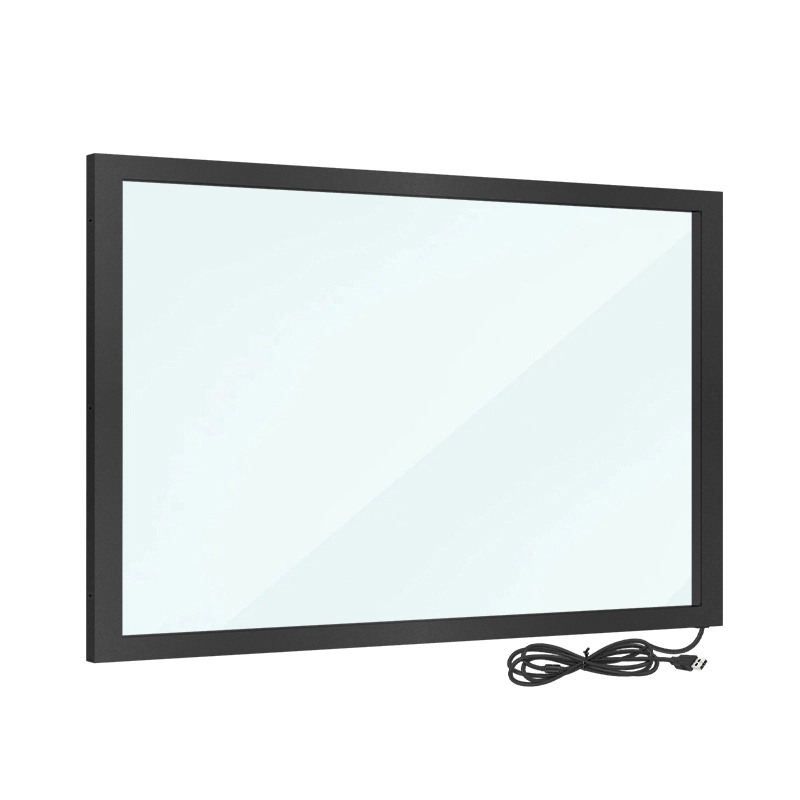
This is why light resistance should be considered when selecting an infrared touch solution. The Infrared Touch Screen 15 to 23.6 Inches (TK Series) is designed with a light resistance of up to 80,000 Lux, helping it maintain reliable touch operation in environments where ambient light may otherwise create challenges for infrared sensing.
Lux is a unit used to describe illuminance, or the amount of visible light reaching a surface. Different environments can have significantly different illuminance levels.
A typical office may have several hundred lux, while a brightly illuminated retail space can reach higher levels. Areas near large windows or exposed to strong daylight can experience substantially stronger illumination.
Infrared touch screens work by using infrared light and sensing interruptions in the infrared field when an object touches the screen. Strong external light can potentially enter the sensing area and interfere with the infrared receivers.
A high light-resistance specification therefore matters because the touch frame needs to distinguish an actual touch event from unwanted optical interference.
The 80,000 Lux specification of the TK Series Infrared Touch Screen provides an important indication of its ability to operate under strong ambient-light conditions. It is particularly relevant when the screen is integrated into equipment installed in bright commercial, public, or semi-outdoor indoor environments.
An infrared touch screen typically uses infrared emitters and receivers positioned around the display area. These components create an invisible infrared grid across the touch surface.
When a finger or another supported object interrupts part of this grid, the controller detects the change and calculates the touch position.
The principle is straightforward, but the surrounding environment can complicate detection. Strong external light contains infrared energy, and if the sensing system is not sufficiently resistant to optical interference, the receiver may detect unwanted signals.
This can lead to problems such as inconsistent touch recognition, missed touches, or reduced stability under particular lighting conditions.
For equipment manufacturers, this means that a touch screen that works well in a controlled office environment may not necessarily perform the same way when installed next to a storefront window, under intense lighting, or in a public facility with changing illumination.
The 80,000 Lux light-resistance capability of the Infrared Touch Screen 15 to 23.6 Inches is particularly useful when the display is installed in environments where lighting cannot be completely controlled.
For example, commercial self-service equipment may be positioned near entrances, windows, or brightly illuminated product areas. Users may approach the screen from different angles while the ambient light changes throughout the day.
In industrial automation, an HMI or control interface may be installed in a production area with strong overhead lighting. The screen needs to remain responsive while operators interact with machinery throughout repeated work cycles.
Transportation equipment and public-service terminals present similar challenges. Displays may be installed in stations, ticketing areas, information kiosks, or other locations where lighting conditions vary considerably.
Healthcare equipment can also benefit from stable touch recognition when the display is used in rooms with bright task lighting or near windows.
The key point is that light resistance is not simply a laboratory specification. It becomes relevant when the screen is installed in a real environment where lighting conditions are difficult to control.
Optical performance is only one part of a touch screen intended for professional equipment. The physical construction also needs to match the application.
The TK series uses 3mm tempered glass coverage combined with an aluminum frame. This structure provides a solid touch surface for equipment that may experience frequent interaction.
Tempered glass is particularly useful for self-service terminals, industrial equipment, public interfaces, and other applications where users interact with the screen repeatedly.
The aluminum frame also provides structural support. The housing uses an industrial aluminum alloy stretch-forming process, while the surface is treated with high-temperature black metal powder spraying. This helps create a durable finish that is suitable for equipment integration.
The frame has a shell thickness of only 8mm, allowing the touch screen to be incorporated into relatively compact equipment designs.
The TK series supports 10-point multi-touch, giving equipment designers more options when developing interactive interfaces.
For a basic control panel, a single touch may be enough. However, more advanced interfaces can benefit from multi-touch input for functions such as zooming, scrolling, selecting multiple elements, or operating software designed for touch interaction.
This is useful for commercial self-service terminals as well as industrial control systems where operators may need to interact with multiple interface elements.
The screen supports a resolution of up to 32768×32768 for touch positioning, providing precise coordinate detection across the touch area.
Another practical consideration for OEM and equipment manufacturers is how easily the touch screen can be connected to the host system.
The TK Series uses a USB 2.0 full-speed interface and supports plug-and-play operation without requiring a dedicated touch driver in typical supported configurations.
The USB connection provides a transmission speed of up to 480 Mbps. The product also uses an aluminum alloy USB plug, designed for repeated equipment integration.
For system integrators, driver-free operation can reduce one potential source of installation complexity. Instead of developing a separate driver solution for each installation, the touch interface can work with supported mainstream operating systems through its driver-layer adaptation.
Operating system compatibility is another important issue when selecting an infrared touch screen.
The TK series supports Windows, Android, and Linux systems. This allows the same touch technology to be considered for different types of host equipment.
For example, Windows may be selected for industrial PCs and traditional automation equipment, while Android can be used in commercial self-service devices and information terminals. Linux compatibility can be useful for embedded systems and specialized industrial applications.
Before deployment, equipment manufacturers should still verify the exact operating system version, hardware interface, application software, and touch protocol requirements of their project.
The TK series is available in several sizes from 15 to 23.6 inches, including 15, 15.6, 17, 18.5, 19, 21.5, 22, and 23.6 inches.
The available aspect ratios include 4:3, 16:9, 5:4, and 16:10.
This variety is useful when replacing an existing display or designing a new equipment enclosure. The screen size should be selected according to the available installation opening, viewing distance, interface layout, and required display ratio.
For older industrial equipment, 4:3 or 5:4 sizes may be more suitable for matching an existing panel opening. Newer commercial equipment may benefit from 16:9 models because many modern interfaces and video contents use widescreen layouts.
Choosing the correct size before mechanical design is important because the mounting structure and viewing window need to match the touch screen dimensions.
The TK series uses LED infrared receiving components designed for stable operation, with a stated service life of up to 60,000 hours for the infrared receiving tube.
For equipment manufacturers, component life matters because replacing a touch interface can require removing the entire equipment panel. A touch screen designed for long-term operation can therefore help reduce maintenance requirements when correctly matched to the operating environment.
However, service life should always be considered together with operating temperature, installation conditions, usage frequency, power supply, and other system-level factors.
The Infrared Touch Screen 15 to 23.6 Inches (TK Series) is designed for more than desktop-style interactive displays.
Its combination of high light resistance, tempered glass, aluminum construction, multi-touch capability, and broad operating-system compatibility makes it suitable for a range of equipment applications.
Typical applications include industrial control and automation, commercial self-service equipment, public-service terminals, healthcare equipment, transportation systems, and other embedded touch interfaces.
In each case, the selection should begin with the actual operating environment. If the display will be exposed to strong ambient light, the 80,000 Lux light-resistance specification becomes an important selection factor. If the equipment requires frequent physical interaction, the 3mm tempered glass and aluminum frame become more relevant. If software compatibility is a priority, Windows, Android, and Linux support can simplify system planning.
ShenZhen GreenTouch Technology Co.,Ltd. specializes in touch products and related interactive display solutions, including capacitive and resistive touch screens, infrared touch frames, nano touch foil, touch monitors, all-in-one PCs, and digital signage.
The company operates a fully enclosed dust-free workshop and a fully automated production line. Its quality management system has obtained ISO9001 and ISO14001 certifications, while its products have obtained certifications including CE, FCC, CB, RoHS, UL, CCC, and HDMI.
Its R&D team includes more than 20 technical engineers, with over 50 new products developed annually and more than 10 annual patents. The company also operates a 5,000-square-meter standard production workshop with a daily production capacity of more than 600 touch panels.
For OEM and equipment integration projects, these manufacturing capabilities are relevant when a touch interface needs to be supplied consistently across multiple equipment models or production batches.
Light resistance is an important specification that should not be overlooked when selecting an infrared touch screen. In environments with strong ambient illumination, the ability to maintain reliable infrared detection can directly affect the usability of the finished equipment.
The Infrared Touch Screen 15 to 23.6 Inches (TK Series) combines up to 80,000 Lux light resistance with 10-point multi-touch, 3mm tempered glass, an aluminum frame, USB plug-and-play connectivity, and Windows, Android, and Linux compatibility.
For industrial controls, self-service terminals, public equipment, healthcare devices, transportation systems, and other touch-enabled equipment, these specifications provide practical advantages during both product design and system integration.
When choosing an IR touch screen, buyers should therefore evaluate not only screen size and touch points, but also ambient lighting, mechanical structure, operating system compatibility, connection method, and expected operating conditions. With its range of sizes and integration-focused design, the TK Series provides a flexible option for equipment manufacturers looking for a stable infrared touch interface.