 ZH
ZH IT
IT ES
ES TR
TR JA
JA PT
PT KO
KO RU
RU FR
FR DE
DE AR
AR ID
ID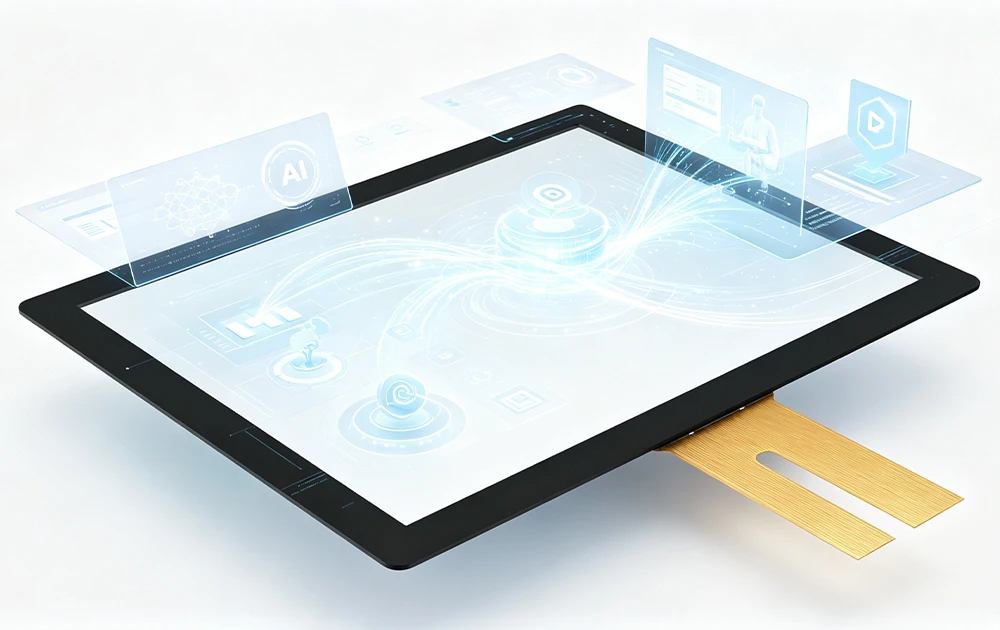
The Deep Integration of touch screen and AI: A Trend Forward
Learn More



When buyers evaluate interactive display technology, they often start with hardware categories they already know: touch monitors, kiosks, digital signage screens, or all-in-one systems. Those products still have their place, but in many modern projects, the real need is different. The goal is not always to add another piece of display hardware. The goal is often to make an existing glass, acrylic, or transparent surface more useful, more engaging, and more responsive to users.
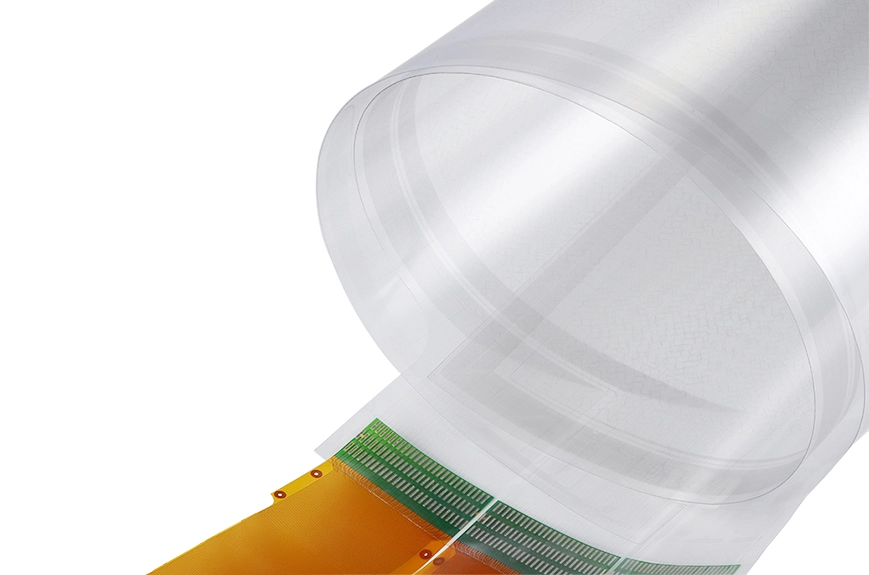
That is where Interactive Touch Foil becomes especially valuable. For retail, education, and public information displays, it offers a way to add interactive functionality without forcing the project into a conventional framed screen structure. This is important because these three application areas all share one common challenge: they need to communicate clearly with users in spaces where visibility, usability, and installation flexibility all matter.
Interactive touch foil helps solve that challenge by turning surfaces into touch interfaces while preserving a cleaner and more adaptable display design.
Retail, education, and public information environments are different in purpose, but they have similar display demands. Each one needs to present information in a way that is easy to understand and simple to engage with. At the same time, the display often has to fit a specific physical environment rather than sit inside a standard device housing.
In retail, displays are often part of storefront design or branded customer experience.
In education, they may be built into classrooms, presentation boards, or training areas.
In public information systems, they are often placed in open spaces, service areas, or guidance points where visibility and access are critical.
This is why interactive touch foil works well across these sectors. It is not limited to one fixed monitor format. GreenTouch Technology’s touch foil products can be applied to glass, acrylic, and polycarbonate, which are already common materials in these spaces. That makes the foil a flexible tool for upgrading existing display surfaces rather than replacing them.
Retail buyers care about more than touch response. They care about customer attention, brand presentation, and how the display fits into the store environment. A standard framed touch display can sometimes solve the interaction problem, but it may introduce a visible hardware look that does not fit premium retail design.
Interactive touch foil changes this by allowing glass or transparent surfaces to become interactive while keeping a more integrated visual style. A storefront window, product showcase, or acrylic promotional board can become a customer-facing interface without turning into a conventional monitor.
In practice, this helps retail projects do more with the same space. A display surface can support:
That creates a stronger role for the display in the sales process. Instead of only showing messages, it allows the customer to interact with them.
Retail environments often rely on glass because it feels open, modern, and brand-friendly. But glass is usually underused as a communication tool. Once interactive touch foil is added, the same glass surface can support targeted interaction without changing the architectural feel of the store.
This is especially useful for:
GreenTouch Technology’s interactive touch foil features support this type of work well. The product uses ultra-thin 0.2 mm transparent PET film, offers transmittance of at least 93 percent, and supports a frameless integrated effect. That means the retail surface can remain visually strong while becoming more functional.
For store operators, this is valuable because it improves engagement without overcrowding the space with additional display hardware.
Education projects often need displays that support explanation, collaboration, and content sharing. But not every environment is built around a standard interactive whiteboard. Some schools, training centers, and internal learning spaces want more flexibility in how interactive surfaces are used.
Interactive touch foil is helpful here because it can be applied to different materials and sizes, from smaller instructional panels to much larger collaborative surfaces. GreenTouch Technology’s touch foil range includes:
This wide range gives education buyers more freedom to choose based on how the teaching space is actually used. A smaller surface may suit a training podium or compact lesson area. A larger foil may support collaborative classroom interaction or a wide demonstration wall.
The benefit is not only size variety. It is the ability to build interaction into the physical teaching environment instead of relying only on standard hardware formats.
Large educational and training displays are often used by more than one person at a time. That is why multi-touch capability matters. GreenTouch Technology’s interactive touch foil uses Interactive PCAP with 40-point touch, which is useful in learning spaces where multiple users may interact with the content together.
This helps in situations such as:
In these cases, the value of touch foil is not just that it makes the display interactive. It supports a more participatory learning style. Instead of passively watching a screen, users can become part of the information flow.
Public information displays need to be easy to understand without explanation. Whether the setting is a transport hub, government service point, hospital lobby, exhibition center, or visitor guidance zone, the screen has to support direct communication with many different users.
Interactive touch foil helps because it allows public-facing surfaces to become touch-enabled without always requiring a traditional kiosk enclosure. This can be useful when the project needs:
In these environments, a standard screen may work, but it may not always fit the visual or structural requirements of the site. Touch foil gives designers and system integrators more freedom to create information points that are both accessible and space-efficient.
Public display projects have a practical challenge that cannot be ignored: they are used often and by many people. This means touch performance alone is not enough. The system also needs to stand up to repeated contact, cleaning, and general exposure.
GreenTouch Technology’s touch foil highlights features that are important for public use:
These points matter because public information displays are rarely installed in ideal low-contact conditions. A supplier that supports these features is better aligned with real commercial and civic deployment.
This makes touch foil more viable in:
For public applications, the benefit is practical reliability as much as visual design.
Retail, education, and public information projects often involve custom environments rather than standard device racks. Buyers are working with walls, windows, counters, partitions, or architectural surfaces. In these situations, installation flexibility becomes a real advantage.
Interactive touch foil offers that flexibility because it can adapt to the surface rather than forcing the project to adapt to the product. GreenTouch Technology also supports customization in:
This gives project teams more control over both performance and presentation. Instead of asking whether a standard touch monitor will fit the environment, they can plan around the environment itself and make the touch layer match it more naturally.
One of the less obvious but very important benefits of touch foil is visual continuity. In retail, that means protecting the brand environment. In education, it means reducing hardware distraction. In public information spaces, it means keeping the design clear and easy to follow.
Because GreenTouch’s foil supports transparent integration, anti-glare performance, and no-frame installation effects, it helps preserve the visual language of the space. This can make the final project feel more modern and more intentional than a setup built around added-on hardware.
For many buyers, that alone is a strong reason to consider touch foil over more conventional display structures.
Retail, education, and public information projects often involve rollout logic. A buyer may start with one installation, then expand to additional sites. That makes supplier consistency important.
GreenTouch Technology is a professional manufacturer of touch products, including capacitive touch screens, resistive touch screens, infrared touch frames, nano touch foil, touch screen monitors, touch all-in-one PCs, advertising digital signage, conference touch all-in-one PCs, teaching all-in-one PCs, and advertising machines. The company has its own trademark, a fully automatic production line, and a fully enclosed dust-free workshop.
GreenTouch Technology also operates under ISO9001 quality management system certification and ISO14001 environmental management system certification. Its products are controlled under strict quality procedures and have obtained CE, FCC, CB, RoHS, UL, CCC, and HDMI certifications. For buyers, this matters because project success in these sectors depends not only on one good sample, but on reliable ongoing execution.
The key benefits of interactive touch foil for retail, education, and public information displays come from its ability to make existing surfaces more useful without making them more complicated. It helps retail displays become more engaging, education spaces become more collaborative, and public information systems become more accessible.
At the same time, it supports cleaner design, flexible installation, broad size coverage, multi-touch interaction, and practical durability. That combination is why interactive touch foil is becoming a stronger option for buyers who need more than a conventional touch screen.
When the project calls for interaction that fits naturally into the space, rather than sitting on top of it, touch foil can be a very effective solution.