 RU
RU ZH
ZH IT
IT ES
ES TR
TR JA
JA PT
PT KO
KO FR
FR DE
DE AR
AR ID
ID
How to Choose a Reliable Resistive Touch Screen Manufacturer for OEM Projects
Learn More



Digital signage has become a practical tool for businesses that need to communicate promotions, product information, menus, membership offers, and brand messages directly at physical locations. However, the requirements for a display installed in a retail store are different from those for a supermarket aisle, restaurant entrance, elevator lobby, or cashier area.
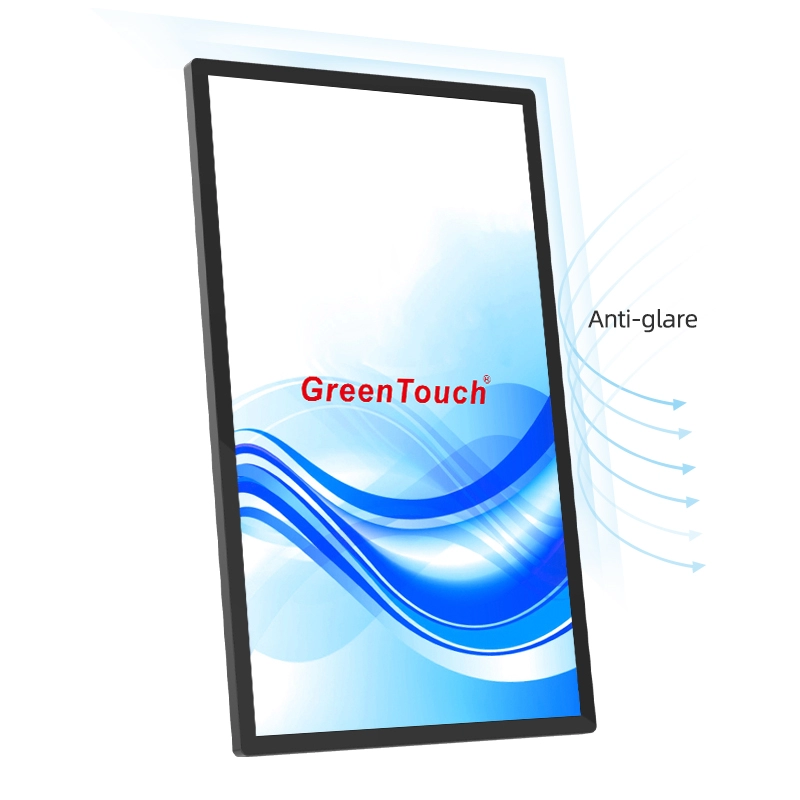
The Ultra-thin Digital Signage 32-65 Inches (7A-G Series) is designed for these offline commercial scenarios. Available in 32, 43, 50, and 65-inch sizes, the series combines a 28mm ultra-thin body, zero-distance wall mounting, high-color-gamut display, Android operating systems, and remote content publishing. These features make it suitable for businesses that need a wall-mounted display without taking up unnecessary space.
Screen size is one of the first decisions when purchasing digital signage, but bigger is not always better. The correct size depends on viewing distance, available wall space, content type, and the amount of visual attention the display needs to attract.
A 32-inch display can work well in relatively compact locations, such as cashier areas, smaller retail stores, service counters, or narrow indoor spaces. It provides enough screen area for promotional messages while keeping the installation footprint manageable.
The 43-inch size offers a practical balance for chain stores, restaurants, entrances, and general retail environments. It can display promotional graphics, product information, menus, and membership campaigns without requiring a large installation area.
A 50-inch display is more suitable when content needs to remain visible from a greater distance, such as supermarket aisles, larger retail areas, or brand display zones.
For larger spaces and prominent advertising locations, a 65-inch screen can provide a stronger visual presence. It is particularly useful for large storefronts, spacious entrance areas, and locations where viewers may be several meters away.
Therefore, when selecting from a 32-65 inch digital signage range, buyers should consider the actual viewing environment rather than choosing the largest available size.
Installation space is often overlooked during digital signage selection. A conventional display can project noticeably from the wall, which may affect the appearance of a store or create unnecessary obstacles in narrow areas.
The 7A-G Series Digital Signage is only 28mm thick. Its ultra-thin structure supports zero-distance wall mounting, allowing the display to sit closely against the wall.
This design can be particularly useful in brand windows, elevator lobbies, restaurant front halls, and supermarket aisles where every centimeter of usable space matters.
A close-to-wall installation also gives the display a cleaner appearance. Instead of looking like a separate electronic device attached to the wall, the screen can form a more integrated part of the commercial environment.
For businesses operating multiple stores, this can also contribute to a consistent visual presentation across different locations.
Resolution should be considered together with screen size and viewing distance.
The 7A-G Series supports UHD 4K or Full HD 1920×1080 configurations. Full HD can be sufficient for many advertising applications where viewers are not positioned very close to the screen and the content consists mainly of text, promotional graphics, menus, and standard video.
UHD 4K becomes more useful when the display is larger or when the content contains fine details. Product photography, high-resolution promotional videos, detailed graphics, and brand visuals can benefit from greater image detail.
Buyers should therefore evaluate the type of content they intend to display instead of assuming that higher resolution is always necessary. For a compact 32-inch installation viewed from a short distance, Full HD may meet the practical requirement. For a large 65-inch screen displaying detailed product imagery, 4K can provide a more suitable viewing experience.
Digital signage is often used to present visual content where color accuracy has a direct impact on how the message is perceived. Restaurant food images, fashion products, brand graphics, promotional banners, and product photography all depend on convincing color reproduction.
The 7A series supports a color depth of 1.07 billion colors and 90% NTSC high-color-gamut performance. This allows the display to reproduce a broader range of colors and helps reduce visible color banding in suitable content.
For commercial users, the practical benefit is straightforward: the screen can present promotional materials with more natural and detailed color reproduction.
This is particularly relevant when the signage is part of a brand's visual identity. If corporate colors, product images, or promotional graphics are displayed inaccurately, the overall presentation may look inconsistent. A display with stronger color performance can help maintain a more polished visual effect.
The physical environment should influence both screen size and installation configuration.
In a brand storefront, digital signage can be used to display seasonal campaigns, new products, promotional videos, or brand messages. A slim wall-mounted structure helps preserve the available display area around the screen.
In chain stores, the same signage format can be deployed across multiple locations for consistent promotional communication. Remote publishing is particularly useful when different stores need to receive updated content without manually replacing files at each location.
Supermarkets can use displays in aisles to promote products, discounts, membership programs, or category information. Depending on aisle width and viewing distance, 43, 50, or 65 inches may be appropriate.
Restaurants can use digital signage near entrances or front halls for menus, promotional combinations, seasonal campaigns, and membership information. The ability to switch between portrait and landscape orientation also provides flexibility for different content layouts.
Elevator lobbies and cashier areas are other useful locations because customers often spend time waiting or completing transactions. These locations can benefit from targeted content that is relevant to customers at that specific point in their journey.
The shape of the content should influence screen orientation.
Portrait displays are often useful for posters, product advertisements, promotional announcements, menus, and vertically designed social-media-style content. They also work well when wall space is narrow but tall.
Landscape orientation is more suitable for wide-format videos, product demonstrations, corporate presentations, and traditional advertising layouts.
The 7A series supports gravity sensing, allowing the screen to switch between landscape and portrait orientations. This gives commercial operators more flexibility when changing installation layouts or advertising content.
Instead of purchasing separate hardware for different orientations, businesses can use the same display platform for different content formats, provided the installation and content configuration support the intended mode.
Managing digital signage becomes more complicated when a company operates multiple stores.
Manually updating a USB drive at every location may be acceptable for a single screen, but it becomes inefficient when dozens or hundreds of displays need updated content.
The 7A series comes with an information publishing system and supports remote program publishing. Users can manage advertising content across locations, arrange split-screen playback, combine multiple media formats, and schedule playback periods.
Time-segmented playback can also be useful for businesses with different messages throughout the day. For example, a restaurant could display breakfast-related content in the morning, lunch promotions around midday, and dinner promotions later in the day.
Timed power-on and power-off functions can further help align equipment operation with business hours.
The operating system is another factor buyers should confirm before purchasing digital signage. The 7A series supports Android 11, 12, 13, and 14 configurations.
The appropriate version may depend on the software environment and content management requirements of the project. Businesses should consider the applications they intend to run, the publishing system they use, and any compatibility requirements before finalizing the configuration.
For integrators and commercial display buyers, confirming the required Android version during the specification stage can help avoid compatibility issues during deployment.
The display uses a tempered glass panel combined with a black metal shell, providing a structure suited to commercial environments.
The surface can also be configured with different treatments, including AG, AF, AR, or mirror-face options. The appropriate treatment should be selected according to the installation environment and viewing requirements.
For example, an environment with noticeable reflections may require a different surface treatment from a controlled indoor retail display. Buyers should therefore consider ambient lighting, nearby windows, overhead lighting, and the expected viewing position before selecting the final surface configuration.
The 178° ultra-wide viewing angle also helps maintain a usable image when viewers approach the screen from different directions, which is useful in stores, aisles, and public areas where people do not always stand directly in front of the display.
Before purchasing 32-65 inch wall-mounted digital signage, buyers should prepare several basic specifications.
First, determine the preferred screen size according to viewing distance and installation space.
Second, confirm whether Full HD or 4K is more appropriate for the planned content.
Third, determine whether portrait, landscape, or both orientations are required.
Fourth, confirm the Android version and content publishing requirements.
Fifth, check whether remote advertising management is required across multiple locations.
Sixth, consider the appropriate surface treatment based on lighting and reflection conditions.
Finally, verify the physical installation requirements. For a 28mm ultra-thin display intended for zero-distance wall mounting, the wall structure, mounting method, cable routing, and maintenance access should be considered before installation.
ShenZhen GreenTouch Technology Co.,Ltd. is a professional manufacturer specializing in touch products and commercial display solutions, including advertising digital signage, touch screen monitors, capacitive and resistive touch screens, infrared touch frames, nano touch foil, and all-in-one PCs.
The company operates a fully enclosed dust-free workshop and a fully automated production line. It has obtained ISO9001 and ISO14001 certifications and holds national high-tech and Shenzhen high-tech enterprise qualifications.
Its manufacturing and R&D capabilities include more than 20 technical engineers, over 50 new products developed annually, and more than 10 annual patents. The company also operates a 5,000-square-meter standard production workshop, with a daily production capacity of more than 600 touch panels.
For digital signage projects, this manufacturing background is useful because commercial deployments often require more than a display itself. Product consistency, configuration options, production capacity, certification, and long-term supply all influence the feasibility of multi-unit projects.
Selecting commercial digital signage should begin with the actual installation and advertising requirements rather than screen size alone. Viewing distance, available wall space, content resolution, orientation, color performance, operating system, content management, and surface treatment all affect the final configuration.
The Ultra-thin Digital Signage 32-65 Inches (7A-G Series) provides 32, 43, 50, and 65-inch options, with a 28mm ultra-thin structure designed for zero-distance wall mounting. Support for UHD 4K or Full HD, 1.07 billion colors, 90% NTSC color gamut, Android 11-14, gravity sensing, remote publishing, split-screen playback, and scheduled operation makes the series adaptable to different commercial environments.
For retailers, restaurants, supermarkets, chain stores, and other offline businesses, Ultra-thin Digital Signage 32-65 Inches can provide a practical way to deliver dynamic content while keeping the installation clean and space-efficient. With its display manufacturing capabilities and broader touch-product experience, ShenZhen GreenTouch Technology Co.,Ltd. can support commercial display projects that require consistent hardware and configurable digital signage solutions.