RU
 ZH
 IT
 ES
 TR
 JA
 PT
 KO
 FR
 DE
 AR
 ID
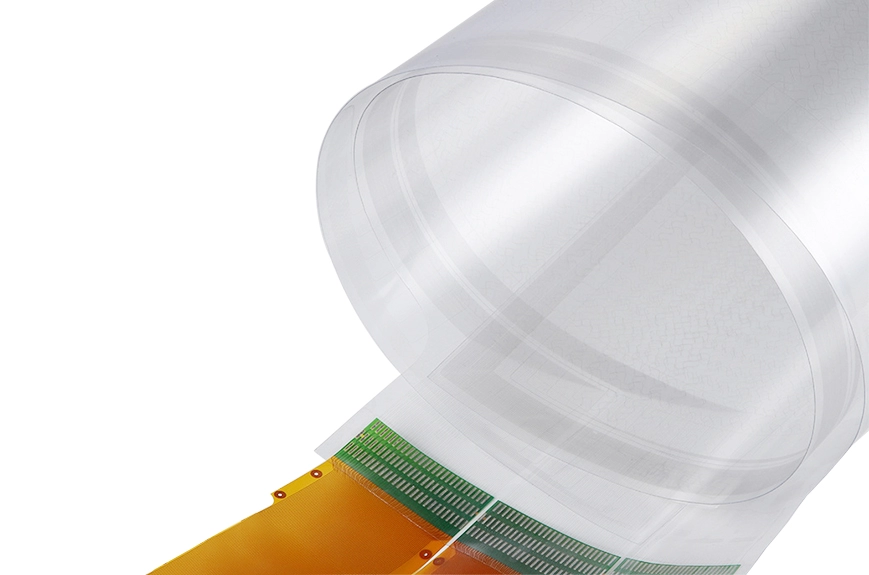
Key Benefits of Interactive Touch Foil for Retail, Education, and Public Information Displays
Learn More



Large interactive displays are often installed in locations where shutting down equipment for maintenance can interrupt daily operations. A classroom interactive display may be used throughout several teaching sessions, while a public information terminal or commercial presentation screen may remain available for long periods. In these applications, the reliability of the touch frame is just as important as the display itself.
For infrared touch technology, the performance of the LED components is one factor worth examining when evaluating long-term operation. These components form part of the infrared sensing system, helping detect interruptions in the light beams when a user touches the screen. Their operating life can influence maintenance planning and the expected service requirements of the touch frame.
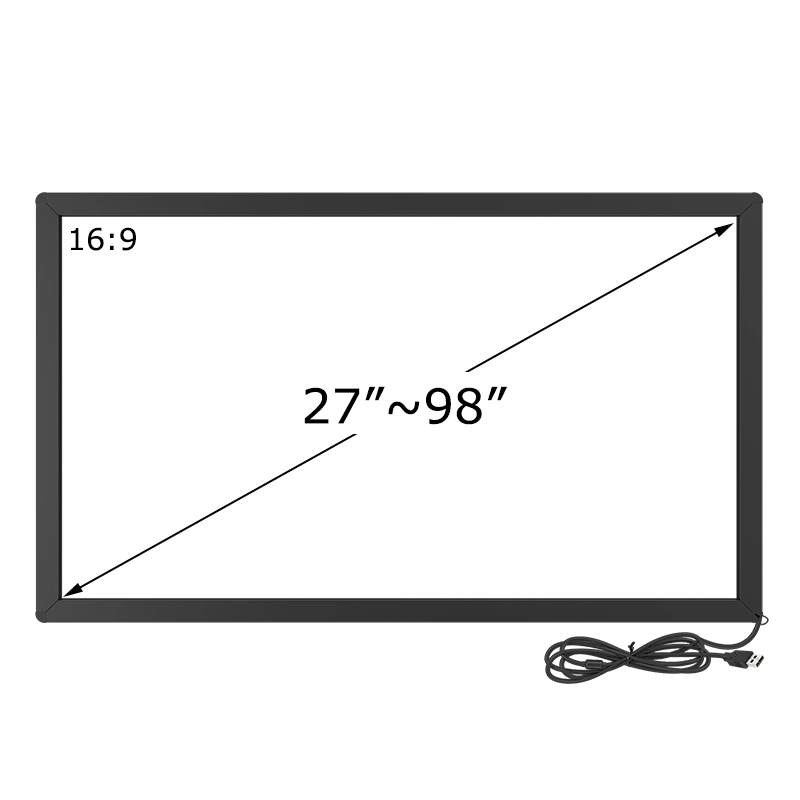
The Infrared Touch Frame 27 to 98 Inches (TB Series) from GreenTouch uses LED infrared receiving tubes with a stated lifespan of 60,000 hours. Combined with a durable aluminum alloy enclosure, stable touch sensing, and USB connectivity, the TB series is designed for large-screen interactive applications that require consistent touch input over extended operating periods.
The 60,000-hour figure refers to the stated lifespan of the LED infrared receiving tube used in the TB series. It is an important component specification, but it should not be confused with a guaranteed operating life for the entire touch frame.
An infrared touch frame typically uses infrared components arranged along the edges of the display. These components create an invisible sensing field across the screen. When a finger or another object interrupts the infrared beams, the controller identifies the affected coordinates and registers the touch input.
The LEDs and receiving components therefore play a direct role in the sensing process. Their stability is relevant to the frame's ability to maintain consistent touch detection during extended use.
For buyers evaluating a large interactive display, a 60,000-hour component lifespan provides a useful reference when comparing hardware specifications. It can also support preliminary maintenance planning. However, actual service life depends on operating temperature, power conditions, installation quality, environmental exposure, and the condition of other electronic components.
A sensible evaluation should consider the LED specification alongside the controller, electrical connections, enclosure design, and the conditions in which the touch frame will operate.
Infrared touch frames rely on a coordinated sensing structure rather than a single touch-sensitive surface. Infrared beams travel across the active display area, and the system detects changes when an object enters the sensing field.
If the sensing components become unstable, users may experience inconsistent touch response. Depending on the cause, symptoms can include missed inputs, interrupted touch recognition, or inaccurate coordinate detection.
In a system used occasionally, these issues may be noticed less frequently. In a classroom, meeting room, public terminal, or industrial control environment, however, repeated touch interactions make stable sensing more important.
The TB series is designed with an advanced chip and LED infrared receiving tubes intended to support stable performance. Its product specifications also highlight sensitive touch response, no disconnection, no ghosting, and no drift under appropriate operating conditions.
These characteristics should be evaluated as part of the complete sensing system. LED lifespan is one element; signal processing, alignment, electrical connections, and installation quality also affect the final touch experience.
A long component lifespan can be useful when planning equipment maintenance, especially when touch frames are installed in locations that are difficult to access.
Consider a large display mounted in a public information area or integrated into a commercial presentation system. Reaching the touch frame may require removing part of the display assembly or arranging access outside normal operating hours. In these situations, buyers need to consider not only the initial installation but also the effort involved in inspection and servicing.
The stated 60,000-hour LED lifespan gives system integrators a reference point for understanding the expected operating characteristics of the infrared components. It can help them compare alternative products and discuss maintenance requirements with equipment operators.
However, it should not be used as a direct replacement interval. The actual inspection schedule should account for the full installation environment, including operating temperature, power supply stability, dust exposure, humidity, and the frequency of use.
For projects with extended daily operation, it is also useful to establish a basic maintenance procedure. This may include checking USB connections, inspecting the frame alignment, confirming touch response across the display area, and looking for visible damage to the enclosure or connecting cables.
Electronic component specifications are only part of long-term reliability. The physical structure of an infrared touch frame also affects how well it withstands everyday use.
The TB series uses an aluminum alloy shell with a streamlined design and a thickness of approximately 14 mm. Aluminum provides a rigid enclosure while keeping the frame relatively compact. It is also resistant to rust under normal use, making it suitable for a range of indoor commercial and industrial installations.
The surface features a black brushed sandblasted finish. This treatment gives the frame a consistent appearance and is designed to resist peeling and color loss during regular use.
For large interactive displays, the frame needs to remain properly positioned around the screen. Mechanical deformation, loose connections, or incorrect alignment can affect the sensing field even when the infrared components themselves remain functional.
A well-fitted enclosure helps protect the internal structure and maintain the intended arrangement of the sensing components. During installation, the frame should be secured according to the supplied instructions, with each side correctly aligned and connected.
Long-term operation also depends on reliable communication between the touch frame and the host device. The TB series uses a USB 2.0 full-speed interface and supports plug-and-play operation without requiring a separate driver under supported system configurations.
The product information specifies a transmission speed of up to 480 Mbps. It also describes an aluminum alloy USB plug and a recognition time stated to be three times faster than a regular USB plug.
For equipment integrators, USB connectivity simplifies the connection between the infrared frame and the computer or control system. It reduces the need for a separate touch interface and makes installation more straightforward.
The TB series supports Windows, Android, and Linux. This compatibility is useful for projects where the display hardware may be connected to different types of host systems, including classroom computers, commercial media players, and industrial control equipment.
Before deployment, the selected operating system and host hardware should still be tested with the intended application. USB port availability, system configuration, cable routing, and the software environment can all influence the final installation.
The TB series supports up to 20 simultaneous touch points, making it suitable for interactive applications involving multiple fingers or users.
In education and training, multiple touch points can support collaborative activities on a shared display. In commercial presentations, they allow users to interact with diagrams, product information, and other visual content. Public information terminals can also use multi-touch input to support navigation through interactive interfaces.
The system provides a touch resolution of 32768 × 32768. This coordinate resolution offers a detailed digital representation of touch positions across the active area. It should be understood as a system coordinate specification rather than a direct measurement of physical accuracy.
For consistent multi-touch performance, the frame must be correctly assembled and positioned. The infrared sensing area needs to align with the active display region, and the four frame strips must maintain reliable electrical connections.
The TB Series infrared touch frame combines 20-point multi-touch capability with a high-resolution coordinate system and LED-based infrared sensing. These features give equipment manufacturers a practical starting point for designing large interactive systems that require responsive input.
The TB series consists of four infrared touch frame strips. Each strip has a corresponding connection position identified as AA, BB, CC, or DD. Correct assembly is important because the four sides work together to create the infrared sensing field.
During installation, users should connect the corresponding strips according to the instructions. The cable must be fully inserted into the connecting PIN socket before the safety buckle is fastened. This helps ensure that the cable contacts are properly seated and maintain electrical conductivity.
After assembly, the USB cable can be connected to the host device. The product instructions recommend waiting approximately 10 seconds before performing the touch test. During this test, the frame should be placed flat to check whether touch input is detected correctly.
These steps may appear simple, but they are important for avoiding problems caused by incomplete connections or incorrect assembly. If one side is not properly connected, the sensing system may not perform as expected.
For large displays, installation teams should also check the frame's position relative to the active screen area. Correct alignment helps ensure that the touch coordinates correspond to the intended display locations.
The TB series is available in standard sizes ranging from 27 inches to 98 inches, with additional custom sizing options listed for larger projects. Its application range includes education and training, commercial presentations, advertising, public information services, industrial control, automation, entertainment, and interactive games.
Different environments create different demands. A classroom may require frequent multi-user interaction, while an industrial control terminal may prioritize stable input and compatibility with an existing host system. A commercial display may need to remain accessible throughout business hours.
In each case, the selection process should consider the active display dimensions, daily operating schedule, installation conditions, touch-point requirements, and host operating system.
The Infrared Touch Frame 27 to 98 Inches (TB Series) provides multiple standard sizes, 20-point touch, Windows/Android/Linux compatibility, and LED infrared components with a stated 60,000-hour lifespan. These specifications help buyers assess whether the product is suitable for their intended interactive display project.
Choosing an infrared touch frame also involves evaluating the manufacturer's production capabilities and quality management practices. Consistent assembly, component control, and technical support are important when integrating touch hardware into commercial or industrial equipment.
ShenZhen GreenTouch Technology Co.,Ltd. is a professional manufacturer of touch products, including capacitive and resistive touch screens, infrared touch frames, nano touch foil, touch monitors, touch all-in-one PCs, and digital signage products.
The company operates an automatic production line and a fully enclosed dust-free workshop. It has passed ISO 9001 quality management system and ISO 14001 environmental management system certification. Its product certification portfolio includes CE, FCC, CB, RoHS, UL, CCC, and HDMI-related certifications for applicable products.
GreenTouch reports more than 20 patent certificates, over 30 computer software copyrights, and more than 60 other certificates. Its R&D team includes more than 20 technical engineers and develops over 50 new products annually.
The company's manufacturing facilities include a 5,000 m² standard production workshop and touch panel production capacity of more than 600 units per day. It also operates warehouse facilities in Huizhou and Shenzhen, with a combined area of 2,000 m² and storage capacity for 20,000 standard-stock pieces.
These capabilities support the company's work across different touch technologies and product configurations, including infrared touch frames for large interactive displays.
A 60,000-hour LED lifespan is a useful specification when evaluating an infrared touch frame, but it should always be considered alongside the complete system design. The condition of the controller, USB connection, frame alignment, electrical environment, and installation quality all contribute to long-term performance.
The Infrared Touch Frame 27 to 98 Inches (TB Series) combines LED infrared receiving tubes with a stated 60,000-hour lifespan, 20-point multi-touch, 32768 × 32768 touch resolution, and a durable aluminum alloy enclosure. Its USB 2.0 interface and support for Windows, Android, and Linux also make it adaptable to a range of interactive display projects.
For buyers and system integrators, the best approach is to evaluate component specifications together with the actual operating schedule, environment, and maintenance requirements. This provides a more realistic basis for selecting touch hardware and planning long-term equipment operation.
For project-specific size, compatibility, or integration requirements, contact ShenZhen GreenTouch Technology Co.,Ltd. to discuss the TB Series infrared touch frame and its suitability for your large-screen interactive display.