 RU
RU ZH
ZH IT
IT ES
ES TR
TR JA
JA PT
PT KO
KO FR
FR DE
DE AR
AR ID
ID
43 Inch to 180 Inch Interactive Touch Foil: How to Choose the Right Size for Your Application
Learn More



In industrial environments, touch screens are exposed to conditions that are far more demanding than those found in offices or retail spaces. Dust, moisture, vibration, temperature fluctuations, continuous operation, and frequent user interaction all place significant stress on display equipment. As a result, choosing the right touch solution has become an important decision for equipment manufacturers, system integrators, and industrial automation companies.
Modern Capacitive Touch Screen products ranging from 23.6 to 65 inches have become a preferred solution for industrial applications due to their excellent durability, responsive touch performance, and long service life. However, not every industrial touch screen delivers the same level of reliability. Understanding the factors that contribute to durability can help buyers make better purchasing decisions.
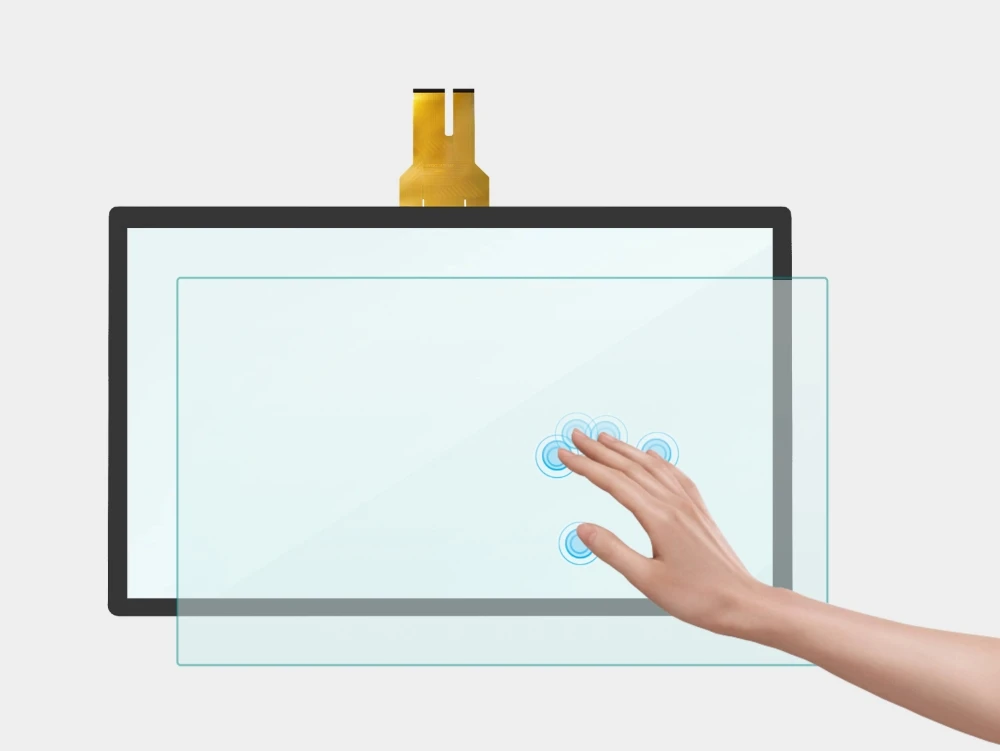
Unlike consumer electronics, industrial equipment often operates around the clock in factories, transportation systems, medical facilities, self-service terminals, control rooms, and outdoor kiosks. Equipment downtime can interrupt production, increase maintenance costs, and reduce operational efficiency.
A reliable capacitive touch screen minimizes these risks by maintaining stable performance even after years of continuous use. This makes durability one of the most important criteria when selecting industrial touch solutions.
One of the first features that determines durability is the protective glass.
Industrial capacitive touch screens commonly use chemically strengthened tempered glass with higher impact resistance than ordinary glass. The strengthened surface helps resist scratches caused by tools, keys, gloves, or repeated finger contact.
Many industrial installations also require thicker cover glass to withstand accidental impacts while maintaining excellent optical clarity and touch sensitivity.
The result is a display that continues to perform reliably even in demanding operating environments.
Projected capacitive (PCAP) technology has become the standard for industrial touch displays because it contains no mechanical moving parts that wear out over time.
Instead of relying on pressure, capacitive technology detects electrical changes when users touch the screen. This design offers several long-term advantages:
Faster touch response
Higher positioning accuracy
Multi-touch capability
Lower mechanical wear
Consistent performance after millions of touch operations
These characteristics make capacitive technology particularly suitable for industrial control systems where precision and reliability are essential.
Another feature found in many industrial-grade touch screens is optical bonding.
By bonding the cover glass directly to the display panel, manufacturers eliminate the air gap that normally exists between layers. This provides several practical benefits:
Reduced internal reflections
Improved sunlight readability
Better resistance to dust and moisture
Enhanced structural strength
Lower risk of condensation
For equipment installed in factories, transportation systems, or outdoor environments, optical bonding can significantly improve long-term reliability.
Consumer displays are generally designed for occasional daily use. Industrial touch displays, on the other hand, are engineered for continuous operation.
High-quality industrial capacitive touch screens use components selected specifically for extended service life, including:
Industrial-grade LCD panels
Long-life LED backlight systems
Stable controller ICs
High-quality touch sensors
Reliable interface connectors
These components help reduce failures during continuous operation while maintaining consistent image quality and touch performance.
Industrial environments present many challenges beyond physical impact.
Dust particles can accumulate inside equipment.
Humidity may affect electronic components.
Oil, grease, and cleaning chemicals are frequently encountered in manufacturing plants.
A durable touch screen is designed to tolerate these conditions through careful sealing, high-quality materials, and optimized structural design.
Depending on the application, industrial touch screens may also support higher ingress protection (IP) ratings, allowing them to operate in environments where moisture and dust are common.
Temperature is another factor that directly affects electronic equipment.
Industrial systems may operate inside refrigerated warehouses, high-temperature production lines, transportation equipment, or outdoor installations.
Industrial capacitive touch screens are designed to maintain stable touch performance across a wider operating temperature range than standard commercial displays.
This ensures reliable interaction regardless of seasonal changes or working conditions.
Industrial machinery often generates electromagnetic interference (EMI).
Motors, power supplies, welding equipment, and high-voltage devices can interfere with sensitive electronics.
Professional industrial touch screens incorporate EMI shielding and optimized controller design to reduce interference and maintain accurate touch detection.
Stable signal processing helps prevent false touches, missed inputs, or unstable cursor movement.
Every industry has unique requirements.
Some customers require larger display sizes.
Others need waterproof front panels.
Certain applications require glove operation, anti-glare glass, higher brightness, or customized interface options.
This is why many equipment manufacturers prefer working with experienced touch screen manufacturers capable of providing customized solutions rather than standard consumer products.
Customized industrial touch screens often integrate more effectively with existing equipment while improving long-term operational stability.
Durability depends not only on product design but also on manufacturing quality.
Strict production control helps ensure consistent touch sensitivity, optical performance, and mechanical reliability across every unit.
Comprehensive testing may include:
High and low temperature testing
Vibration testing
Touch life testing
Surface hardness testing
Optical inspection
Electrical performance verification
These quality control procedures reduce product variation and improve field reliability.
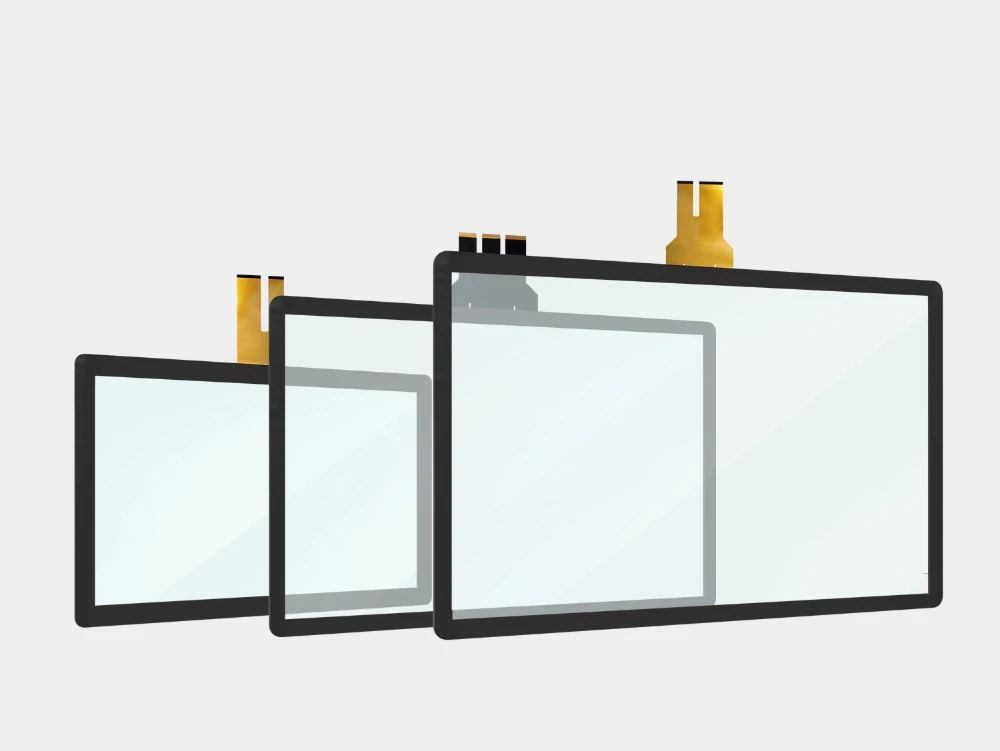
When selecting an industrial touch screen supplier, buyers should evaluate more than just technical specifications.
A professional manufacturer should provide:
Stable production capacity
Consistent product quality
Engineering support
Customization capability
Reliable quality management
Long-term supply continuity
ShenZhen GreenTouch Technology Co., Ltd. is a professional manufacturer of touch products. The company focuses on providing capacitive touch solutions for industrial control, commercial displays, self-service terminals, medical equipment, education, transportation, and other professional applications. Its product portfolio includes capacitive touch screens ranging from 23.6 to 65 inches, supporting different installation requirements and customized project needs.
Industrial applications demand far more than responsive touch performance. Long-term durability depends on multiple factors, including cover glass strength, touch technology, component quality, environmental resistance, optical bonding, EMI protection, manufacturing processes, and quality control.
Choosing a high-quality industrial capacitive touch screen helps reduce maintenance costs, improve equipment reliability, and extend product service life.
For businesses looking for reliable large-format touch solutions, working with an experienced manufacturer ensures that every touch screen is designed to perform consistently under demanding industrial conditions while meeting the specific requirements of each application.