 RU
RU ZH
ZH IT
IT ES
ES TR
TR JA
JA PT
PT KO
KO FR
FR DE
DE AR
AR ID
ID
Android Touch Panel PC Connectivity: HDMI, USB, LAN and TF Card Explained
Learn More



Choosing an industrial panel PC is not simply a matter of selecting the largest screen or the highest available processor. For equipment manufacturers and system integrators, processor selection affects application responsiveness, memory requirements, connectivity, thermal design, and the overall configuration of the finished system.
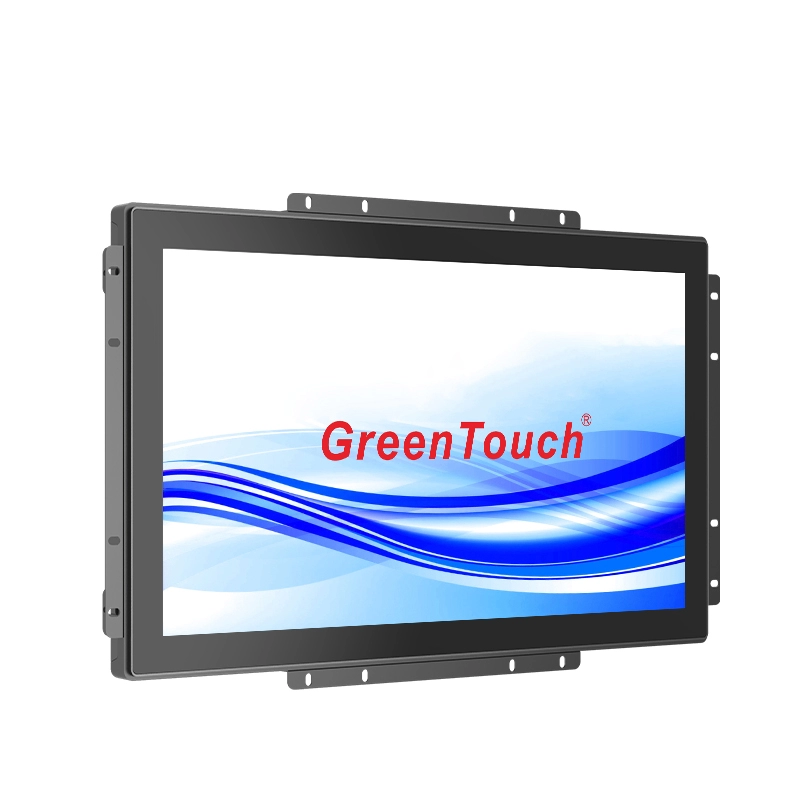
The High Brightness Touch Panel PC 10.1-23.8 Inches (2CGL Series) is available with Rockchip RK3566, RK3568, and RK3588 processor options, giving system designers flexibility when matching computing performance with application requirements. Combined with high-brightness display technology, 10-point projected capacitive touch, multiple communication interfaces, and industrial-oriented construction, the series is designed for outdoor, semi-outdoor, and indoor applications.
The key point is that RK3566, RK3568, and RK3588 should not simply be treated as three interchangeable choices. The right configuration depends on what the panel PC needs to run, how many devices it needs to communicate with, and how much processing headroom the application requires.
Before comparing processor options, it is useful to define what the panel PC actually needs to do.
A panel PC used as a basic operator interface may primarily display a control application and communicate with a PLC or other industrial controller. In this case, the system may not need the same processing resources as a terminal running a more demanding graphical interface, multiple applications, local data processing, or advanced networking functions.
Typical applications for the 2CGL series include industrial automation, transportation equipment, public information terminals, medical equipment, security systems, retail and food-service equipment, energy equipment, and outdoor operations.
These applications can have very different computing requirements.
For example, a machine interface may prioritize stable communication through RS232 or RS485. A public information terminal may place greater emphasis on graphical performance and network connectivity. An outdoor energy terminal may need to balance computing capability with thermal management and continuous operation.
Therefore, processor selection should begin with the software workload and system architecture rather than simply choosing the processor with the highest model number.
The RK3566 option can be considered when the panel PC is primarily responsible for standard control, monitoring, and user-interface functions.
Many industrial applications do not require a large amount of local computing. If the system mainly runs an Android-based HMI application, displays operating parameters, receives user input, communicates with external equipment, and sends information over a network, a moderate computing configuration may be sufficient.
This type of application can include:
For these applications, unnecessary processing capacity may not provide a practical advantage. Instead, system designers should look at the complete configuration, including RAM, storage, communication interfaces, screen size, temperature requirements, and mounting method.
The RK3566 configuration is therefore worth considering when the software workload is relatively straightforward and the priority is a balanced industrial panel PC configuration.
When an application requires more processing headroom, RK3568 can be considered as another configuration option within the 2CGL series.
A more demanding interface may involve more complicated graphics, multiple software functions, larger datasets, or a greater number of connected peripherals. In these cases, selecting a processor with additional capability can provide more room for the application to operate without making the panel PC responsible for tasks beyond its intended design.
Potential applications may include more sophisticated industrial HMI software, equipment monitoring interfaces with multiple data sources, interactive information terminals, and applications that need more local processing.
However, the processor should still be evaluated together with RAM and storage. A more capable processor does not automatically compensate for insufficient memory or unsuitable software architecture.
For OEM equipment builders, this means processor selection should be treated as part of the entire system configuration rather than an isolated specification.
RK3588 is positioned as the higher-performance processor option among the three configurations offered for the 2CGL series.
It can be considered for applications where the panel PC needs to handle a more demanding software environment or more complex local processing requirements.
Potential scenarios may include advanced graphical interfaces, applications requiring greater processing headroom, or systems where the panel PC is expected to perform more tasks locally instead of functioning only as a simple display and control terminal.
For these applications, the additional processor capability can be useful when the software workload is genuinely more demanding.
The important point for buyers is that processor selection should be based on actual application requirements. If an application only needs a simple HMI interface, choosing the highest processor option may not be necessary. Conversely, if the panel PC is expected to handle more complex tasks, selecting a configuration with greater processing headroom can make the system easier to develop and upgrade.
The three processor options should be evaluated across several practical factors.
| Selection factor | What to consider |
|---|---|
| Application workload | Basic HMI, monitoring, interactive interface, or more demanding local processing |
| Software | Android application requirements and expected future updates |
| RAM | 2GB, 4GB, or 8GB configuration depending on application needs |
| Storage | 32GB or 64GB SSD depending on software and local data requirements |
| Connectivity | RS232, RS485, LAN, USB, HDMI and wireless communication |
| Display | 10.1–23.8 inch screen and required resolution |
| Environment | Indoor, semi-outdoor, or outdoor installation |
| Duty cycle | Maximum non-stop 24/7 operation |
| Thermal conditions | Operating temperature and heat generated by the complete system |
| Installation | Embedded, wall-mounted, or desktop configuration |
This approach prevents processor selection from becoming a simple “higher is better” decision.
The High Brightness Touch Panel PC 10.1-23.8 Inches (2CGL Series) supports 2GB, 4GB, and 8GB RAM configurations, with 32GB and 64GB storage options.
The required memory depends largely on the software environment. A relatively simple HMI application may have modest memory requirements, while a more complicated interface or application environment may require additional headroom.
Storage should be considered in a similar way. The operating system and application software consume part of the available capacity, while local databases, logs, configuration files, media content, and other application data may require additional space.
For OEM projects, it is better to estimate actual software and data requirements before finalizing the RAM and storage combination.
In industrial equipment, a panel PC is rarely an isolated computer. It often needs to communicate with other devices.
The 2CGL series provides RS232, RS485, LAN, USB, HDMI, PHONE, TF, and DC12V interfaces. It also supports Ethernet and wireless connectivity, with 802.11b/g/n Wi-Fi as the default wireless configuration. Depending on configuration, network support includes 3G, 4G, 5G, Ethernet, Wi-Fi, and Bluetooth 4.0.
For example, RS232 or RS485 may be required for communication with industrial equipment, while Gigabit Ethernet can support higher-speed network connections. USB can be used for compatible peripherals, and HDMI can support external display connectivity where required.
This is why a processor comparison should always be followed by an interface review. A powerful panel PC that lacks the required communication ports may still be unsuitable for the actual equipment.
Processor capability is only one part of the 2CGL design.
The panel PC provides 1000–1500 cd/m² high-brightness capability, depending on configuration, helping the display remain visible in strong ambient light. This is particularly relevant to outdoor and semi-outdoor applications where lighting conditions cannot be controlled like they can in an office.
The series is available in screen sizes from 10.1 to 23.8 inches, with different aspect ratios and resolutions. This allows equipment manufacturers to match the panel PC to both the available installation area and the information density of the interface.
The combination of computing hardware and high-brightness touch interaction makes the 2CGL Series suitable when the application requires more than a conventional industrial display.
Processor selection also needs to be considered alongside heat dissipation.
The 2CGL panel PC uses two built-in low-frequency turbine fans to improve heat dissipation. It also supports an operating temperature range of -20°C to 70°C, with a storage range of -30°C to 80°C according to the listed specifications.
This is important for systems installed in outdoor cabinets, industrial equipment, transportation facilities, and other environments where ambient temperature can vary significantly.
As processing workloads increase, the system designer should consider not only the processor but also the complete thermal environment. Cabinet ventilation, installation position, ambient temperature, continuous operating time, and internal heat sources can all influence actual operating conditions.
The 2CGL series is specified for maximum non-stop 24/7 operation, making thermal design particularly relevant for applications that remain active throughout production or service periods.
A practical selection approach can be summarized as follows:
Choose RK3566 when the application primarily involves standard HMI functions, equipment monitoring, simple control interfaces, and routine communication.
Consider RK3568 when the application requires additional processing headroom for more involved interfaces, software functions, or connected equipment.
Consider RK3588 when the application has substantially higher local computing requirements and the additional processing capability is justified by the software workload.
These are configuration-selection guidelines rather than fixed performance rankings for every application. Actual suitability depends on the software being used, system optimization, peripheral requirements, and the final equipment architecture.
For OEM buyers, processor selection is only one part of choosing a panel PC supplier. Production capability, touch integration, quality management, customization support, and supply consistency can also affect the success of an equipment project.
The High Brightness Touch Panel PC 10.1-23.8 Inches (2CGL Series) is supplied by ShenZhen GreenTouch Technology Co., Ltd., a touch-product manufacturer with capabilities covering touch screens, touch monitors, touch all-in-one PCs, digital signage, and other interactive display products.
The company operates a 5,000 m² standard production workshop and a Class 1000 dust-free lamination workshop. Its manufacturing processes include G+G, G+FF bonding, and TP+LCM full lamination. The company also reports more than 20 technical engineers, more than 50 new products annually, and more than 10 annual patents.
For equipment manufacturers, these capabilities are relevant because a panel PC combines multiple components and manufacturing processes. Display quality, touch performance, mechanical assembly, processor configuration, and final testing all need to work together.
RK3566, RK3568, and RK3588 should not be selected simply by processor model number. The more useful approach is to start with the application and work through the complete configuration.
First, determine what software the panel PC needs to run. Then estimate RAM and storage requirements. After that, check the communication interfaces, display size, brightness, operating temperature, installation method, and expected duty cycle.
For outdoor or semi-outdoor equipment, brightness and environmental specifications become especially important. For industrial automation, communication interfaces such as RS232 and RS485 may be critical. For more demanding applications, processor and memory headroom deserve greater attention.
The High Brightness Touch Panel PC 10.1-23.8 Inches (2CGL Series) brings these elements together in one platform, with RK3566, RK3568, and RK3588 processor options, 2GB–8GB RAM, 32GB–64GB storage, 1000–1500 cd/m² high brightness, 10-point capacitive touch, multiple communication interfaces, IP65 front protection, and support for 24/7 operation.
For OEM equipment builders and system integrators, the best processor is ultimately the one that matches the actual workload while fitting the environmental, connectivity, thermal, and mechanical requirements of the finished system.