 RU
RU ZH
ZH IT
IT ES
ES TR
TR JA
JA PT
PT KO
KO FR
FR DE
DE AR
AR ID
ID
How to Choose a Reliable Resistive Touch Screen Manufacturer for OEM Projects
Learn More



A large touch display needs more than physical screen size to deliver a useful interactive experience. As the display grows, image detail, text clarity, interface layout, and viewing distance all become increasingly important. A 50-inch screen running at only Full HD resolution can show visible pixel structure when users stand close to it, particularly when displaying small text, engineering diagrams, dashboards, maps, or detailed images.
This is where 50 Inch 4K UHD Touch Screen Monitor technology becomes particularly valuable. With a resolution of 3840 × 2160 pixels, a 50-inch 4K display provides four times the pixel count of a 1920 × 1080 Full HD display. For professional applications where users need to both view and interact with on-screen information, that additional detail can make a practical difference.
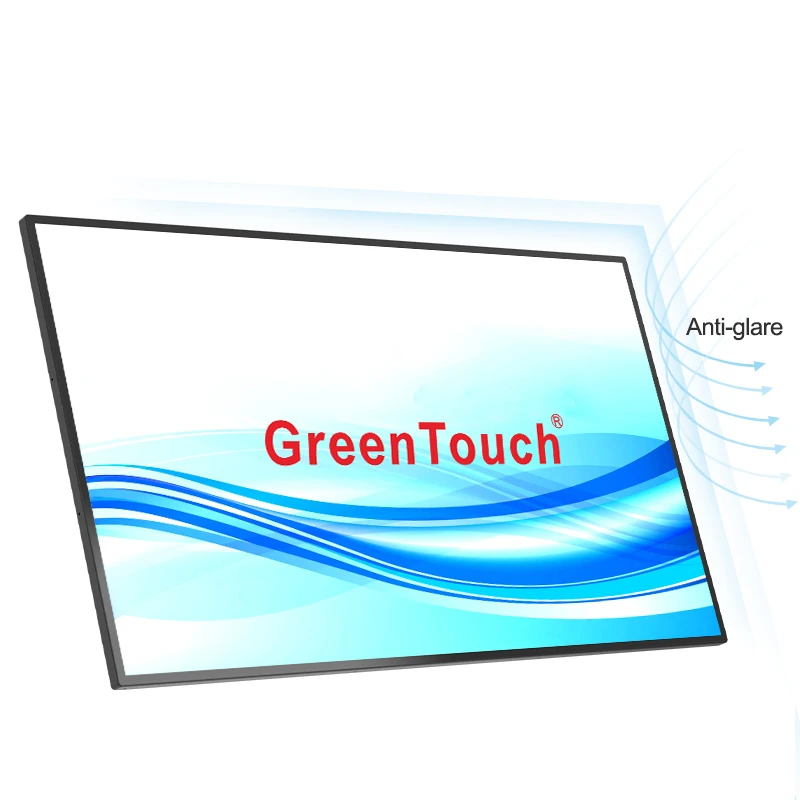
A larger display does not automatically mean a clearer image. If the resolution remains unchanged while the screen size increases, each pixel has to cover a larger physical area.
For example, a 50-inch Full HD display still contains only 1920 × 1080 pixels. When the same content is stretched across a much larger panel, fine lines and small text can appear less defined. This can become noticeable when the monitor is used as an interactive workstation, control interface, presentation display, or professional visualization screen.
A 4K panel increases the pixel count to 3840 × 2160. The result is substantially more image information across the same 16:9 display area.
For users working with detailed content, this means more information can fit on the screen without making individual interface elements unnecessarily large. Engineers can view more of a drawing, operators can display additional dashboard data, and presenters can show high-resolution content without sacrificing as much detail.
One of the main advantages of 4K resolution is not simply that images look sharper. It is that the additional pixels provide more usable working space.
Consider a control dashboard containing multiple data panels. On a lower-resolution display, the operator may need to enlarge individual sections or switch between screens to read detailed information. With 3840 × 2160 resolution, more panels can be displayed simultaneously while retaining clear text and graphical elements.
The same principle applies to:
For these applications, resolution directly affects how much information can be presented without forcing users to constantly zoom, scroll, or change screens.
Resolution is especially relevant when a display is also used as an interactive touch interface.
A touchscreen does not only present information. Users physically interact with buttons, menus, diagrams, images, and other interface elements. If the displayed content is difficult to distinguish, accurate interaction becomes less convenient.
The 50 Inch 4K UHD Touch Screen Monitor combines 3840 × 2160 resolution with projected capacitive 10-point touch technology. This allows the display to support detailed visual content while maintaining direct touch interaction.
The 10-point capacitive touch system is suitable for applications involving gestures, multiple touch points, and interactive interfaces. Depending on the software, users can perform operations such as zooming, navigating visual content, selecting objects, or manipulating on-screen controls.
The combination is important because a high-resolution display without an effective interaction method does not provide the same experience as a display designed for both visualization and touch.
Small text is one of the easiest areas in which resolution differences become noticeable.
On a large 50-inch screen, displaying a complex interface may involve many small labels, status indicators, measurements, or control parameters. At lower resolutions, designers may have to enlarge these elements simply to keep them readable.
With 3840 × 2160 resolution, designers have more pixels available for fine graphical elements. This does not mean that every application will automatically produce better text; the software interface and scaling settings still matter. However, the display has enough resolution to reproduce detailed content more precisely.
This can be particularly useful when a 50-inch monitor is installed where users may move between different viewing distances. A person standing several meters away may need large visual elements, while an operator standing closer to the screen may need to inspect detailed information.
Resolution is only one part of image quality. A 4K display used for professional content also needs to reproduce colors and tonal transitions effectively.
The 50 Inch 4K UHD Touch Screen Monitor supports 1.07 billion display colors and 90% NTSC coverage. It also offers 99% sRGB and 95% DCI-P3 color gamut specifications.
These characteristics are useful when the display is used for content where color differentiation matters. For example, visual dashboards may use different colors to distinguish operating conditions, while presentations, product visualization, and media content can benefit from a wider color range.
The monitor also supports HDR, which is designed to improve image layering and visual differentiation between bright and dark areas. When properly supported by the content source, HDR can contribute to a more detailed visual presentation rather than relying solely on increased resolution.
A 50-inch touch monitor is rarely viewed by just one person sitting directly in front of it.
In meeting rooms, classrooms, control areas, exhibitions, and collaborative environments, several users may view the screen from different positions. A narrow viewing angle can result in differences in perceived brightness and color as users move away from the center.
The monitor provides a 178° ultra-wide viewing angle, making it more suitable for situations where users approach the display from different directions.
The thin-bezel structure also helps maximize the visible display area without adding unnecessary visual bulk around the screen.
A high-resolution display is only useful if the connected equipment can deliver the required signal.
The monitor provides HDMI 2.0, HDMI 1.4, and DP 1.2 inputs, together with USB and AUDIO interfaces. Having multiple video inputs gives system integrators more flexibility when connecting computers, media players, industrial systems, or other external equipment.
HDMI 2.0 is particularly relevant for systems that need to transmit higher-resolution video signals. DP 1.2 provides another option for compatible computers and professional equipment.
Before deployment, buyers should still check the output capabilities of the source device, supported refresh rate, cable specifications, and software configuration. A 4K monitor cannot compensate for a source system that only outputs lower-resolution content.
A 50-inch format occupies an interesting position between desktop displays and much larger interactive screens.
For industrial applications, it can serve as a large operator interface or visualization screen. In meeting environments, it can support presentations and collaborative interaction. In education, the combination of large size and touch input allows teachers and students to interact directly with digital content.
It can also be considered for:
The appropriate application depends on the required brightness, operating environment, mounting method, touch workflow, and software platform.
The physical installation of a large touchscreen needs to be considered at the design stage. The monitor supports VESA 400 × 300mm mounting for wall, hanging, and horizontal installation configurations.
This gives integrators a practical mounting standard when designing display structures or equipment enclosures.
The monitor is also specified for maximum non-stop 24/7 operation, with a rated service life of up to 50,000 hours under normal operating conditions. Its operating temperature range is 0°C to 50°C, while the storage range is -20°C to 60°C.
For professional installations, these specifications should be evaluated against the actual site conditions rather than treated as universal guarantees. Ventilation, installation position, ambient temperature, signal source, and operating workload can all affect long-term system performance.
The decision to purchase a 4K touchscreen should not be based simply on the label “4K.” Buyers should consider what the screen will display and how users will interact with it.
If the application mainly shows simple large-format information from a distance, Full HD may sometimes be sufficient. But when a 50-inch screen is expected to present detailed graphics, multiple information panels, high-resolution media, or interactive content, 3840 × 2160 resolution provides a much stronger foundation.
The combination of 4K resolution, 10-point projected capacitive touch, wide viewing angle, broad color coverage, HDR support, and multiple video interfaces makes the 50 Inch 4K UHD Touch Screen Monitor a practical option for professional interactive display projects.
For buyers looking beyond individual specifications, supplier manufacturing capability is equally important. ShenZhen GreenTouch Technology Co.,Ltd. operates dedicated touch-product R&D and manufacturing facilities, including a 5,000 m² standard production workshop, dust-free lamination capabilities, and production capacity for touch panels and interactive display products. Its quality system and product certifications also provide a foundation for supplying touch display solutions for different commercial and professional applications.
The value of 4K becomes clearer as screen size increases and the viewing task becomes more demanding. On a 50-inch display, the 3840 × 2160 resolution provides enough pixel information to reproduce detailed graphics, small interface elements, and high-resolution media with greater clarity than Full HD.
When that resolution is combined with accurate capacitive touch, 1.07 billion display colors, 99% sRGB, 95% DCI-P3, HDR, multiple digital inputs, and 24/7 operating capability, the result is more than a large display. It becomes a platform for presenting and interacting with detailed digital information.
For applications where screen size, visual detail, and direct interaction all matter, the 50 Inch 4K UHD Touch Screen Monitor offers a balanced configuration for building professional interactive display systems.