 RU
RU ZH
ZH IT
IT ES
ES TR
TR JA
JA PT
PT KO
KO FR
FR DE
DE AR
AR ID
ID
IR Touch Technology Explained: Advantages of 32-65 Inch Wall Mount Touch Displays
Learn More



When a project moves into the large-display range, touch selection becomes more complicated than many buyers expect. On smaller devices, a conventional touch monitor or a standard integrated touch panel may be enough. But once the display grows into presentation walls, commercial windows, glass partitions, large signage, or oversized interactive surfaces, the question changes. Buyers are no longer just choosing a touch function. They are choosing a structure, an installation method, a visual effect, and a long-term project path.
That is why the comparison between Interactive Touch Foil and traditional touch solutions matters so much. For large displays, the better choice depends less on habit and more on how the final system is supposed to look, where it will be installed, and what kind of integration freedom the project needs.
GreenTouch Technology’s interactive touch foil lineup itself shows how this category is positioned for different display scales: XTM covers 10.1 to 32 inches, XTA covers 32 to 65 inches, XTB covers 42 to 153 inches, and XTC extends from 43 to 180 inches, giving buyers a clear path from medium to ultra-large interactive surfaces.
Traditional touch solutions usually work well when the product is meant to be a finished device: a touch monitor, a touch panel PC, or a kiosk screen with a defined enclosure. In that case, the touch system is already packaged with the display and the buyer mainly selects size, technology, and mounting style.
Large display projects are often different. The customer may already have glass, acrylic, or polycarbonate as part of the installation. The project may involve a storefront window, a transparent wall, a curved surface, or a custom-built visual structure. In these cases, adding a standard framed touch device may create unnecessary thickness, a visible border, or design limitations. GreenTouch’s touch foil is specifically described as applicable to glass, acrylic, and polycarbonate, and able to work in straight or curved forms with an integrated frameless result.
That is the first big divide. Traditional touch solutions are usually stronger when the display itself is the main product. Interactive touch foil becomes stronger when the touch layer needs to adapt to an existing or custom surface.
A large display is usually more visible than a small terminal. It becomes part of the space. In a showroom, museum, meeting room, retail window, or architectural installation, appearance matters just as much as touch function. A bulky structure or a strong bezel may be acceptable on an industrial monitor, but it may look out of place in a premium glass-based display project.
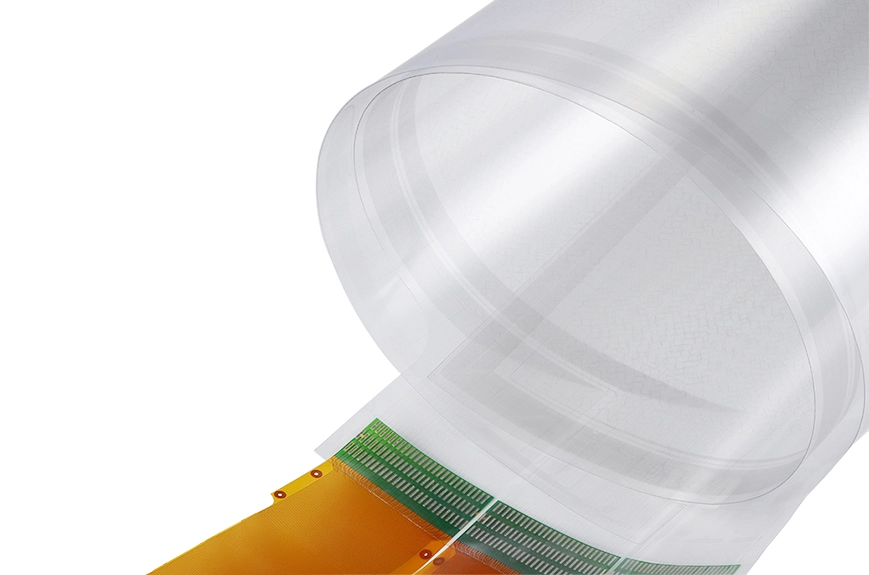
Interactive touch foil has a clear advantage in that kind of work because it is built around an ultra-thin 0.2 mm transparent PET film and supports transmittance of at least 93 percent, along with full-angle anti-glare. Instead of placing a conventional touch device in front of the design, the foil lets buyers keep the surface itself as the main visual element.
That does not mean traditional touch solutions are visually weak in every case. For enclosed commercial signage, education displays, or rugged public terminals, a standard large touch display may still be the right answer. But when buyers want a clean glass look, a transparent interactive effect, or a borderless appearance, interactive touch foil is usually more aligned with the design goal.
It is important not to overstate the case. Traditional touch solutions still offer an advantage that many buyers value: they are easier to standardize. If the project requires a finished monitor with a defined housing, known interface layout, and straightforward replacement process, a traditional large touch display may reduce project variables.
This is especially true when the installation team wants to minimize on-site fitting work. With a finished touch monitor or integrated panel, the structure is already confirmed by the manufacturer. The buyer does not need to think as much about surface adhesion, substrate selection, or customized optical treatments.
So for large displays, traditional touch solutions are usually better when the priority is:
Interactive touch foil is usually better when the priority is:
transparent or architectural display integration
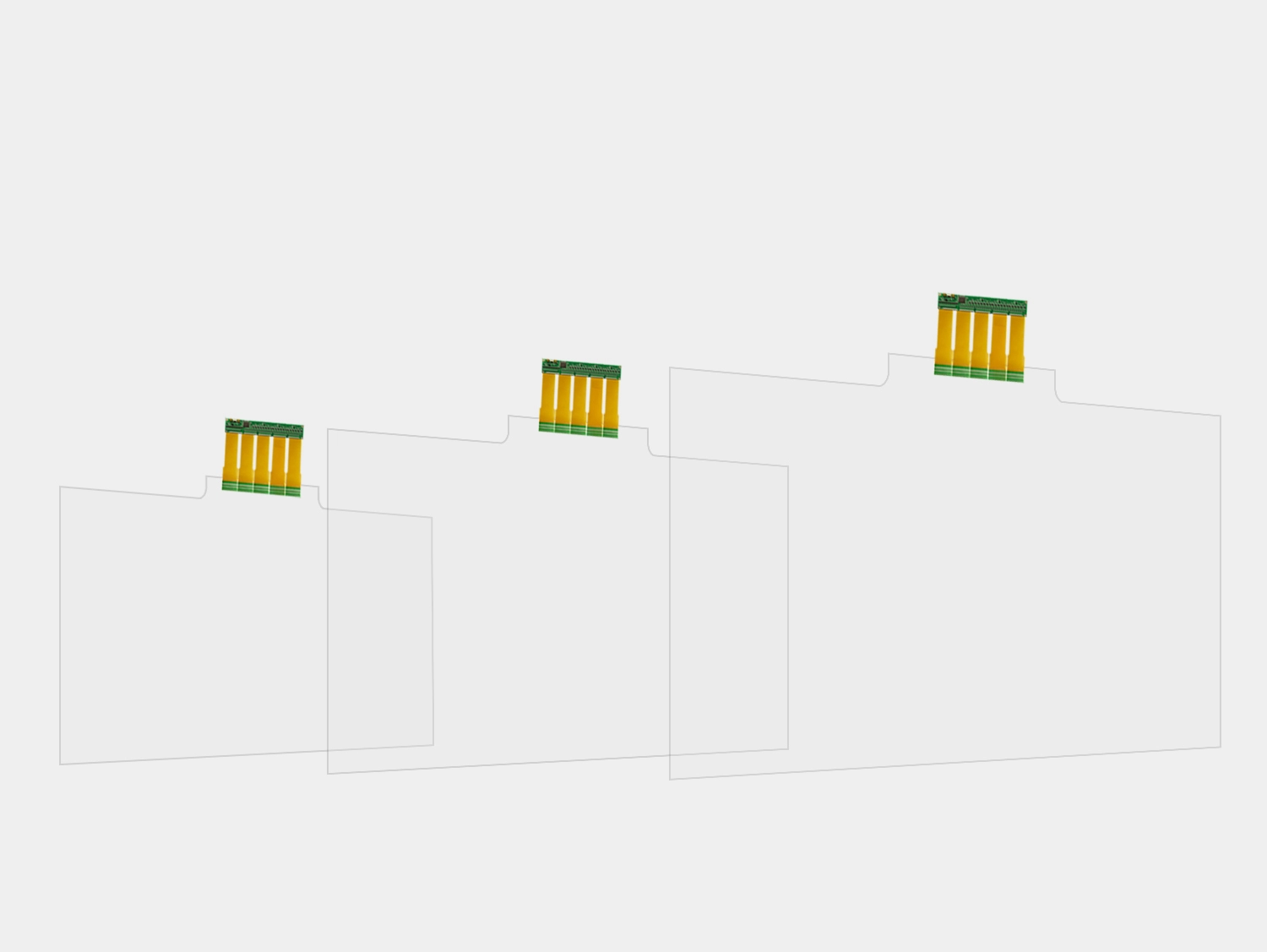
One of the strongest arguments for interactive touch foil in large-display projects is range flexibility. GreenTouch’s XTC series extends from 43 to 180 inches, while XTB reaches 42 to 153 inches. That matters because once a project goes beyond common commercial monitor sizes, standard integrated touch products become more restrictive.
In many large interactive projects, the question is not simply “Do you have a 55-inch touch display?” The question is more like:
Touch foil addresses those questions better because it is not tied to the same housing logic as a traditional finished display. For oversized interactive surfaces, that flexibility is often the deciding factor.
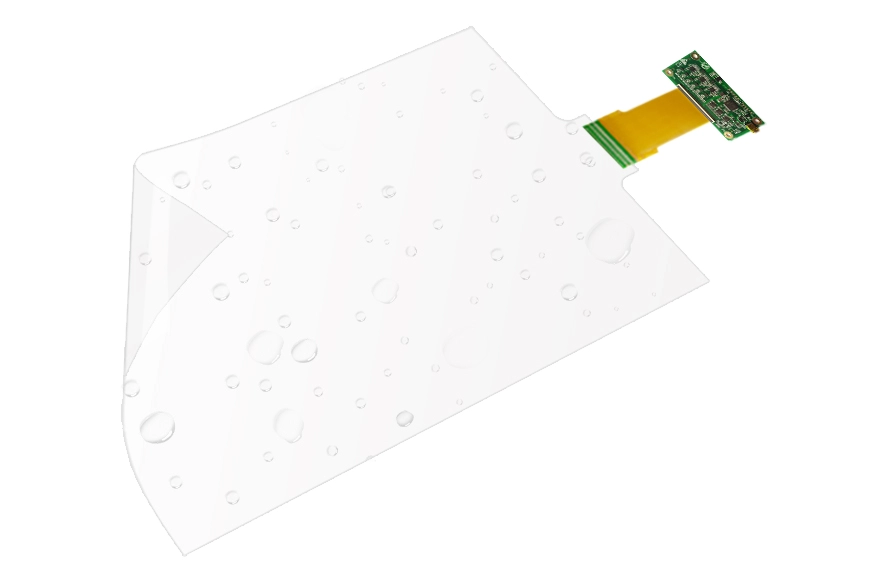
Large touch displays are not only about performance. They are also about how the product gets from specification to final installation. Traditional touch solutions are typically installed as complete hardware units. Interactive touch foil is installed onto the back of a clean, flat medium such as glass or acrylic, then connected through its controller and USB link. GreenTouch’s product pages outline the process: prepare the surface, align and adhere the film, connect the FPC to the controller, connect via USB, then calibrate in the operating system.
This makes touch foil more installation-sensitive, but also more adaptable. For some buyers, that is a benefit because it allows the interactive layer to be built into the project rather than added as a separate device. For others, it means the supplier needs to offer stronger project communication and possibly pasting support. GreenTouch explicitly lists pasting services among its customization options.
So the better option depends partly on the installation team. If the project can manage custom fitting and wants the design advantage, touch foil is often superior. If the project needs a simpler hardware swap-in model, traditional solutions may feel easier.
For large displays, touch quality is judged differently than on small devices. Buyers care about whether the surface feels responsive across the whole area, whether touch points register accurately, and whether the system can support multiple users or richer interaction.
GreenTouch’s touch foil uses Interactive PCAP with 40-point touch and emphasizes accurate positioning and strong touch penetration ability. For collaborative spaces, public interaction, education, and large commercial engagement surfaces, that is an important point. The product pages also note compatibility with Windows, Android, and Linux, plus USB 2.0 connection and no-driver calibration workflow.
Traditional large touch solutions can also provide strong performance, but they often come with a more fixed structure. Touch foil’s value is that it brings multi-point capacitive interaction to a broader set of transparent and non-standard display environments.
Large displays are often installed in spaces where many users interact with them. Retail windows, public information systems, exhibitions, and business lobbies all introduce practical environmental risks. GreenTouch’s touch foil product highlights IP67 waterproof performance, vandal resistance, and anti-pollution characteristics.
Those features make foil more practical than some buyers might assume. A common misconception is that touch foil is only a delicate design-layer product. In reality, for the right project it can be a durable commercial solution, especially where the touch system needs to sit behind a protective transparent surface rather than expose a conventional front monitor housing.
Traditional touch solutions still remain strong in ruggedized equipment and fixed commercial enclosures. But in large public-facing transparent installations, touch foil can offer both protection and visual elegance at the same time.
For large displays, interactive touch foil is generally the better choice when:
Traditional touch solutions are generally the better choice when:
In other words, this is not a pure technology contest. It is a project-fit decision.
As projects get larger, supplier capability matters more. Interactive touch foil is not just a material; it is a system that requires correct sizing, compatibility with the substrate, and reliable production quality. GreenTouch Technology manufactures touch products including capacitive touch screens, resistive touch screens, infrared touch frames, nano touch foil, touch monitors, touch all-in-one PCs, and digital signage, and it operates with a fully automatic production line and fully enclosed dust-free workshop. The company also lists ISO9001 and ISO14001 certifications, along with product certifications such as CE, FCC, CB, RoHS, UL, CCC, and HDMI.
That matters because for large-display projects, the better choice is not just the product type. It is also the manufacturer’s ability to support custom scale, installation logic, and repeatable OEM supply.
For large displays, interactive touch foil is often better when the project is design-led, glass-based, transparent, oversized, or structurally non-standard. Traditional touch solutions are often better when the project needs a conventional finished display with simple standard mounting and hardware replacement logic.
So the right answer is not universal. It depends on whether the display is meant to be a device, or part of a space.
As more buyers build interactive environments rather than just buy touch hardware, interactive touch foil is becoming a more compelling option for large displays. And in projects where size, transparency, and visual integration matter, it is often the more flexible path.