 RU
RU ZH
ZH IT
IT ES
ES TR
TR JA
JA PT
PT KO
KO FR
FR DE
DE AR
AR ID
ID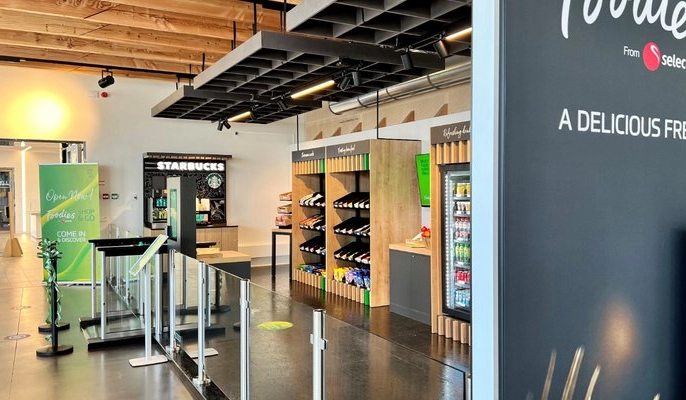
Automated store with touch screen
Learn More



For OEM buyers, choosing an interactive touch solution is rarely just about comparing a few product parameters. The real question is whether the supplier can support the full project from design matching to stable batch delivery. That is especially true for Interactive Touch Foil, because this product is often used in customized display environments rather than in one fixed standard format.
A retail window display, a curved acrylic information panel, a smart glass partition, or a large-format interactive presentation surface may all use touch foil, but they do not share the same structure, installation method, or end-user behavior. That is why OEM buyers need more than a seller. They need a manufacturer that understands application scenarios, material compatibility, customization, and long-term product consistency.
For many projects, the performance of the final solution depends just as much on the manufacturer’s engineering and production capabilities as it does on the foil itself.
Unlike some standard display components, interactive touch foil is often chosen because the project has a specific spatial or structural goal. The buyer may want to turn ordinary glass into an interactive storefront screen, add touch function to acrylic signage, or build a frameless curved display that cannot be achieved easily with traditional touch screens.
This means OEM applications usually begin with questions like:
A reliable manufacturer should be comfortable discussing these practical details early, because they directly affect whether the product can be integrated smoothly.
Interactive touch foil is not simply a transparent add-on. It becomes part of the final interactive surface, which means its performance is closely tied to optical quality, touch accuracy, installation method, and controller stability.
GreenTouch Technology’s interactive touch foil product information highlights several points that matter in OEM selection:
From an OEM point of view, these are not just selling points. They are indicators of whether the supplier understands how the product is used in actual projects.
A reliable interactive touch foil manufacturer should be able to explain clearly how the product works with different surface materials. In OEM applications, material compatibility is not optional. It determines both the technical feasibility and the finished appearance.
Since interactive touch foil can be applied to glass, acrylic, and polycarbonate, the manufacturer should be able to discuss:
This is particularly important in projects involving retail windows, smart partitions, exhibition displays, interactive teaching systems, and information terminals. A manufacturer who only repeats catalog data without discussing the real substrate is usually not enough for serious OEM work.
One major reason buyers look for a factory-direct interactive touch foil supplier is that OEM projects rarely stay within one standard format. Even when the core technology is already defined, the actual project may require different dimensions, branding, surface treatments, or installation methods.
A reliable manufacturer should be able to support customization in areas such as:
For OEM buyers, this makes a big difference. It means the touch foil can be aligned with the final product concept instead of forcing the project to fit a generic standard. In commercial display projects, small structural details often affect the whole user experience, so the supplier’s willingness and ability to customize becomes a key evaluation point.
A strong interactive touch foil manufacturer should not only provide the foil. It should also understand the integration process. GreenTouch Technology’s product information describes the foil as a simple integration process and a cost-effective interactive solution. That matters because many buyers are not purchasing a standalone part. They are building a complete interactive display system.
In practical OEM work, integration support may include:
If the supplier can only ship the foil but cannot guide integration basics, the buyer may still face avoidable delays or installation issues.
For interactive touch foil, touch performance alone is not enough. OEM customers often choose this solution because they want the display to remain visually clean, bright, and modern. That is why optical performance is a serious part of supplier evaluation.
GreenTouch Technology lists transmittance of not less than 93 percent, strong penetration, and full-angle anti-glare. These points are especially valuable in projects where the visual effect matters as much as the touch function, such as:
A reliable manufacturer should understand that the foil is part of both the touch system and the visual presentation layer. That is what makes optical treatments like AG, AF, and AR more than optional extras in some OEM projects.
In public-facing or high-use applications, durability is a serious factor. Interactive touch foil may be used in environments where the display surface faces constant contact, cleaning, dust, or occasional rough treatment. In these cases, buyers should pay attention to more than just basic touch function.
GreenTouch Technology highlights waterproof IP67, vandal proof, and anti-pollution features. For OEM buyers, these points suggest the product is being developed with real installation conditions in mind.
A reliable manufacturer should be able to support projects where the foil may be used in:
In these projects, durability is part of the value of the solution, not an afterthought.
For OEM applications, the supplier’s production background matters. Buyers are not just assessing whether the current sample works. They are assessing whether the same product quality can be repeated in future orders and whether the supplier can support evolving project needs.
GreenTouch Technology is a professional manufacturer of touch products, covering capacitive touch screens, resistive touch screens, infrared touch frames, nano touch foil, touch screen monitors, touch all-in-one PCs, advertising digital signage, conference touch all-in-one PCs, teaching all-in-one PCs, and advertising machines. The company has its own trademark and has established a fully automatic production line and a fully enclosed dust-free workshop.
This kind of manufacturing base gives OEM buyers more confidence because it suggests better production control and stronger consistency support. GreenTouch Technology has also passed ISO9001 quality management system certification and ISO14001 environmental management system certification, and its products are controlled under strict quality management procedures. In addition, the company has obtained CE, FCC, CB, RoHS, UL, CCC, and HDMI certifications, which further strengthens its qualification background for international markets.
Many OEM buyers are not sourcing for one shipment only. They may start with one pilot project, then expand to multiple sizes, different markets, or future product generations. This makes continuity an important part of supplier evaluation.
A reliable interactive touch foil manufacturer should support:
This is especially important in branded commercial display projects, where one successful installation may later be expanded into a broader product line or chain deployment.
Before confirming a manufacturer, OEM buyers should review a few practical questions:
These questions often reveal more than a product sheet alone.
Choosing a reliable interactive touch foil manufacturer for OEM applications is really about choosing a partner that can support the whole project, not just ship a transparent touch layer. The right supplier should understand material compatibility, customization, integration, optical requirements, and long-term production consistency.
For buyers developing interactive windows, glass displays, acrylic interfaces, educational systems, or commercial presentation solutions, those capabilities matter directly to project success. A well-made interactive touch foil can create an elegant and highly practical interactive surface, but only when the manufacturer behind it is equipped to support real OEM execution.