 RU
RU ZH
ZH IT
IT ES
ES TR
TR JA
JA PT
PT KO
KO FR
FR DE
DE AR
AR ID
ID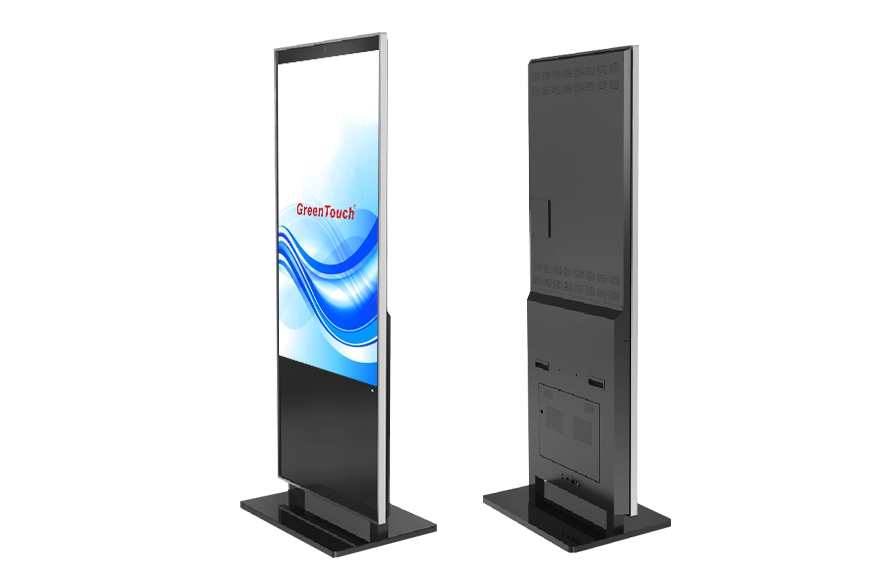
43-55 Inch Floor Standing Digital Signage: SWLB Series Design and Features
Learn More



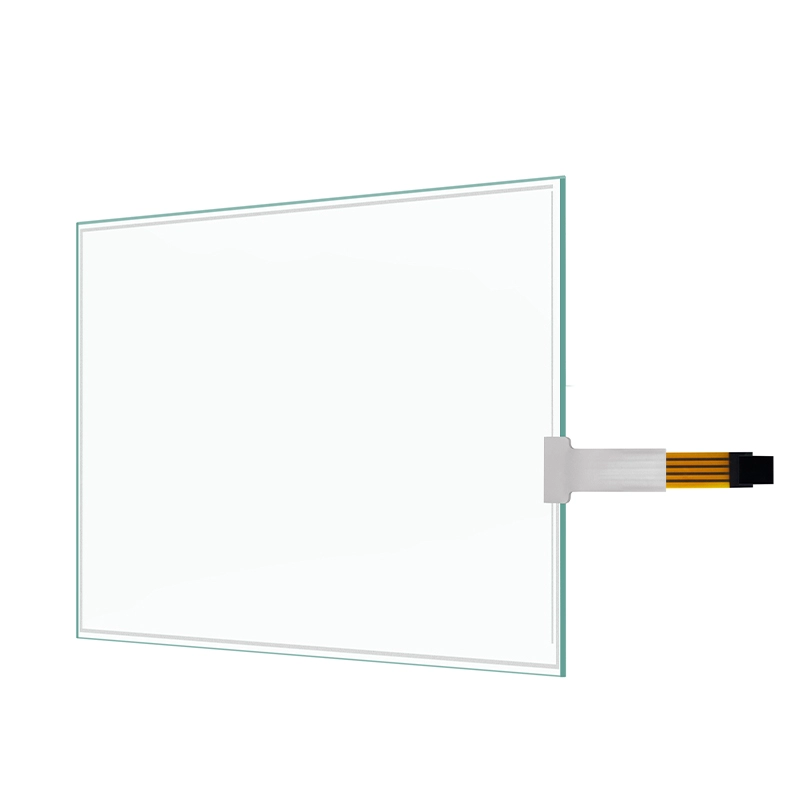
In the touch display market, many people first think of capacitive technology because it is widely used in consumer electronics. But for industrial and commercial equipment, product selection is rarely based on trend alone. Buyers care more about whether the touch interface matches the working environment, the operating method, and the service cycle of the equipment. That is why the Resistive Touch Screen remains an important option across a wide range of industrial and commercial applications.
For OEM buyers, equipment manufacturers, and system integrators, resistive touch screens continue to offer practical value. They are not chosen because they are new. They are chosen because they solve real operating problems. In many cases, they are still one of the most suitable touch solutions for devices that need stable input, simple interaction, and reliable long-term use.
Industrial and commercial equipment is very different from consumer devices. In a factory, a medical device, a control terminal, or a self-service machine, the user is often working quickly and under practical constraints. Operators may wear gloves. They may use a stylus, a pen, or another non-finger input tool. The equipment may be installed in a workshop, production line, hospital station, cashier counter, or service kiosk.
In these environments, the touch interface is expected to respond accurately and consistently. It does not need gesture-heavy interaction. It needs dependable point input.
This is one of the biggest reasons resistive touch screens remain widely used. They respond to pressure, so they can be operated by finger, gloved hand, stylus, or similar object. For many industrial and commercial scenarios, that flexibility is far more useful than the multi-touch experience commonly associated with consumer products.
One of the clearest advantages of resistive touch screens is that they do not depend on the conductivity of bare fingers. This makes them a practical choice for workplaces where operators wear protective gloves or use tools for more precise input.
Examples include:
In these applications, the touchscreen is part of a task-driven workflow. Operators need it to respond the first time, without changing their working habits. A resistive touch screen supports that kind of use more naturally.
Many industrial and commercial devices are not designed around modern app-style interaction. Their interfaces are built around buttons, numerical fields, command menus, function pages, and control operations. In other words, the logic is based on clear single-point input rather than gesture navigation.
That is where resistive touch screens continue to perform well. For equipment makers, this means the touch technology matches the structure of the interface itself. The goal is not to make the display feel like a consumer tablet. The goal is to make sure operators can complete commands accurately and efficiently.
In industrial and business environments, that often matters more than visual novelty.
Another major advantage of resistive touch screens is compatibility. Many industrial and commercial products stay in service for a long time. Some are updated only gradually. Others require replacement parts that match existing dimensions, interface designs, and user habits.
This makes resistive touch screens useful for:
For many buyers, the question is not whether a newer touch technology exists. The question is whether the selected touch screen fits the existing product design and can be integrated without unnecessary redesign. Resistive touch screens often provide a more straightforward answer in those situations.
Resistive touch screens continue to serve a broad range of industries because they align well with functional equipment design. Typical applications include:
Control panels, operator interfaces, machine terminals, and HMI systems often require precise point input and durable daily use. Resistive touch screens are still a common choice where glove operation and equipment compatibility matter.
Many healthcare devices require stable, direct touch operation rather than complex gesture control. In diagnostic instruments, portable medical terminals, and nursing station equipment, resistive screens remain a practical option.
Cash registers, POS terminals, and ordering systems often depend on repeatable input and long operating hours. Resistive touch screens continue to serve many devices in these areas, especially where stylus or structured touch input is preferred.
Ticketing machines, information kiosks, attendance systems, and payment terminals all need clear interface logic and reliable touch response. Resistive touch screens can support these requirements effectively.
Testing devices and industrial handheld equipment often require touch operation in variable environments. Here again, practical input flexibility is more important than consumer-style interaction.
For OEM projects, the touch screen is not a standalone product. It is part of the full equipment design. The manufacturer has to consider dimensions, active area, connector layout, installation structure, and controller matching. In this process, resistive touch screens often offer useful integration advantages.
They are well suited for compact and medium-size devices, and they are often easier to match with existing product architectures used in industrial and commercial systems. This makes them especially helpful when the buyer needs to:
A resistive touch screen may not be the right answer for every project, but it remains a highly practical answer for many OEM requirements.
Even when resistive touch technology is a good fit, the final product quality still depends heavily on the supplier. OEM buyers need more than a catalog item. They need a manufacturer that understands industrial use conditions, supports customization, and maintains consistent quality.
GreenTouch Technology is a professional manufacturer of touch products, covering capacitive touch screens, resistive touch screens, infrared touch frames, nano touch foil, touch screen monitors, touch all-in-one PCs, advertising digital signage, conference touch all-in-one PCs, teaching all-in-one PCs, and advertising machines. With its own GreenTouch trademark, fully automatic production line, and fully enclosed dust-free workshop, the company has built a solid manufacturing base for standard and custom touch products.
From the perspective of industrial and commercial buyers, this kind of background matters because it supports better control over product consistency, engineering communication, and long-term supply reliability.
For export-oriented OEM projects and professional equipment markets, compliance and manufacturing standards are also important. Buyers need confidence that the supplier is operating under a stable management system and producing products with consistent control.
GreenTouch Technology has passed ISO9001 quality management system certification and ISO14001 environmental management system certification. Its products are managed under strict quality procedures and have obtained CE, FCC, CB, RoHS, UL, CCC, and HDMI certifications.
These points are useful not just for presentation, but for real project work. In many B2B supply discussions, they help support qualification reviews, documentation checks, and smoother communication with international buyers.
When buyers compare touch technologies, the decision should always return to the end-use environment. A resistive touch screen still has clear strengths in industrial and commercial equipment because it supports practical input methods, fits many established device structures, and works well in settings where stable operation matters more than advanced multi-touch effects.
Its advantages are especially clear when the product needs:
That is why resistive touch screens continue to be selected in real projects, even in a market with many other touch options available.
Resistive touch screens continue to hold their value because industrial and commercial equipment follows a different logic than consumer electronics. The decision is not about what looks newer. It is about what works better in daily operation, what integrates more smoothly into the device, and what remains dependable over time.
For industrial terminals, medical devices, POS systems, self-service machines, and embedded equipment, resistive touch screens still offer meaningful advantages. When supported by a capable manufacturer such as GreenTouch Technology, they can provide a practical and reliable solution for OEM and equipment development projects.
In the end, the strongest advantage of resistive touch screens is not that they try to replace every other touch technology. It is that they continue to meet the needs of applications where functional performance matters most.