RU
 ZH
 IT
 ES
 TR
 JA
 PT
 KO
 FR
 DE
 AR
 ID

Advantages of new energy vehicle display screens
Learn More



Industrial and commercial equipment often operates in conditions that are far from ideal. Touch interfaces may be exposed to dust, moisture, oil residue, frequent physical contact, and electrical interference from nearby machinery. In these environments, an unstable touchscreen can interrupt normal operation, affect user efficiency, and increase equipment maintenance requirements.
For equipment manufacturers, selecting a suitable touch technology is therefore not simply a matter of screen size or appearance. The touchscreen must provide consistent input, tolerate the conditions around the equipment, and integrate reliably with the host system. A Resistive Touch Screen 7 to 22 Inches (5 Wire) is designed to address these requirements through pressure-based input, a practical layered structure, and options for environmental protection.
Understanding how this technology works helps OEMs and system integrators determine whether it is suitable for industrial control panels, payment terminals, medical equipment, and other applications where dependable touch operation matters.
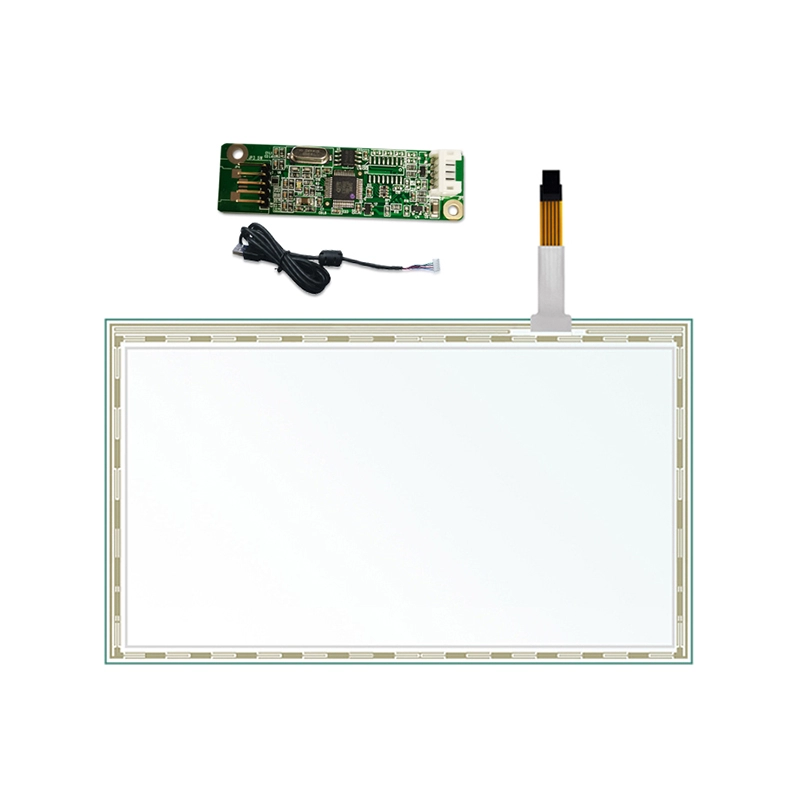
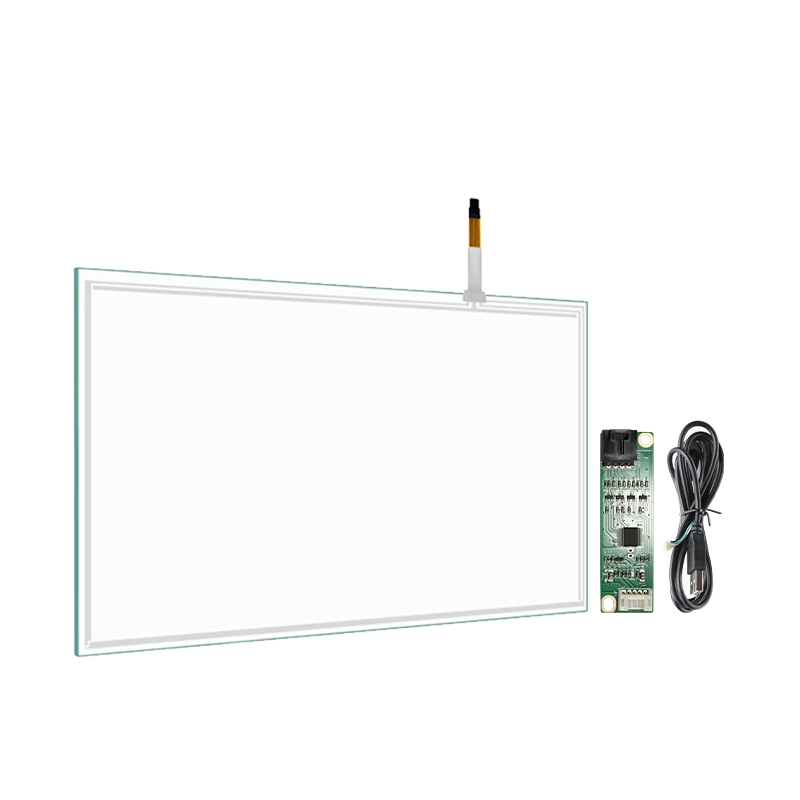
A five-wire resistive touchscreen detects input through physical pressure. When a finger, gloved hand, or compatible stylus presses the surface, the conductive layers make contact at the pressed location. The controller then identifies the touch position based on the electrical signals generated by that contact.
This operating principle is particularly useful in equipment where users cannot always interact with a display under clean, dry conditions. Unlike touch technologies that rely primarily on changes in the electrical properties of the user's finger, resistive touch input is activated by physical contact between the screen layers.
For example, an operator using an industrial machine may need to select a function while wearing work gloves. A technician may also operate a control panel in an environment where hands are not completely clean. Pressure-based input makes these interactions practical, provided the applied pressure and input device are compatible with the panel design.
The five-wire configuration is commonly selected for applications that require dependable operation over repeated use. GreenTouch's five-wire products offer a stated touch lifetime of 1,000,000 times and a resolution of 4096 × 4096. These specifications provide useful reference points when evaluating the panel for equipment with frequent user interaction.
The internal structure is an important factor in touchscreen performance. A five-wire resistive panel generally uses two conductive layers: ITO film and ITO glass. These layers work together to detect the position of physical contact.
In the product structure offered by GreenTouch, ITO film is combined with ITO glass in a pure-plane design. The overall thickness is approximately 2.3 mm, providing a relatively slim assembly for equipment manufacturers working with limited installation space.
The layered structure also supports a straightforward input mechanism. When pressure is applied, the two conductive layers come into contact. The controller processes the resulting electrical changes and translates them into touch coordinates.
For OEM projects, the practical value of this structure lies in the balance between input reliability, panel thickness, and integration requirements. Equipment designers can evaluate the touchscreen alongside the display module, enclosure, mounting structure, and controller rather than treating it as an independent component.
A 5-wire resistive touch screen can therefore be a suitable option for equipment that requires a physical-pressure input method and a relatively simple interface architecture.
Environmental contamination is one of the common causes of touchscreen operating problems. Industrial control panels may be installed near production equipment, where airborne dust, oil residue, and moisture are difficult to eliminate completely. Payment terminals and self-service machines may also experience frequent contact with different users and varying environmental conditions.
Resistive touchscreens have a practical advantage in these situations because their input mechanism is based on physical pressure rather than depending on the electrical characteristics of a user's finger. According to GreenTouch's product information, its five-wire resistive touch panels are designed to remain unaffected by environmental pollutants such as water, oil, dust, and moisture.
This does not mean that every installation is automatically waterproof or suitable for direct exposure to liquids. The complete equipment design still matters. The enclosure, front-panel bonding, cable outlets, mounting interfaces, and sealing materials all influence the protection level of the finished device.
GreenTouch indicates that its panels can be sealed against contamination and support NEMA 4, 4X, and 12 requirements. Equipment manufacturers should confirm the sealing configuration and verify the protection rating of the complete assembled product under the applicable test conditions.
For applications involving regular cleaning or exposure to industrial contaminants, this distinction is important. Selecting a suitable panel is only one part of building a reliable sealed touchscreen system.
A touchscreen used throughout the working day may receive thousands of physical contacts. Over time, repeated interaction can cause surface wear, particularly when operators use hard styluses or when dust particles are present between the input tool and the screen.
GreenTouch specifies a surface pencil hardness of 3H according to ASTM D3363. This provides a reference for evaluating resistance to surface scratching under the relevant pencil-hardness test method. The product also uses a mist hard coating and anti-Newton ring treatment.
These treatments serve different practical purposes. The hard coating helps improve surface resistance to scratching during normal operation. Anti-Newton ring treatment helps reduce unwanted optical interference patterns that may appear between closely spaced transparent layers.
For equipment designers, the surface finish should be selected according to the actual operating environment. A matte finish may be useful where reflections need to be controlled, while a smooth finish may suit applications with different visual or cleaning requirements. Anti-glare treatment can also be considered when the display is used under strong ambient lighting.
The Resistive Touch Screen 7 to 22 Inches (5 Wire) can be customized with different surface treatments, including matte anti-Newton ring and anti-glare options, allowing the panel configuration to better match the intended application.
Industrial equipment often contains motors, power supplies, switching devices, and other electrical components that can create electromagnetic interference. A touchscreen must work alongside these components without causing unnecessary input problems.
GreenTouch describes its five-wire resistive touchscreens as having strong anti-interference capabilities and using stable ICs and bonding equipment in production. These characteristics are relevant when the panel is integrated into industrial automation systems, embedded computers, and control terminals.
However, overall system stability depends on more than the touchscreen itself. The controller, grounding arrangement, cable routing, power supply quality, USB connection, and surrounding electrical design can all influence performance.
During equipment development, engineers should test the complete assembly under realistic operating conditions. This includes checking touch response while nearby motors and switching devices are running, verifying cable connections, and confirming that the controller communicates correctly with the host system.
GreenTouch five-wire resistive touchscreens support Windows, Android, and Linux systems. This compatibility gives equipment manufacturers flexibility when selecting an operating platform for their products.
A stable touch interface also needs to fit the equipment's physical layout. A screen that is too small may make controls difficult to operate, while an oversized panel can complicate enclosure design and installation.
GreenTouch offers five-wire resistive touchscreens in sizes ranging from 7 to 22 inches. Available formats include:
16:9: 7", 15.6", 18.5", and 21.5"
4:3: 10.4", 12.1", 15", 17", and 19"
16:10: 22"
The range covers different equipment configurations, from compact embedded control units to larger industrial operator interfaces.
For example, a 7-inch or 10.4-inch panel may suit compact control equipment, while 15.6-inch and 21.5-inch formats can provide more display area for interfaces containing multiple operating parameters. The appropriate choice depends on the available mounting space, user viewing distance, interface layout, and host display specifications.
When selecting a panel, manufacturers should also check the active area, outline dimensions, viewing requirements, controller interface, and cable outlet position. These details are essential for avoiding mechanical or electrical compatibility problems during assembly.
Standard touchscreen specifications do not always cover the needs of specialized equipment. Some devices operate in environments with elevated temperatures, high humidity, or prolonged ultraviolet exposure. Others require a particular FPC outlet location or a customized electrical interface to fit an existing enclosure.
GreenTouch supports customization of screen size, logo, FPC outlet location, packaging, ITO glass thickness, controllers, and electrical interfaces. Surface options include matte anti-Newton ring, anti-glare, and smooth finishes. High-temperature, high-humidity, and anti-UV requirements can also be discussed during project development.
These options allow the touchscreen to be considered as part of the complete equipment design. Before confirming a customized configuration, OEM buyers should provide the intended operating temperature and humidity range, installation method, expected contact frequency, and relevant environmental test requirements.
This information helps the manufacturer assess which structural and material options are appropriate. It also makes sample evaluation and engineering verification more efficient.
Consistent touchscreen performance depends on manufacturing quality as well as product design. Lamination defects, contamination, inconsistent bonding, and poor electrical connections can all affect the finished panel.
ShenZhen GreenTouch Technology Co., Ltd. is a professional manufacturer of touch products, including capacitive touchscreens, resistive touchscreens, infrared touch frames, nano touch foil, touch monitors, and touch all-in-one PCs. The company operates a fully enclosed dust-free workshop and has established automatic production lines. Its quality and environmental management systems have obtained ISO 9001 and ISO 14001 certifications.
GreenTouch reports having a Class 1,000 dust-free lamination workshop, more than 20 technical engineers, and production capabilities covering G+G and G+FF bonding as well as TP+LCM full lamination. Its touch panel production capacity is stated at more than 600 units per day, supported by warehouse facilities in Huizhou and Shenzhen.
The company's five-wire resistive touchscreens are intended for applications such as industrial automation, industrial tablet PCs, POS terminals, ATMs, GPS devices, payment machines, medical equipment, and pharmacy automation. The product range carries CE, FCC, and RoHS certifications, with a stated warranty period of one to three years.
For buyers, these manufacturing and quality-control details should be considered alongside product specifications. It is also advisable to request samples, confirm the exact configuration, and test the panel in the intended enclosure before moving into mass production.
Maintaining stable touchscreen input in harsh environments requires the right combination of sensing technology, material structure, surface protection, electrical integration, and manufacturing control. Five-wire resistive technology uses physical pressure to register input, making it practical for equipment that may encounter gloves, moisture, oil, dust, and other everyday operating challenges.
The Resistive Touch Screen 7 to 22 Inches (5 Wire) from GreenTouch combines an ITO film and ITO glass structure, 4096 × 4096 resolution, a stated lifetime of 1,000,000 touches, and customizable surface and integration options. With suitable enclosure sealing and system-level testing, it can support a wide range of industrial and commercial equipment designs.
For OEMs and equipment manufacturers evaluating a dependable touch interface, GreenTouch provides multiple screen sizes and customization options to help match the touchscreen to the actual installation and operating environment.