 RU
RU ZH
ZH IT
IT ES
ES TR
TR JA
JA PT
PT KO
KO FR
FR DE
DE AR
AR ID
ID
Advantages of new energy vehicle display screens
Learn More



When a large touchscreen is used for professional applications, image quality and touch response cannot be evaluated separately. A 65-inch display provides a large interactive surface, but its size also makes the relationship between the LCD, touch layer, and user more noticeable. If there is too much separation between these layers, reflections, viewing clarity, and touch positioning can all affect the user experience.
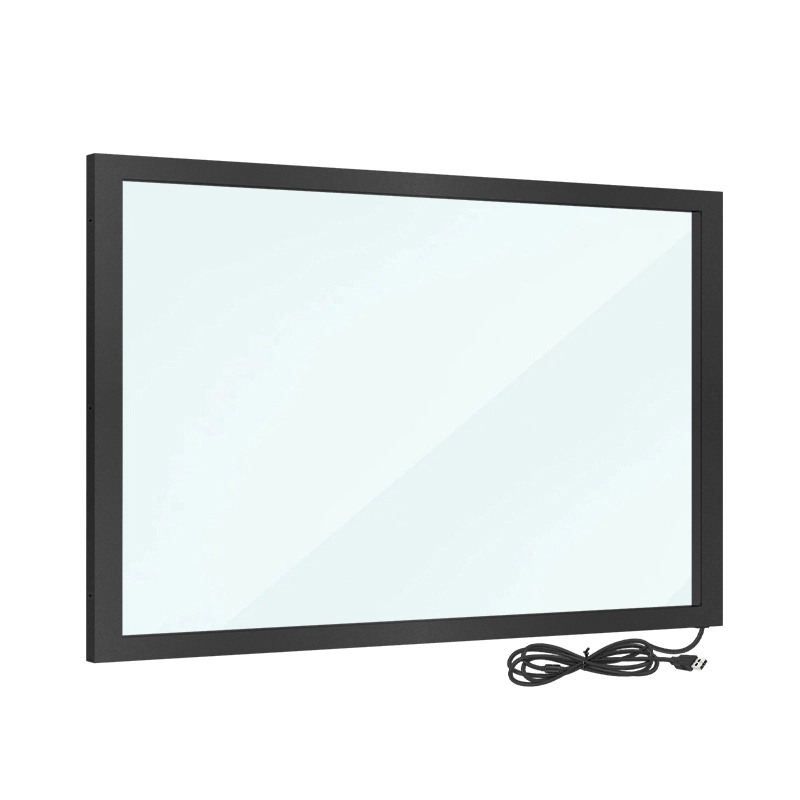
This is one reason optical bonding has become an important consideration in large-format touch displays. Instead of treating the touch panel and LCD as completely separate layers with an air gap between them, optical bonding brings the two components together using a bonding material across the interface.
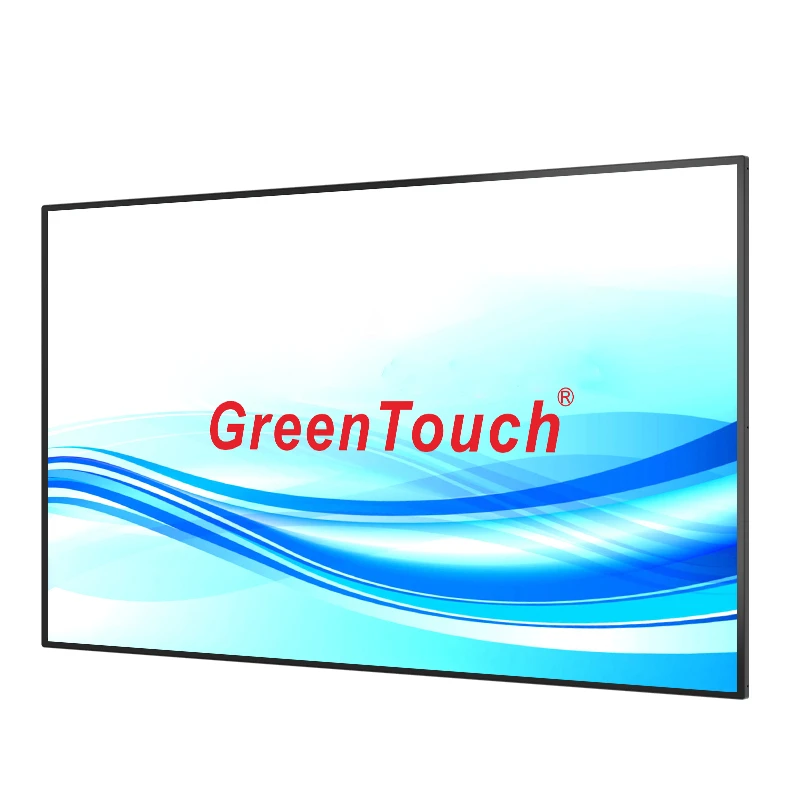
The 65 Inch 4K UHD Touch Screen Monitor uses an optically bonded touch panel and LCD panel to combine large-format 4K visuals with 10-point projected capacitive touch. For applications such as professional interactive displays, conference systems, commercial environments, education, control interfaces, and public information terminals, this construction can influence how the screen looks and feels during everyday operation.
A conventional touchscreen can contain an air gap between the touch panel and LCD. Light traveling through these different layers can be reflected at the boundaries between materials, which may reduce perceived contrast or make the display harder to view under certain lighting conditions.
Optical bonding addresses this structure by bonding the touch panel directly to the LCD panel with a transparent optical adhesive or bonding material.
The objective is not simply to make the display thinner. The more important consideration is how the integrated layers affect the path of light between the LCD and the viewer.
For a 65-inch touchscreen, this can be particularly relevant because the large surface area can make reflections and viewing differences more noticeable than on smaller displays.
On a small touchscreen, users typically sit relatively close to the display and interact with a limited viewing area. A 65-inch touchscreen is different. Users may stand, walk around, view the screen from the side, or interact with content at different positions.
A large interactive display may also be installed in a room with ceiling lights, windows, spotlights, or other sources of ambient light.
In these situations, the relationship between the display surface and the LCD becomes important.
The optical bonding used in the 65 Inch 4K UHD Touch Screen Monitor helps create a more integrated display structure. This is useful when the screen is expected to provide both detailed visual content and direct touch interaction.
One of the practical effects of optical bonding is the reduction of reflections caused by an air gap between the touch layer and LCD.
When light from the environment enters a display with multiple separated layers, some of it can reflect between the surfaces. These reflections may create a washed-out appearance or reduce perceived clarity, particularly in bright environments.
By reducing the separation between the touch panel and LCD, optical bonding can help minimize this effect.
This does not mean optical bonding automatically makes every display readable in direct sunlight. The actual result also depends on brightness, surface treatment, ambient lighting, panel specifications, and installation conditions.
However, when optical bonding is combined with appropriate surface treatment, it can contribute to a clearer viewing experience.
The 65-inch monitor also supports AG surface treatment, with AR, AF, and antibacterial options available depending on requirements. This gives system designers additional ways to address glare, reflections, fingerprints, or hygiene considerations.
Large-format touch interaction requires more than a responsive sensor. The user also needs to feel that the point they touch corresponds naturally with the content displayed underneath.
When there is a noticeable physical gap between the touch surface and LCD, the visual position of a touch target can feel slightly separated from the actual touch surface, especially when viewed from an angle.
Optical bonding brings the touch layer closer to the displayed image.
The 65 Inch 4K UHD Touch Screen Monitor supports projected capacitive 10-point touch with sensitive sensing and accurate fixed-point interaction. Combined with optical bonding, this structure is suitable for interfaces where users need to select icons, operate menus, move objects, annotate content, or interact with visual information directly on the screen.
For a 65-inch display, this is especially useful because users may interact with different areas of the screen while standing rather than sitting directly in front of it.
Optical bonding does not increase the resolution of an LCD panel. A 3840 × 2160 display remains 3840 × 2160 regardless of whether the touch layer is optically bonded.
What optical bonding can influence is how clearly users perceive the image produced by the LCD.
The 65-inch monitor provides 4K UHD resolution, which delivers four times the pixel density of 1080P in terms of total pixel count. This additional detail can be useful for large-format content containing small text, charts, diagrams, product visuals, maps, technical information, or high-resolution video.
When high-resolution content is displayed through a touchscreen, the user needs to both see and interact with that information. A more integrated optical structure can help maintain the direct relationship between visual content and touch operation.
This is one reason optical bonding is particularly relevant when evaluating a large 4K interactive display rather than treating the touch panel as an independent component.
Optical bonding is only one part of the overall display system. Color performance, contrast, viewing angle, HDR capability, and surface treatment also affect the final image.
The 65 Inch 4K UHD Touch Screen Monitor supports up to 1.07 billion display colors and 90% NTSC color performance. It also provides 99% sRGB and 95% DCI-P3 wide color gamut specifications.
These characteristics can help the display reproduce a broad range of colors for applications where visual detail matters.
The monitor also supports HDR, which is designed to provide more distinct image layers between bright and dark areas. Higher color depth can help reduce visible color banding in gradients, while Delta E can be used as a reference for evaluating color accuracy.
Together, these features mean optical bonding is not being used as an isolated selling point. It forms part of a broader display design that combines 4K resolution, high color depth, wide color gamut, HDR, and capacitive touch.
A 65-inch touchscreen is rarely viewed from exactly one fixed position.
In a conference room, people may sit at different angles. In a retail environment, customers may approach from either side. In an educational or public information setting, users may move around while viewing the content.
The monitor provides a 178-degree ultra-wide viewing angle, helping maintain a consistent image across a broad range of viewing positions.
Optical bonding can complement this type of large-format display design by reducing the visual impact of reflections between display layers.
However, viewing angle and optical bonding solve different problems. The viewing angle concerns how the LCD image remains visible from different positions, while optical bonding primarily concerns the optical relationship between the display and touch layers.
Understanding this distinction helps buyers evaluate specifications more realistically.
The screen surface is another factor that should be evaluated alongside optical bonding.
The 65-inch monitor supports AG treatment, with AR, AF, and antibacterial options available.
AG, or anti-glare, can help diffuse reflections from ambient light sources. This can be useful in rooms with strong overhead lighting or other bright sources.
AR, or anti-reflective treatment, focuses on reducing reflected light from the display surface.
AF, or anti-fingerprint treatment, can help maintain a cleaner appearance where users frequently touch the screen.
An antibacterial surface option can be considered for environments where hygiene is an additional requirement.
These treatments should not be viewed as interchangeable. The right option depends on where the display will be installed and how it will be used.
A large touchscreen also needs to connect reliably with computers, media sources, or other equipment.
The 65-inch monitor provides HDMI 2.0, HDMI 1.4, DP 1.2, USB, and AUDIO interfaces. The connectors are positioned on the rear and face toward the right, which can simplify cable routing depending on the installation configuration.
The monitor can also be configured to power on or off automatically based on the presence of current or a video signal.
For applications requiring built-in computing rather than an external computer, an OPS-type configuration is available. This can allow the display to be integrated into a more complete interactive computing solution.
These options make the 65 Inch 4K UHD Touch Screen Monitor suitable for projects where display, touch, connectivity, and computing requirements need to be considered together.
Large interactive displays are often used for extended periods. Replacing or servicing a display can be inconvenient when it is integrated into a wall, conference system, kiosk, or commercial installation.
The monitor is designed for a long service life of up to 50,000 hours under normal operating conditions and supports 7×24 operation. A 1–3 year guarantee is available depending on the applicable configuration or project terms.
This continuous-use capability is useful for professional installations where the screen may operate for long working shifts or throughout the day.
Optical bonding therefore needs to be considered alongside the complete hardware design. A good optical structure is valuable, but it should also be supported by appropriate display components, touch technology, thermal design, surface treatment, and operating specifications.
For large-format touch displays, the bonding process itself is an important part of manufacturing quality.
ShenZhen GreenTouch Technology Co.,Ltd. has established a Class 1000 dust-free lamination workshop and supports G+G, G+FF bonding, and TP+LCM full lamination technologies.
This type of controlled production environment is relevant to optical bonding because dust and other particles trapped between layers can affect the appearance of a finished display.
The company operates a 5,000 m² standard production workshop and reports daily production of more than 600 touch panels. Its R&D team includes more than 20 technical engineers, with more than 50 new products developed annually and more than 10 annual patents reported.
The company also holds ISO9001 quality management system and ISO14001 environmental management system certifications, along with CE, FCC, CB, RoHS, UL, CCC, HDMI, and other certifications.
For OEMs and system integrators, manufacturing capability is worth considering because optical bonding is not simply a specification to be selected on a product sheet. The quality of the bonding process, cleanliness of the production environment, alignment, and integration of the touch and display layers all contribute to the final product.
The answer depends on the application.
For a large display used mainly as a passive screen in a controlled room, optical bonding may not be the most important purchasing factor.
For an interactive 65-inch display, however, the requirements are different. Users need to see detailed content clearly while touching the screen directly. Reflections, touch positioning, viewing angles, and surface treatment can all affect the experience.
Optical bonding becomes more valuable when the project combines large screen size, touch interaction, high-resolution content, frequent user interaction, and challenging ambient lighting.
For these applications, the 65 Inch 4K UHD Touch Screen Monitor combines optical bonding with 3840 × 2160 resolution, 10-point capacitive touch, 1.07 billion colors, 99% sRGB, 95% DCI-P3, HDR, a 178-degree viewing angle, and optional surface treatments.
Optical bonding does not simply add another feature to a touchscreen. It changes the physical relationship between the touch panel and LCD, which can influence perceived clarity, reflections, touch positioning, and the overall feeling of interacting with a large display.
For a 65-inch 4K touchscreen, these details become more important because users interact with a much larger surface and may view it from different positions and lighting conditions.
When selecting a professional interactive display, optical bonding should therefore be evaluated together with resolution, touch technology, color performance, viewing angle, surface treatment, connectivity, and long-term operating capability.
With its optically bonded construction and professional display specifications, the 65 Inch 4K UHD Touch Screen Monitor provides a practical platform for applications that require both detailed 4K visuals and direct touch interaction.