 EN
EN ZH
ZH IT
IT ES
ES TR
TR JA
JA PT
PT KO
KO RU
RU FR
FR DE
DE AR
AR ID
ID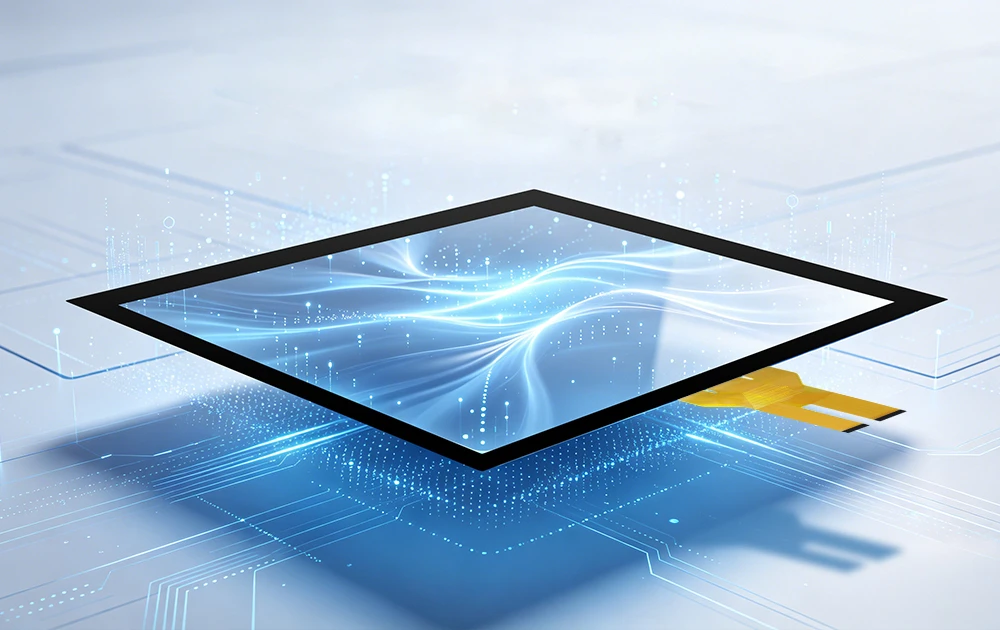
Frequently Asked Questions about Capacitive Touchscreens
Learn More



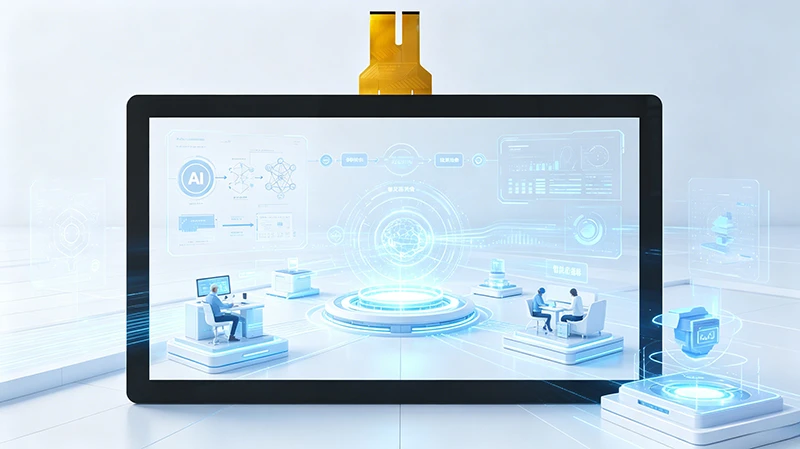
The deep integration of touch screens and AI is driving human-computer interaction towards a new stage of context-adaptive interaction. Traditional touchscreens serve only as passive input tools, but with the integration of artificial intelligence, they gain the ability to perceive, understand, and respond to environmental changes, achieving a leap from "touch control" to "intelligent control."
The core lies in AI's ability to capture user behavior ,physiological state, and environmental information in real time through sensor fusion (such as cameras, microphones, and accelerometers).Combined with contextual semantic understanding, it dynamically adjusts the interface layout, operational logic, and feedback methods. For example, in driving scenarios, the system automatically simplifies the interface, enlarges key buttons, and enables voice control; when reading, it adjusts font size and background brightness according to the user's concentration; and for elderly users, it proactively provides operation steps or gesture guidance.
A deeper level of adaptation is reflected in personalized learning capabilities: AI continuously analyzes user preferences and habits, building dynamic behavioral models that allow the interface to "anticipate" needs. For example, if it detects a user frequently swiping to check the weather, the system can display a three-day forecast in advance; if it recognizes emotional fluctuations (through micro-expressions or voice tone),it proactively pushes soothing music or reminds users to rest.
Furthermore, contextual adaptation transcends the boundaries of physical interaction—supporting multimodal input (gestures, eye tracking, voice) collaboration to achieve "seamless interaction."When a user's gaze rests on a certain area, the interface automatically highlights relevant information without requiring touch.
This coupling not only improves efficiency and experience but also reshapes the human-machine relationship: the device transforms from a tool into a partner that "understands" you. However, privacy, security, and algorithmic transparency remain challenges. The future requires striking a balance between accurate response and user autonomy, driving technology towards a more human-centered evolution.