 RU
RU ZH
ZH IT
IT ES
ES TR
TR JA
JA PT
PT KO
KO FR
FR DE
DE AR
AR ID
ID
The Difference between LED and LCD
Learn More



Touch technology is often discussed in broad terms, but equipment buyers usually make decisions based on a much narrower question: what actually works in the target device, under the target conditions, for the target user? In many industrial and commercial applications, the answer is still a Resistive Touch Screen.
That is especially true for equipment categories such as HMI terminals, POS systems, medical devices, and self-service machines. These products are built for repeated daily use, but they do not all operate in the same environment. Some are installed in factory workshops. Some are placed on retail counters. Some are integrated into diagnostic equipment. Some are expected to serve the public continuously in unattended locations. Because the use conditions are different, the touch solution must be chosen around application logic, not appearance alone.
Resistive touch screens remain relevant in these segments because they solve practical problems. They support pressure-based input, work with gloves or stylus operation, adapt well to compact or embedded device designs, and match many existing system architectures used in OEM equipment.
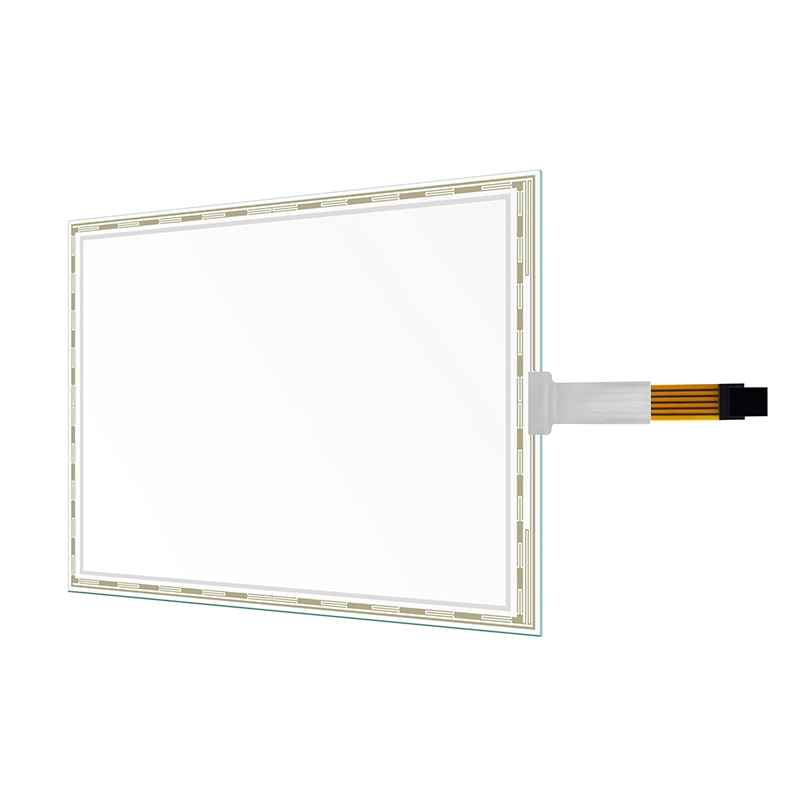
A common mistake in touch product selection is assuming that all devices need the same user experience. In reality, HMI equipment, POS terminals, medical devices, and self-service systems serve different tasks. What they share is that the touch layer is part of the working tool, not just part of the display.
In these markets, buyers usually care about:
A resistive touch screen often fits these requirements because it supports direct, practical interaction instead of relying on gesture-heavy consumer-style use.
Human-machine interface equipment is built for control, monitoring, and command input. In factory automation, machine control cabinets, and industrial operating panels, the user usually needs precise single-point interaction rather than multi-touch entertainment-style behavior.
That makes resistive touch a practical option for HMI applications.
In a typical HMI scenario, operators may:
Under these conditions, a resistive touch screen is often easier to integrate into the actual use flow. It supports finger, gloved hand, or stylus operation, which is valuable when the operator cannot stop to remove protective gear just to use the screen.
For HMI device manufacturers, resistive touch screens also make sense because many industrial systems still use structured interface layouts with keys, menus, parameter fields, and function zones. This kind of interface logic matches well with single-touch control behavior.
POS terminals may seem less demanding than industrial control systems, but they also have very practical operating requirements. A POS terminal is not judged by how advanced the display looks. It is judged by how efficiently it supports cashier work, ordering processes, checkout operations, and long daily running hours.
In POS applications, a resistive touch screen can still be a smart choice because it offers:
Not every retail or restaurant environment needs multi-touch gesture control. In many cases, the operator is selecting menu items, entering amounts, confirming actions, or moving through defined software pages. A resistive touch screen fits this kind of workflow naturally.
It is also useful in projects where the manufacturer is updating an existing POS product line rather than building a completely new hardware platform. Compatibility and continuity can be just as important as appearance in these situations.
Medical equipment is one of the clearest examples of why the “best” touch technology depends on the device, not the market trend. Medical systems often require stable operation, predictable user input, and good compatibility with specialized equipment structures. In some cases, touch interaction must also work well with gloves, stylus input, or controlled operating procedures.
A resistive touch screen continues to be used in medical-related equipment because it can support:
Examples may include portable diagnostic instruments, monitoring devices, nurse station terminals, registration equipment, and control interfaces inside professional healthcare systems.
In these applications, the touch layer is part of the device’s functional reliability. The user is not looking for gesture effects. The user is looking for an interface that behaves consistently and supports a structured work process.
For OEM medical equipment manufacturers, another consideration is supply continuity. Medical devices often stay in service for years, which makes long-term product consistency and repeat supply especially important.
Self-service devices represent another area where resistive touch screens still have clear value. This category includes ticketing machines, information kiosks, check-in terminals, payment devices, queue systems, attendance terminals, and other public-facing machines.
These devices are used by many different people, often in fast, task-driven situations. The interface must be easy to understand and responsive enough to support a clear user journey. In some projects, stylus-based interaction or repeated single-point selection remains more important than high-end multi-touch behavior.
A resistive touch solution can be a good fit for self-service devices because it supports:
For equipment brands and kiosk manufacturers, this also matters at the engineering level. Self-service machines often involve tight enclosure design, embedded installation, and project-specific layout requirements. Resistive touch screens can be customized to work within those structural limits.
When buyers compare touch solutions for HMI, POS, medical, and self-service products, the most important step is not to compare buzzwords. It is to compare use conditions.
A resistive touch screen is often the right answer when the device needs:
This is why resistive touch products continue to remain relevant across professional equipment categories. The choice is not about following old habits. It is about selecting the touch structure that best fits the actual device function.
For manufacturers developing these devices, sourcing the right resistive touch screen is rarely just about choosing a size. The screen may need to match the housing, controller, interface logic, and operating environment of the full product. That is why OEM buyers usually need a supplier who can support more than standard catalog delivery.
A capable partner should be able to support:
This is especially important in HMI, medical, and self-service device projects, where the touch screen directly affects usability and field performance.
GreenTouch Technology is a professional manufacturer of touch products, with a product range covering capacitive touch screens, resistive touch screens, infrared touch frames, nano touch foil, touch screen monitors, touch all-in-one PCs, advertising digital signage, conference touch all-in-one PCs, teaching all-in-one PCs, and advertising machines.
For buyers in industrial and commercial sectors, this kind of manufacturing background matters because it supports both standard supply and project-based customization. GreenTouch Technology has established a fully automatic production line and a fully enclosed dust-free workshop, which helps strengthen production control and product consistency. The company also operates under ISO9001 quality management system certification and ISO14001 environmental management system certification, and its products are managed through strict quality control processes.
In addition, GreenTouch Technology products have obtained CE, FCC, CB, RoHS, UL, CCC, and HDMI certifications. These points are important for customers serving global markets, because they support qualification review and smoother OEM cooperation.
Although HMI, POS, medical, and self-service devices all use touch interaction, the solution path does not have to be identical. A good resistive touch screen supplier should understand that the same technology can serve different industries in different ways.
For example:
This is why application understanding matters so much in supply discussions. Buyers do not just need a touch screen. They need a touch solution that fits the product category.
Resistive touch screen solutions remain highly practical for HMI, POS, medical, and self-service devices because these markets are built around function, workflow, and reliability. In each of these application areas, the screen is part of the equipment’s working system, not just part of its appearance.
For OEM buyers and device manufacturers, the value of resistive touch technology lies in how well it supports real-world operation: pressure-based input, glove and stylus compatibility, strong device matching, and dependable long-term supply.
When the touch solution is selected around how the equipment is actually used, the result is usually better product performance, smoother integration, and a more reliable end-user experience.