
 ZH
ZH IT
IT ES
ES TR
TR JA
JA PT
PT KO
KO RU
RU FR
FR DE
DE AR
AR ID
ID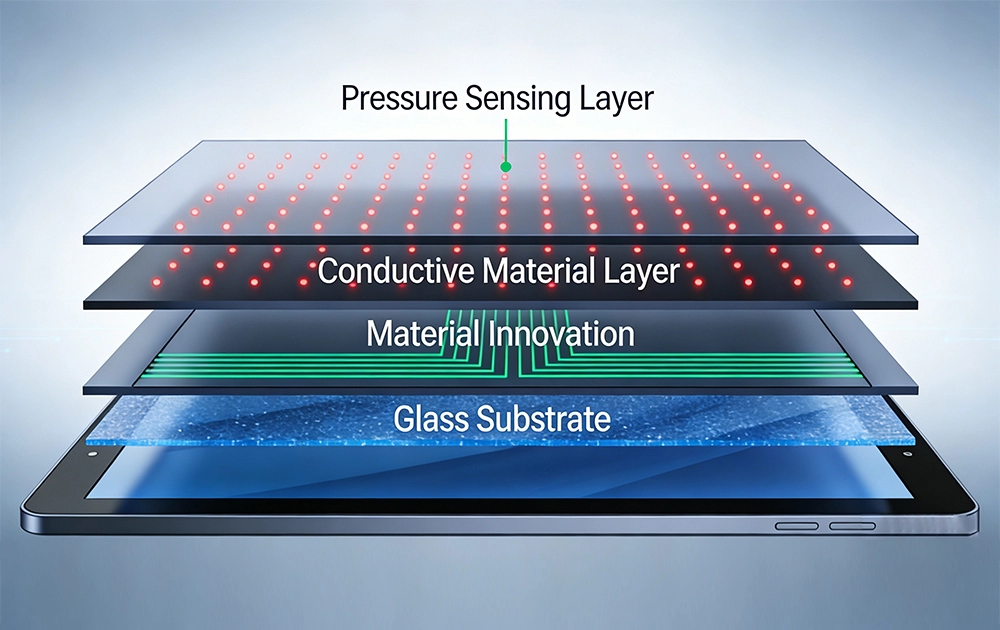
Breakthrough in Resistive Touchscreen Technology in 2026: Driven by Both Pressure Sensing and Material Innovation
Learn More



When buyers search for a Resistive Touch Screen, they often begin with size, application, or interface requirements. But once the project moves into actual product selection, one technical question quickly becomes important: should the device use a 4-wire or a 5-wire resistive touch screen?
For many OEM buyers, this is not just a specification detail. It affects touch durability, long-term stability, integration decisions, and the final performance of the end product. A touchscreen used in an industrial control terminal, POS device, medical instrument, or self-service machine has to match real operating conditions. Choosing the wrong structure can lead to avoidable issues later, especially in projects that expect long service cycles and repeated touch input.
The good news is that the choice between 4-wire and 5-wire resistive touch screens is not complicated once buyers understand how each structure works and where each one performs best.
Before comparing the two types, it is worth understanding why resistive touch technology remains widely used in industrial and commercial equipment.
Unlike capacitive touch, resistive technology responds to pressure. It can be operated by finger, gloved hand, stylus, or pen-like tool. That makes it especially practical for environments where users are not interacting with the screen the same way they would on a smartphone or tablet.
This is why resistive touch screens are still common in:
In these applications, stable single-point input, glove compatibility, and dependable operation often matter more than gesture-based interaction.
A 4-wire resistive touch screen uses two conductive layers. Both layers participate in position detection. When pressure is applied, the top and bottom conductive layers make contact, and the controller calculates the touch position through voltage changes.
This structure is widely used because it is straightforward and practical for many devices. It is commonly selected for standard commercial equipment and projects where the touch frequency is moderate and the environment is not unusually harsh.
For buyers, the advantages of 4-wire resistive touch screens usually include:
A 4-wire structure is often enough for projects where touch performance requirements are clear and routine, but not extremely demanding over long operating cycles.
A 5-wire resistive touch screen works differently. In this design, the bottom layer handles the voltage distribution used for position detection, while the top layer mainly acts as the contact-sensing layer. This structure changes how the touch signal is measured and generally improves long-term durability in demanding use environments.
The biggest point buyers usually care about is stability over time. Because the sensing logic relies more heavily on the bottom layer, the 5-wire design is often preferred in equipment that experiences repeated, high-frequency use or requires more consistent touch behavior across a longer service life.
A 5-wire resistive touch screen is commonly used in:
For these cases, the 5-wire structure is often seen as the stronger option for durability and long-cycle reliability.
From a buyer’s point of view, the 4-wire vs 5-wire discussion should not stay too theoretical. The real question is simple: what kind of working condition will the screen face after it is installed in the product?
A 4-wire resistive touch screen may be a practical choice when:
A 5-wire resistive touch screen is often the better choice when:
This is why experienced OEM buyers do not ask only which structure is more common. They ask which structure better fits the product’s real use pattern.
One of the most practical differences between 4-wire and 5-wire resistive touch screens is durability under repeated use.
In many industrial and commercial applications, the touchscreen is used as an operating interface rather than a simple display add-on. If that interface is touched thousands of times over its service life, long-term signal stability becomes more important than initial touch response alone.
A 5-wire structure is often favored in such cases because buyers generally view it as the better option for repeated-use environments. A 4-wire structure can still perform well, but it is more often selected for projects where usage intensity is lower or where the application conditions are less demanding.
This does not mean one is universally better than the other. It means buyers should match the structure to the actual product workload.
Another point buyers should consider is how the touchscreen fits into the overall product structure. The choice between 4-wire and 5-wire is not only about touch behavior. It also affects sourcing, controller matching, and product planning.
When selecting a resistive touch screen for OEM equipment, buyers should review:
For example, a replacement project may need a screen structure that matches an older existing design. In that case, the choice may be influenced by what the original equipment used. In a new OEM project, the buyer may have more flexibility and can choose based on the required operating conditions from the beginning.
A reliable manufacturer should be able to discuss both options clearly and guide the buyer toward a suitable structure rather than pushing one version without understanding the end application.
To make the difference clearer, it helps to look at common project scenarios.
In industrial HMI equipment, the screen may be used daily by operators, often with gloves and under repetitive working conditions. Here, many buyers lean toward 5-wire resistive touch screens because they want longer-term operational stability.
In POS systems, touch input is frequent but the environment is often cleaner and more controlled than a factory floor. Depending on the expected intensity and device design, 4-wire resistive touch screens may still be a practical fit.
Medical equipment often values precise input and stable use over time. The final selection depends on device design and touch frequency, but reliability is usually a high priority, which leads many buyers to consider 5-wire structures carefully.
In replacement scenarios, compatibility may become the main factor. If an existing system was designed around a 4-wire or 5-wire configuration, changing the structure may require extra adjustment. In such cases, buyers usually focus on matching the original engineering conditions first.
The difference between 4-wire and 5-wire resistive touch screens may sound simple on paper, but in real OEM work, product selection often depends on detailed engineering communication. A good supplier should ask about the actual equipment, use environment, and durability expectation before recommending a structure.
GreenTouch Technology is a professional manufacturer of touch products, with product lines covering capacitive touch screens, resistive touch screens, infrared touch frames, nano touch foil, touch screen monitors, touch all-in-one PCs, digital signage, conference touch all-in-one PCs, teaching all-in-one PCs, and advertising machines. With its own trademark, fully automatic production line, and fully enclosed dust-free workshop, the company is positioned to support both standard supply and OEM-oriented touch product development.
GreenTouch Technology has passed ISO9001 quality management system certification and ISO14001 environmental management system certification, and its products are managed under strict quality control procedures. The company has also obtained CE, FCC, CB, RoHS, UL, CCC, and HDMI certifications. For OEM buyers, this kind of manufacturing background matters because resistive touch screen selection is closely tied to consistency, technical support, and long-term supply reliability.
Before confirming a 4-wire or 5-wire resistive touch screen, buyers should review a few practical questions:
These questions usually lead to a much better decision than choosing based only on catalog terminology.
For OEM buyers, the difference between 4-wire and 5-wire resistive touch screens is really a question of application fit. A 4-wire structure can be a practical solution for many standard commercial and industrial devices. A 5-wire structure is often preferred when the product faces heavier usage, stricter durability needs, or longer service expectations.
The right choice depends on how the product will actually be used, how long it is expected to last, and how well the screen structure matches the full equipment design. That is why buyers should not treat 4-wire and 5-wire as interchangeable labels. They should treat them as engineering options tied to real project requirements.
When the selection is based on operating conditions rather than assumptions, the final product usually performs more reliably in the field.