
 CN
CN
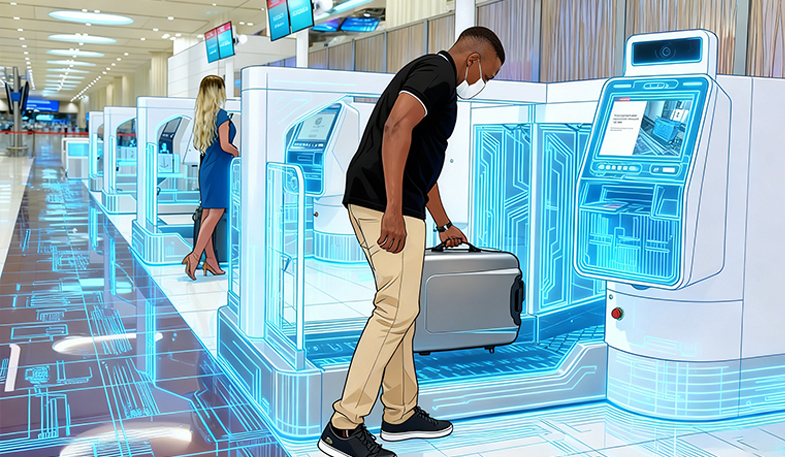
Applications of industrial touch monitor in public transportation
Learn more


Shenzhen, March 18, 2026 — Despite fierce competition in the touch technology field, resistive touchscreens, with their unique environmental adaptability and interactive characteristics, are poised for a dual upgrade in both technology and application in 2026. Latest industry data shows that through technological breakthroughs such as leveraging inherent physical properties to achieve pressure sensing and replacing traditional ITO with new conductive materials, resistive touchscreens continue to see deeper applications in demanding scenarios such as industry and medicine, further optimizing the market structure towards high value and high reliability.
Core Technology Iteration: From "Single-Point Positioning" to "Three-Dimensional Interaction"
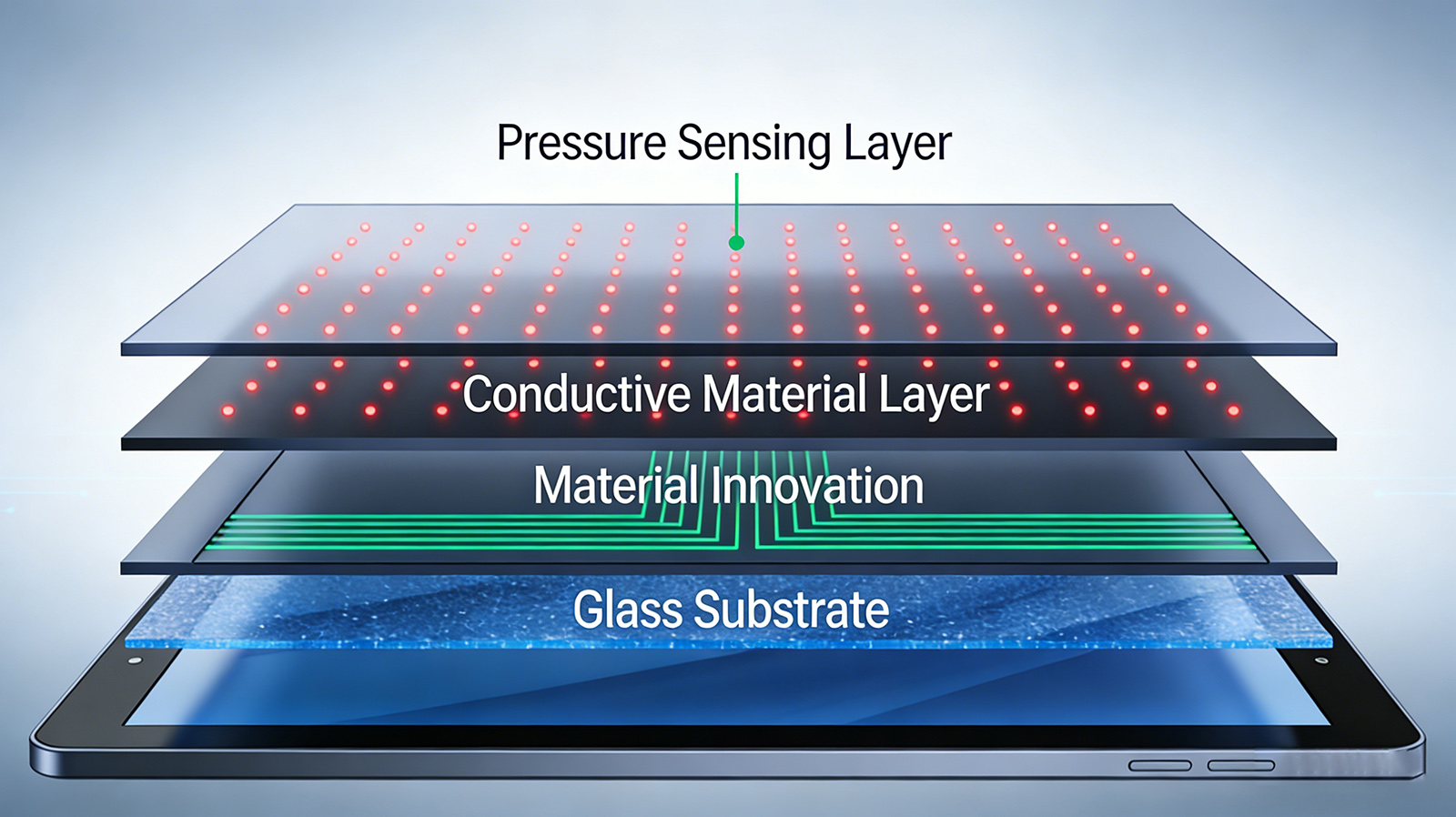
The core breakthroughs for resistive touchscreens in 2026 focus on two main dimensions: functional upgrades and material innovation. Traditional resistive screens rely on pressure contact between two transparent conductive layers to achieve coordinate positioning, while this year, the industry has achieved zero-hardware-cost pressure-level sensing through algorithm optimization.
Based on Holm’s Contact Theory, the research team discovered that contact resistance is inversely proportional to pressure (Rc∝1√F). In a five-wire resistive touchscreen architecture, no additional force-sensitive resistors (FSRs) are needed. The difference in force between a light touch and a heavy press can be accurately captured simply by reusing the ADC (analog-to-digital converter) signal from the touch detection pin. After dual verification through software calibration, dynamic normalization, and coordinate stability, three levels of pressure recognition can be achieved. It has been successfully applied in industrial HMIs and medical equipment, solving the pain point of accurate command input when operating with gloves.
At the materials level, substantial progress has been made in novel conductive layer alternatives. Traditional ITO (indium tin oxide) is limited in its application scenarios due to its high brittleness and poor bending performance. In 2026, graphene composite conductive film and silver nanowire technology gradually entered the pilot and small-batch production stages. The graphene composite film achieves a bending radius of less than 3mm and a light transmittance of 86%, making it suitable for military portable terminals. The silver nanowire improves the flexibility and durability of the conductive layer and is undergoing adaptation verification in outdoor industrial control and automotive scenarios, potentially overcoming the material bottlenecks of traditional resistive touchscreens.
Market Landscape: Continuous Structural Optimization, Focusing on Essential Needs in Specialized Scenarios
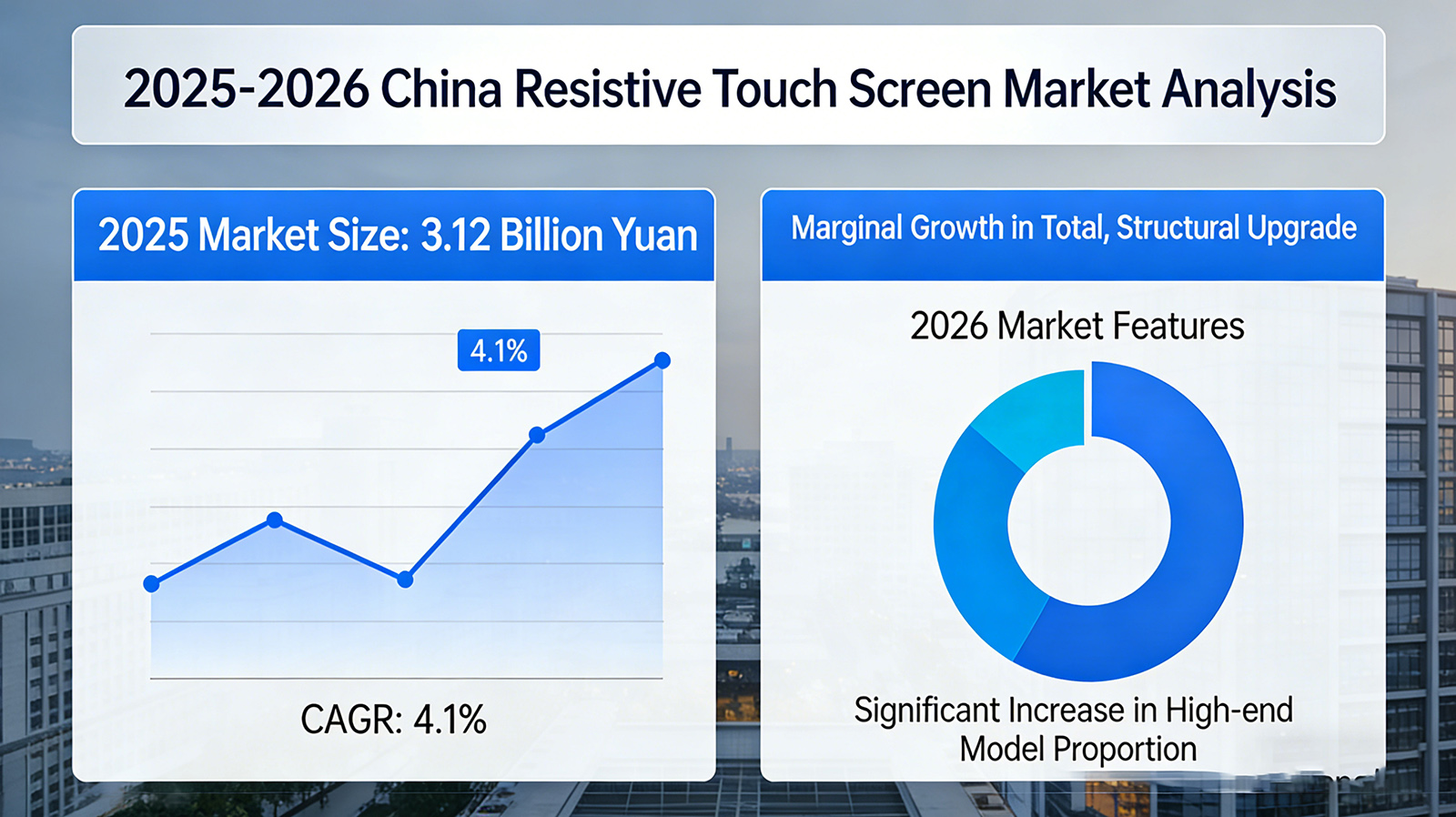
According to industry research data, the Chinese resistive touchscreen market reached 3.12 billion yuan in 2025, with a compound annual growth rate of approximately 4.1%. Entering 2026, the market is characterized by "slight increase in total volume but structural upgrades," with a significant increase in the proportion of high-end models.
In terms of product structure, the shipment share of five-line and above high-lifespan resistive touchscreens is expected to exceed 73.6%, completely replacing traditional four-line touchscreens. Five-line touchscreens integrate the measurement electrodes into the lower glass substrate, retaining only the upper PET layer as a flexible sensing layer. Linearity is improved to within ±1.5%, and click life is extended to over 5 million clicks, making them mainstream in high-frequency operation scenarios such as industrial automation and medical equipment. Meanwhile, the G/G (glass-to-glass) structure, due to its scratch resistance and impact resistance, is rapidly increasing its penetration rate in high-wear scenarios such as outdoor equipment and rail transportation.
Application scenarios continue to converge towards high-reliability fields. Industrial automation remains the largest application market, projected to account for 42% in 2026, with demand steadily increasing due to upgrades in intelligent manufacturing and the widespread adoption of the Industrial Internet of Things. In the medical equipment sector, customized resistive touchscreens supporting sterile glove operation and resistant to repeated alcohol wiping account for 74% of applications, becoming a core interaction solution for equipment such as operating room monitors and anesthesia machines. Furthermore, in extreme environments such as rail transit (e.g., the Fuxing high-speed train), power dispatching, and intelligent mining, resistive touchscreens maintain their irreplaceable essential status due to their advantages in electromagnetic interference resistance and wide-temperature operation (-40℃ to +70℃).
Industry Ecosystem: Deepening Local Supply Chains, Focusing on Differentiated Competition
China's resistive touchscreen industry has formed a dual-core cluster pattern in the Pearl River Delta and the Yangtze River Delta. Guangdong and Jiangsu provinces together contribute over 70% of the production capacity. Shenzhen, Dongguan, Suzhou, and other regions have formed complete localized supply chains from ITO conductive films and glass substrates to module bonding, significantly optimizing supporting response efficiency.
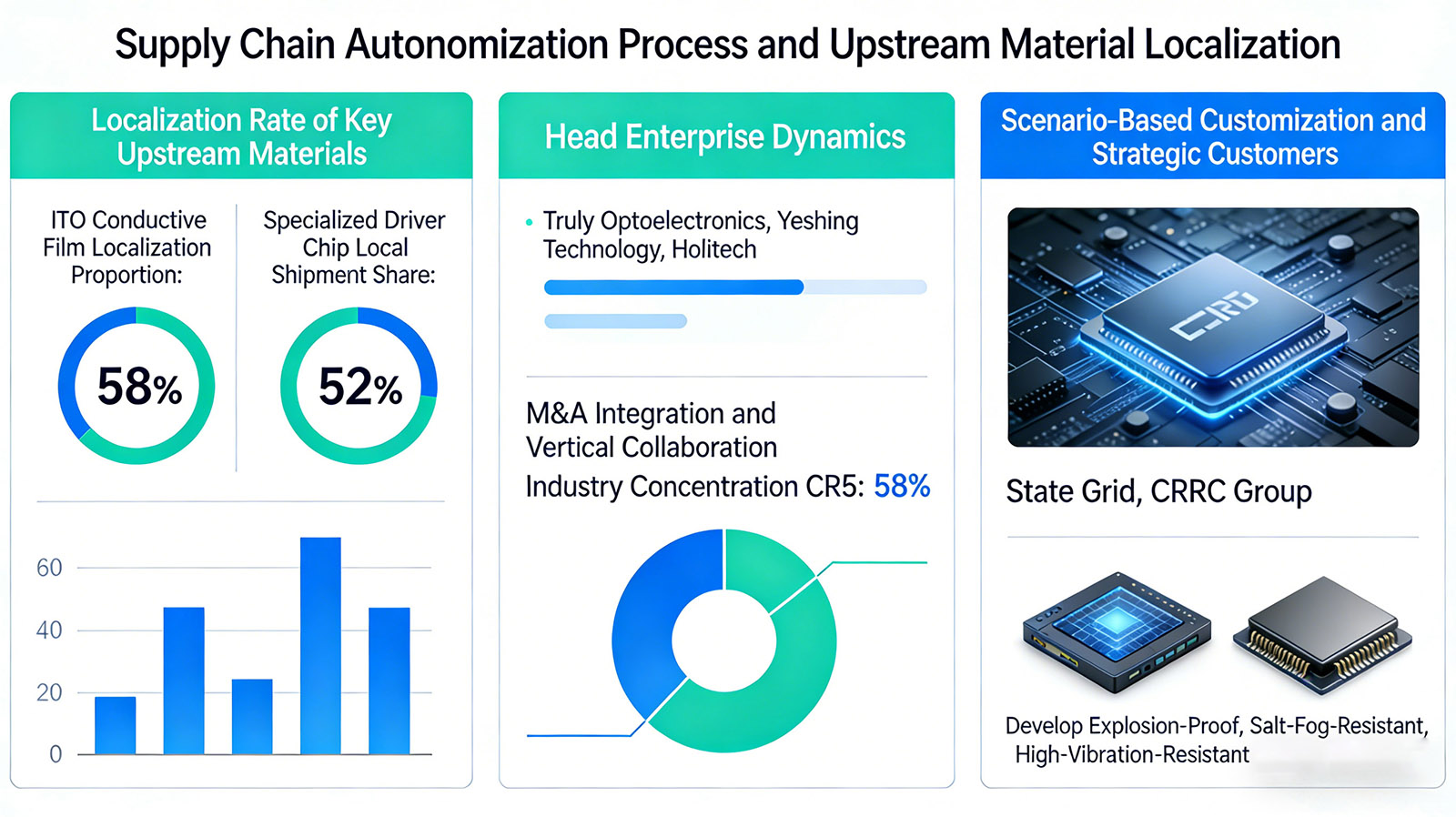
The process of supply chain self-sufficiency is accelerating, with the localization rate of upstream key materials steadily increasing. The domestic production rate of ITO conductive film reached 58%, and the domestic shipment share of dedicated driver chips exceeded 52%. Leading companies such as Truly Optoelectronics, GE Electronics, and Holitech have increased the industry concentration (CR5) to 58% through mergers and acquisitions and vertical synergy, forming a comprehensive advantage in technological iteration and cost control. Simultaneously, these companies are focusing on scenario-based customization, developing explosion-proof, salt spray-proof, and high-vibration-resistant special modules for strategic clients such as State Grid and CRRC, further enhancing product added value.
While resistive touchscreens are no longer the mainstream in consumer electronics, they are experiencing a resurgence thanks to technological innovation. From "functional upgrades" in pressure sensing to "performance breakthroughs" in new materials, and "self-reliance and controllability" in the domestic supply chain, the resistive touchscreen industry in 2026 is using differentiated competitive strategies to solidify its core position in harsh environments, providing stable and reliable human-computer interaction solutions for fields such as intelligent manufacturing and healthcare.